Buying guides
Best Deshedding Shampoo for Dogs: What It Can and Cannot Do
A deshedding shampoo does not stop shedding; it loosens dead undercoat so more of it comes out in the bath and the brushing that follows. The best one is a pH-balanced dog shampoo paired with a conditioner, with slip-adding ingredients such as oatmeal, aloe or plant oils, used alongside an undercoat rake and a thorough dry. The tools do most of the work; the shampoo makes them easier.
By Matt GarnettUpdated November 14, 20264 min read2 sources
What a deshedding shampoo actually does
Shedding is natural. Double-coated breeds such as Huskies, German Shepherds, Labradors and Corgis grow a dense undercoat and drop it, often heavily twice a year. A deshedding shampoo cannot change that cycle. What it can do is clean and condition the coat so that loose hair slides free instead of clinging, and moisturize the skin so it is not dry and flaky during a heavy shed.
That means the real buying criteria are the same as for any good dog shampoo, plus slip. The AKC advises using a shampoo made for dogs, because human products are made for a different skin pH, and choosing soap-free formulas designed to hydrate rather than strip the coat's oils. Conditioning agents and a separate conditioner add the slip that helps loose hair come out.
Ingredients and formula types compared
Most deshedding shampoos combine a gentle cleanser with conditioning ingredients. Oatmeal soothes skin, aloe and vitamin E moisturize, and plant oils such as coconut add slip; the AKC lists all of these among useful shampoo ingredients. Some formulas are two-step systems with a shampoo and a conditioner; others are combined shampoo-conditioners, which are quicker but usually less effective on a very thick coat.
Fragrance-free or lightly scented versions suit dogs with sensitive skin, since the AKC notes artificial fragrance can trigger skin sensitivity. Concentrated shampoos are diluted before use, which helps you work them through a dense coat. Avoid products that promise to stop shedding, which no shampoo can do, and medicated formulas unless your vet has suggested one.
Best approach for each coat
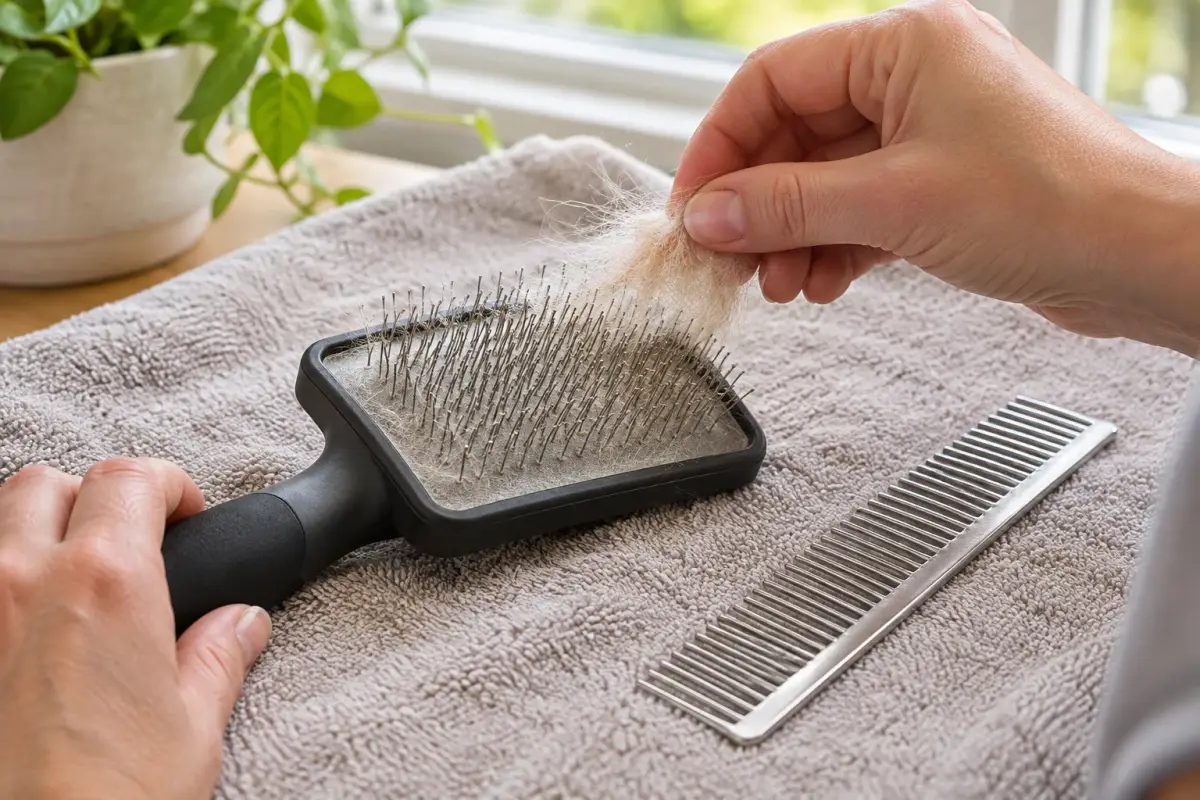
For dense double coats such as Huskies, Malamutes, German Shepherds and Corgis, use a deshedding shampoo and conditioner during the spring and fall blowout, then an undercoat rake and a high-velocity dryer. For short double coats such as Labradors and Pugs, a conditioning shampoo followed by a rubber curry brush removes a surprising amount of hair.
For single-coated breeds such as Poodles and Shih Tzus, which shed little, a deshedding shampoo adds nothing; use a moisturizing shampoo and a conditioner to prevent tangles instead. For dogs with itchy or flaky skin during a shed, choose a fragrance-free oatmeal formula, and ask your vet if the itching persists.
What to avoid
Avoid human shampoo and dish soap. Avoid bathing too often in the hope of reducing shedding; the AKC notes overbathing dries the skin and coat. Avoid shaving a double-coated dog to stop shedding: the AKC's grooming guidance says shaving does not eliminate shedding and damages the coat, raising the risk of skin issues and sunburn.
Avoid leaving shampoo in the coat. Dense undercoats trap product, which causes itching, so rinse far longer than seems necessary. Sudden, patchy or excessive hair loss, bald spots, sores or constant scratching are not normal shedding and need a vet visit rather than a different shampoo.
How to use it for the most hair removal
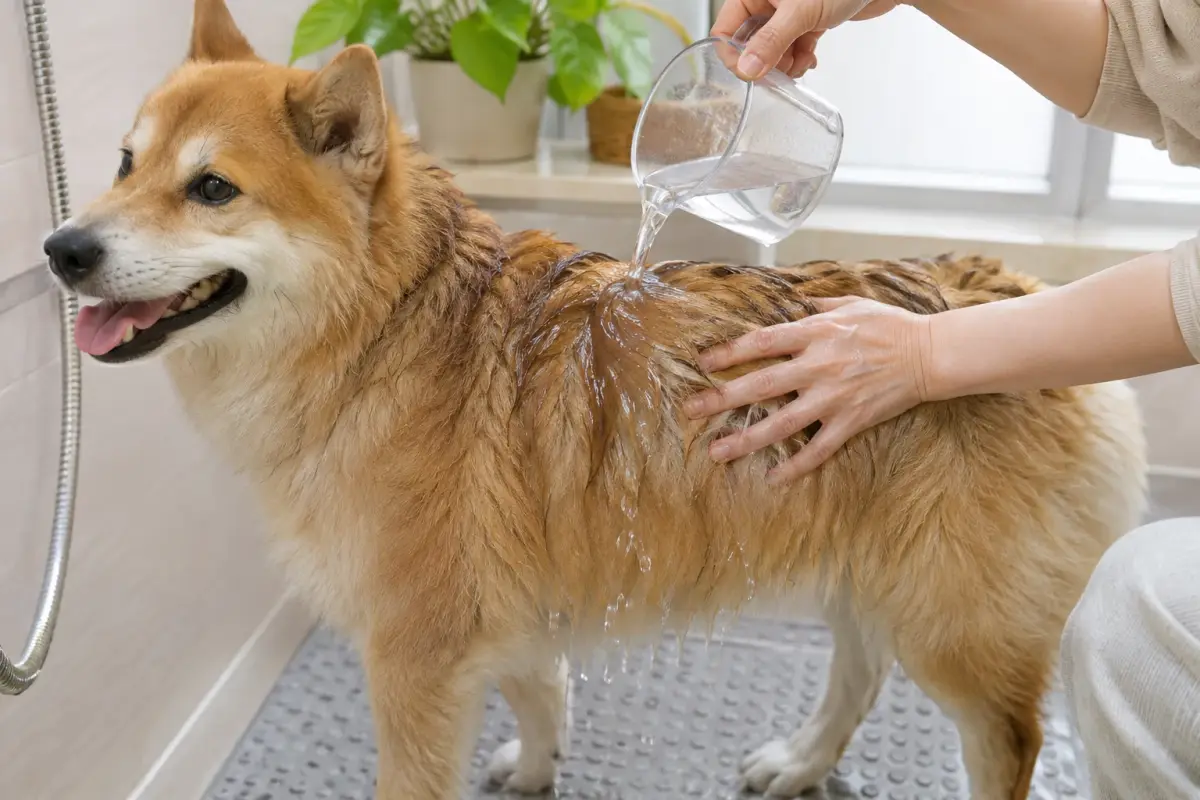
Brush first with a slicker brush or undercoat rake to remove loose hair and mats, which water would otherwise tighten. Soak the coat to the skin with lukewarm water, which takes several minutes on a thick coat. Work the shampoo in against the direction of growth, leave it on for the time the label gives, then rinse until the water runs completely clear. Apply conditioner and rinse again.
Dry thoroughly. A high-velocity pet dryer, used on a cool or low-heat setting, blows out huge amounts of loose undercoat; the AKC notes groomers use high-velocity dryers on dense coats. Finish with an undercoat rake once the coat is dry. Expect a lot of hair: the first deshedding bath of the season can fill a bag.
How often to use it, and how long it lasts
During a heavy shed, a deshedding bath every two to four weeks, with brushing several times a week in between, is usually plenty. Outside shedding season, a regular gentle shampoo every month or two suits most double-coated dogs. Brushing remains the most effective way to manage shedding day to day.
Concentrated formulas last longest, especially for large dogs. Keep the bottle closed and at room temperature. Watch your dog's skin after each bath for a few days; redness, flaking or extra scratching mean the formula does not suit it, and your vet can recommend an alternative.
Common questions
Does deshedding shampoo really work?
It helps loose undercoat come out during the bath and the brushing afterward, but it does not stop shedding. Most of the hair removal comes from rinsing, drying and brushing with the right tools.
What is the best dog shampoo for shedding?
A pH-balanced dog shampoo with conditioning ingredients such as oatmeal, aloe or plant oils, followed by a conditioner, used with an undercoat rake and a thorough dry.
How often should I bathe a dog that sheds a lot?
Every two to four weeks during a heavy shed and every month or two otherwise. Brush several times a week between baths, which removes more hair than extra bathing.
Should I shave my dog to stop shedding?
No, not a double-coated dog. Shaving does not stop shedding and can damage the coat and expose the skin to sunburn. Brush and bathe instead, and ask a groomer for help with heavy coats.
Sources we checked
This guide is general information, not veterinary advice. If your pet is unwell or injured, contact your veterinarian.