Buying guides
Best Brush for German Shepherds: How to Choose Tools for Shedding
A German shepherd needs two tools: an undercoat rake or deshedding tool to pull out the dense, loose undercoat, and a slicker or pin brush for routine grooming of the outer coat. Long-coated shepherds add a wide-toothed comb for the feathering. Brush a few times a week most of the year and daily during the spring and fall coat blows, and never shave the coat to cut shedding.
By Matt GarnettUpdated November 14, 20263 min read2 sources
Why German shepherds shed so much
German shepherds have a double coat: a dense, soft undercoat for insulation and a coarser outer coat of guard hairs that sheds water and dirt. The AKC lists the breed among double-coated dogs whose undercoat helps keep them cool in summer and warm in winter, and notes double coats shed year-round with peaks in spring and fall.
Most of what ends up on the floor is undercoat. A brush that only smooths the outer coat leaves it behind, which is why shepherd owners who use a single soft brush feel they are losing the battle.
The tools compared
An undercoat rake has long, widely spaced teeth that reach through the guard hairs and pull loose undercoat out. It is gentle on the topcoat and the best everyday deshedding tool for a shepherd. A bladed deshedding tool removes even more undercoat in one pass, and is good in shedding season, but the AKC advises light pressure with bladed tools and they should not be used daily.
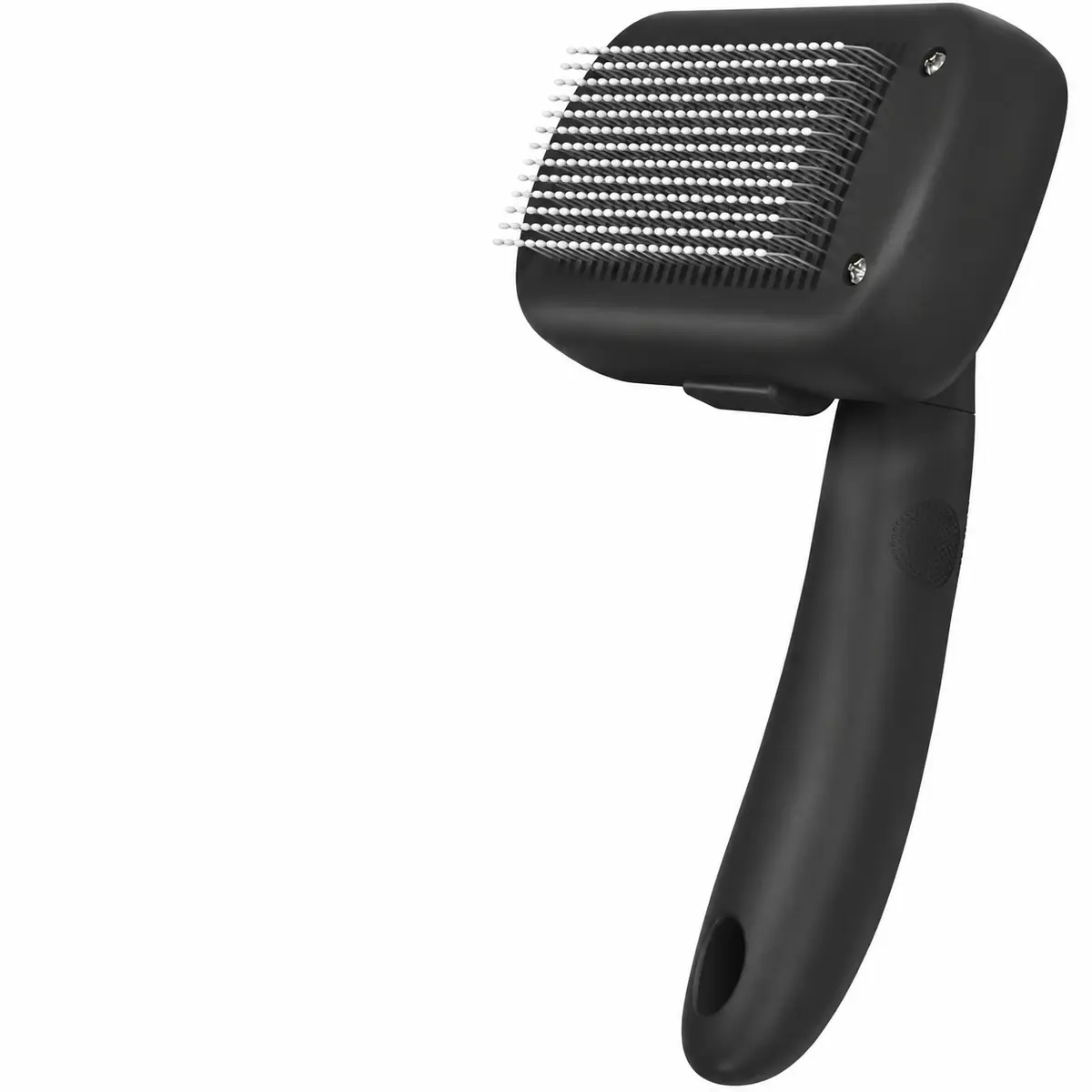
A slicker brush lifts loose hair and small tangles from the outer coat and is the AKC's suggestion for dense coats. A pin brush is gentler for finishing. A metal comb checks you have reached the skin and works the feathering behind the ears and on the legs of long-coated dogs.
Stock coat vs long coat
Most German shepherds have a medium-length stock coat, for which an undercoat rake plus a slicker covers nearly everything. Long-coated shepherds have longer hair on the ears, legs, tail and body that tangles more easily, so add a wide-toothed metal comb and check behind the ears and the britches for mats.
Puppies have a softer coat that changes as the adult coat comes in, often around six months to a year. Start with a soft slicker and short, positive sessions so grooming is routine by the time the first heavy shed arrives.
A routine for shedding season
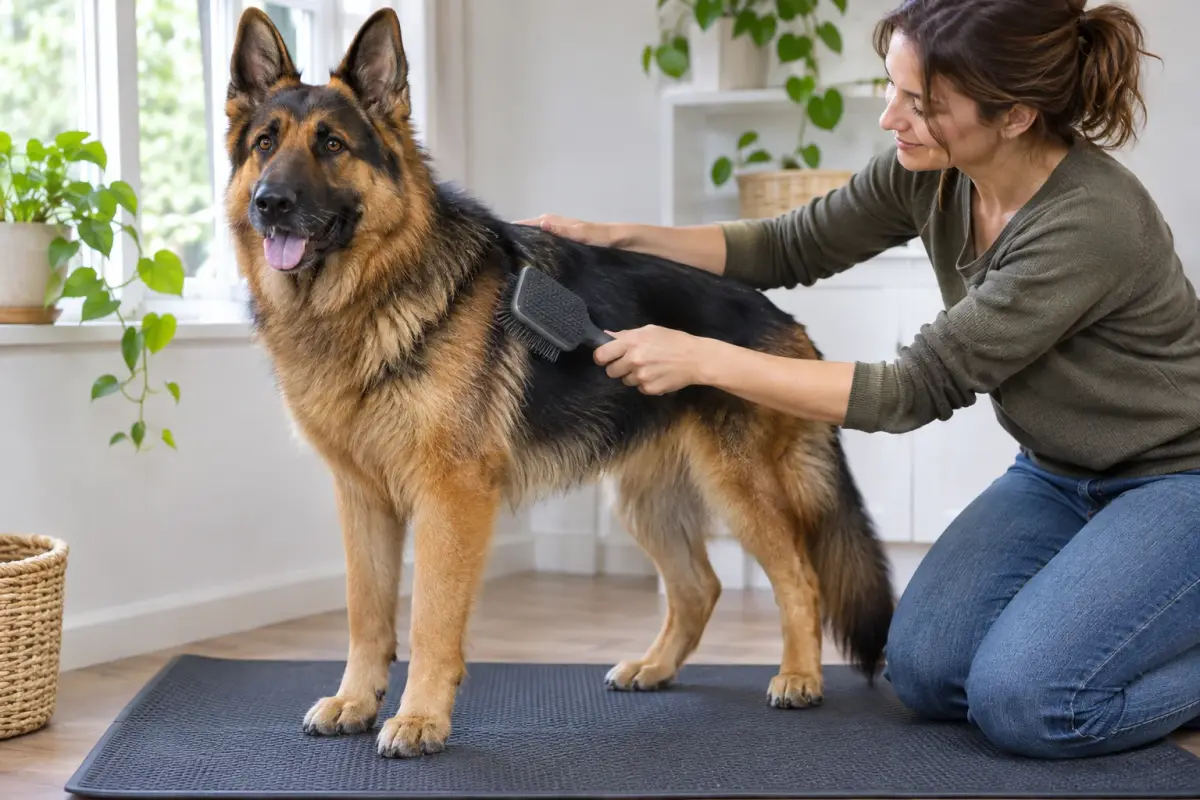
During a coat blow, brush daily for 10 to 15 minutes. Work in sections from the neck back, rake in the direction of hair growth, then go over with the slicker. A bath with a dog shampoo, followed by thorough drying, loosens a lot of undercoat at once; brush again once dry.
Outside shedding season, two or three sessions a week with a rake and slicker keep hair under control. Brush outdoors or on a sheet to make cleanup easy, and use a strong vacuum indoors.
What to avoid
Avoid shaving. The AKC warns that shaving a double coat removes its insulation, can raise the risk of heatstroke, and can cause the coat to grow back patchy. Avoid pressing hard with bladed deshedders, and avoid them on irritated skin.
Avoid ignoring skin changes found while brushing. Hot spots, scabs, flaking, bald patches or a sudden change in shedding outside the normal seasons can point to allergies, parasites or other problems, and should be checked by your vet.
Care and lifespan of tools
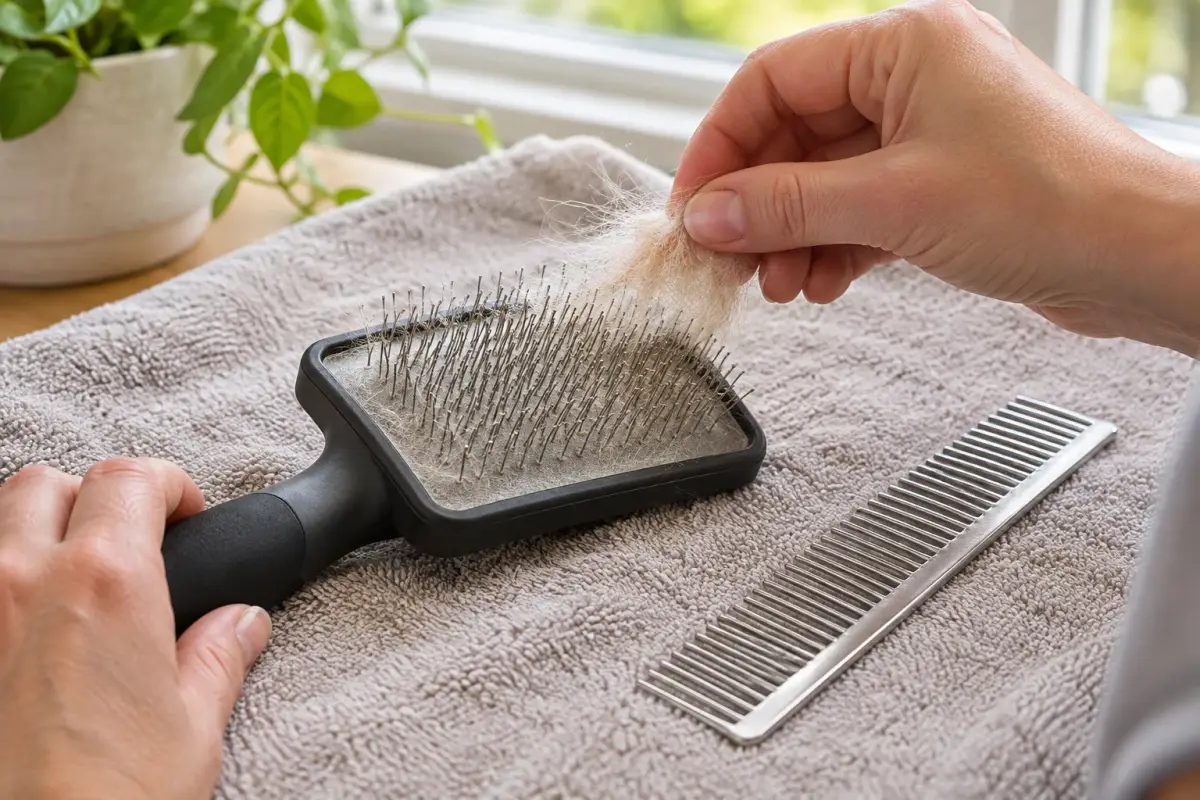
Clear hair from tools after each session and wash them in warm soapy water every few weeks. Keep metal tools dry to prevent rust.
Replace slicker brushes when pins bend or the pad splits. A good undercoat rake lasts many years; a bladed deshedder dulls with use and should be replaced when it starts pulling instead of gliding.
This page is general information, not veterinary advice, and it cannot replace an examination by the vet who knows your pet.
Coat-tool shapes and working edges
| Tool | Construction described | Inspection focus |
|---|---|---|
| Undercoat rake | Long,widely spaced teeth | Tooth length and spacing |
| Bladed deshedding tool | A bladed working edge | The exact use directions and edge condition |
| Slicker | Fine pins in a brush head | Pin tips and spacing |
| Pin brush | Pins used for finishing | Tip condition and contact with the coat |
| Metal comb | Rows of teeth | Tooth spacing and smoothness |
Common questions
What is the best deshedding brush for a German shepherd?
An undercoat rake for regular use, plus a bladed deshedding tool used gently once a week in shedding season. Finish with a slicker brush. Together they remove loose undercoat without damaging the outer coat.
How often should I brush my German shepherd?
Two or three times a week most of the year, and daily during the spring and fall coat blows. Frequent short sessions keep shedding under control and let you spot skin problems early.
Can I shave my German shepherd to stop shedding?
No. The AKC warns that shaving a double coat removes its insulation, can increase heatstroke risk, and can make the coat grow back patchy. Regular brushing is the right way to manage shedding.
Do long-coated German shepherds need different brushes?
They need the same rake and slicker, plus a wide-toothed metal comb for the longer feathering on ears, legs and tail, which tangles more easily than a stock coat.
Sources we checked
This guide is general information, not veterinary advice. If your pet is unwell or injured, contact your veterinarian.