







Cats
Cat puzzle feeders
Little things. Happy cats.
21 items picked for everyday life with your pet, with shipping estimates on every item.
 A happy life, one little thing at a time.
All cats toys & play →Cat toys →Cat scratchers →Interactive cat toys →Cat tunnels →Cat scratching posts →Cat exercise wheels →Cat scratch deterrents →Catnip & silvervine toys →
↗Tracked US shippingEstimates on every item↶Returns & refundsHow it works♡Here to helpTalk to Giddy Pets
All cat puzzle feeders
Little essentials. Lots of love.



Interactive cat toys
Clear Cat Treat Puzzle with Tiered Labyrinth Center
- Options
- 2 to choose from
$20.99


Interactive cat toys
Wooden Cat Puzzle Box and Replacement Sandpaper Options
- Options
- 3 to choose from
From $13.99


A little guidance
Help choosing cat puzzle feeders
Buying guides and care advice written for this range: what to measure, what matters and what to skip.
From our guides
- Best Cat Puzzle Toys: How to Choose One Your Cat Will Use →
- Best Automatic Cat Feeder for Two Cats: What Actually Matters →
- Best Automatic Cat Feeder With a Camera: What Actually Matters →
- Best Automatic Cat Feeders: How to Choose the Right Type →
- Best Chicken Feeders: What Actually Matters →
- Best Gravity Cat Feeder: Who It Suits and What to Check →
This page holds food puzzles for cats: a rolling drum that releases kibble as your cat bats it, interactive puzzle feeders with compartments and sliders, and wooden puzzle boxes and foraging mazes with holes for your cat to fish food out of with a paw. They are for indoor cats who eat too fast, put on weight easily or get bored between meals.
Why cats benefit from food puzzles
In the wild a cat eats many small meals a day and spends a lot of time hunting for each one. A bowl that is filled and emptied in minutes skips all that work. Food puzzles bring some of it back, giving the brain and body something to do.
VCA notes that food puzzles provide mental stimulation, can reduce stress and boredom, slow down fast eaters and help inactive or overweight pets move more. Animal behavior consultants have also suggested foraging toys may reduce some aggressive behavior in cats.
Types in this range
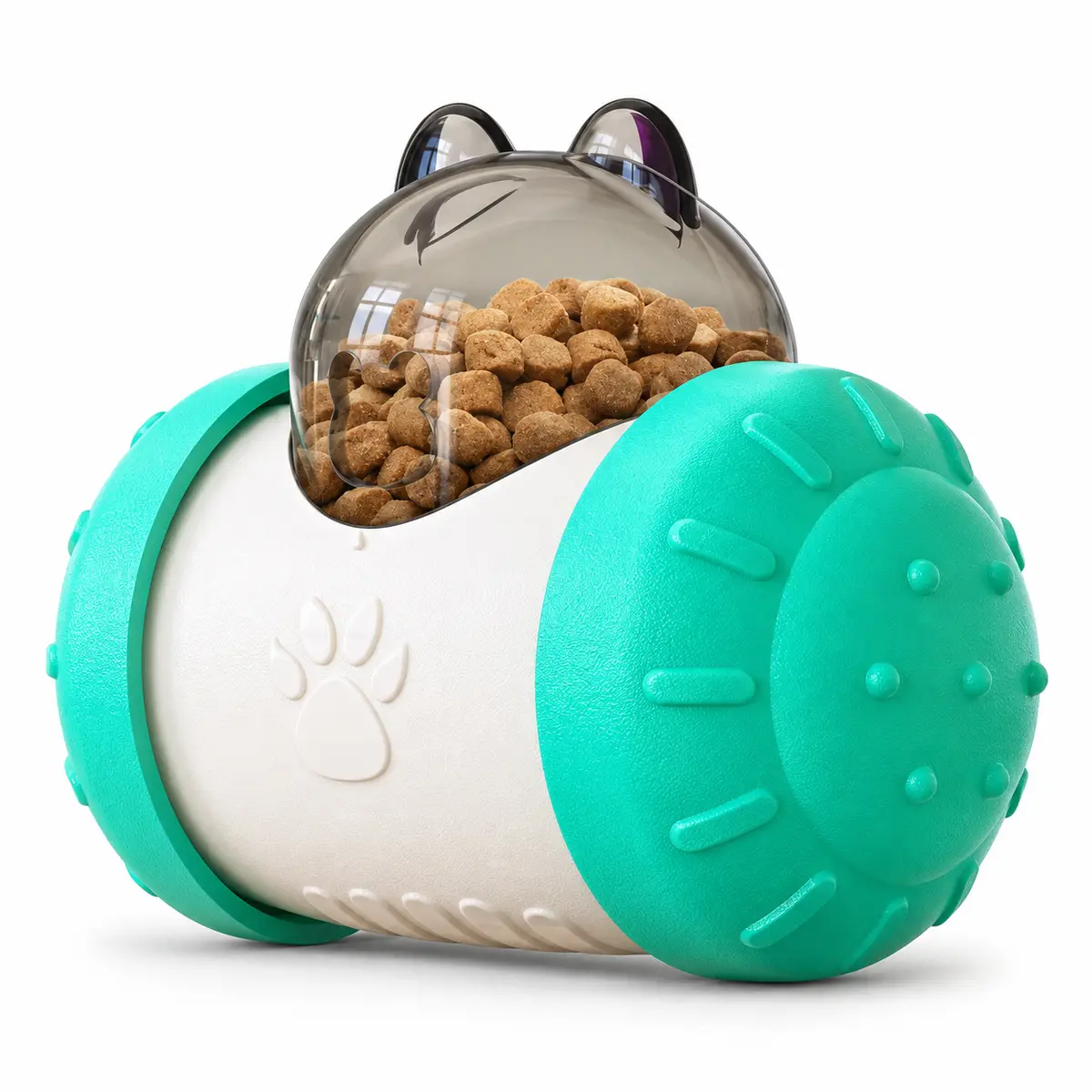
A rolling drum or ball dispenser holds kibble inside and drops a few pieces out as your cat pushes it around the floor, which turns a meal into a chase. Interactive puzzle feeders use compartments, sliders or lids your cat has to move to reach the food.
Wooden puzzle boxes and foraging mazes have holes on the top or sides; your cat reaches in with a paw to scoop out kibble or treats. They are heavier and stay put, which suits cats who prefer to work in one place.
Getting your cat started
Start easy so your cat succeeds quickly. VCA recommends choosing simple puzzles first, since some pets only solve complicated ones after an owner demonstrates how they work. Put a few treats or favorite kibble pieces where they are easy to reach, then make it harder over days and weeks.
Use part of your cat's daily food rather than extra treats, so the total calories stay the same. Many owners feed one meal a day from a puzzle and the rest from a bowl.
Choosing the right puzzle
Match the puzzle to your cat. Playful, active cats often love rolling dispensers. Cautious or older cats may prefer a stationary wooden box where they can work at their own pace. Cats with flat faces, like Persians, do better with shallow compartments they can reach easily.
Check the hole size against your cat's kibble. Food puzzles are designed for dry food and treats; wet food is better served in a lick mat or flat plate.
Feeding safely
Watch that your cat is still eating enough. A cat that gets frustrated and gives up may miss meals, and cats should never go without food for more than a day, because they are prone to serious liver problems when they stop eating. If your cat is not managing the puzzle, make it easier or go back to a bowl for a while.
Wash puzzles regularly to remove crumbs and oils. If you have several cats, give each its own puzzle in a separate area. For a weight loss plan, ask your vet how much your cat should eat each day.
Puzzles for multi-cat homes
In a home with more than one cat, a food puzzle can cause tension if one cat guards it or eats the other's share. Give each cat its own puzzle, placed in a different room or at least well apart, and watch the first few sessions.
A confident cat may finish quickly and move on to a slower housemate's puzzle, so match the difficulty to each cat. A shy cat may need its puzzle somewhere quiet, away from the busy kitchen, before it will settle and work at it.
Cat feeder puzzle mechanisms
| Format | Food location | How access works |
|---|---|---|
| Rolling ball or drum | Inside a moving container | Pieces fall through dispensing openings |
| Compartment puzzle | Under lids or sliders | The cat moves a cover to reach food |
| Maze or hole box | Within channels or behind openings | A paw reaches through an opening |
Are puzzle feeders good for cats?
Yes, for most cats. VCA says food puzzles provide mental stimulation, slow fast eaters and help inactive or overweight pets move more.
How do I get my cat to use a puzzle feeder?
Start with the easiest setting and a few tempting treats, then make it gradually harder. Show your cat how it works if needed.
Can I feed my cat all its food from a puzzle?
Some cats can, but check they are eating enough. Many owners use a puzzle for one meal and a bowl for the rest.
Can I use wet food in a cat puzzle feeder?
Most puzzle feeders are designed for dry kibble and treats. Wet food is better on a lick mat or flat plate.
Do puzzle feeders help cats lose weight?
They can help by slowing eating and increasing activity. Your vet can tell you how much your cat should eat daily.