






Buying guides
Best Automatic Cat Feeder for Two Cats: What Actually Matters
The best automatic cat feeder for two cats gives each cat its own bowl, its own portion and its own timed meal, which a single shared hopper cannot do. Look for twin compartments or two separate machines, a power backup, and bowls you can wash easily. The right design depends on whether your cats eat the same food, at the same speed, in the same room. Browse our automatic cat feeders for two cats once you know which setup fits.
By Matt GarnettUpdated November 14, 20265 min read4 sources
Why two cats need two portions, not one shared bowl
Feeding two cats from one bowl hides problems. VCA Animal Hospitals notes that every pet has its own calorie needs, so measured amounts in separate bowls are the best way to keep each one from being over- or under-fed. It adds that when a pet feels unwell it eats less or stops, and separate bowls make that obvious enough to prompt a call to the vet. A shared hopper makes it easy to miss that signal for days.
Free feeding is the other trap. Cornell's Feline Health Center says that leaving dry food out all day may be acceptable for some cats, but it can lead to overeating and weight gain in others. In a two-cat home the heavier eater tends to win, so the lighter cat can end up underfed. A timed feeder turns grazing into scheduled meals, and that is the real benefit, more than the convenience of being away.
Twin-bowl feeder, two machines, or a microchip feeder
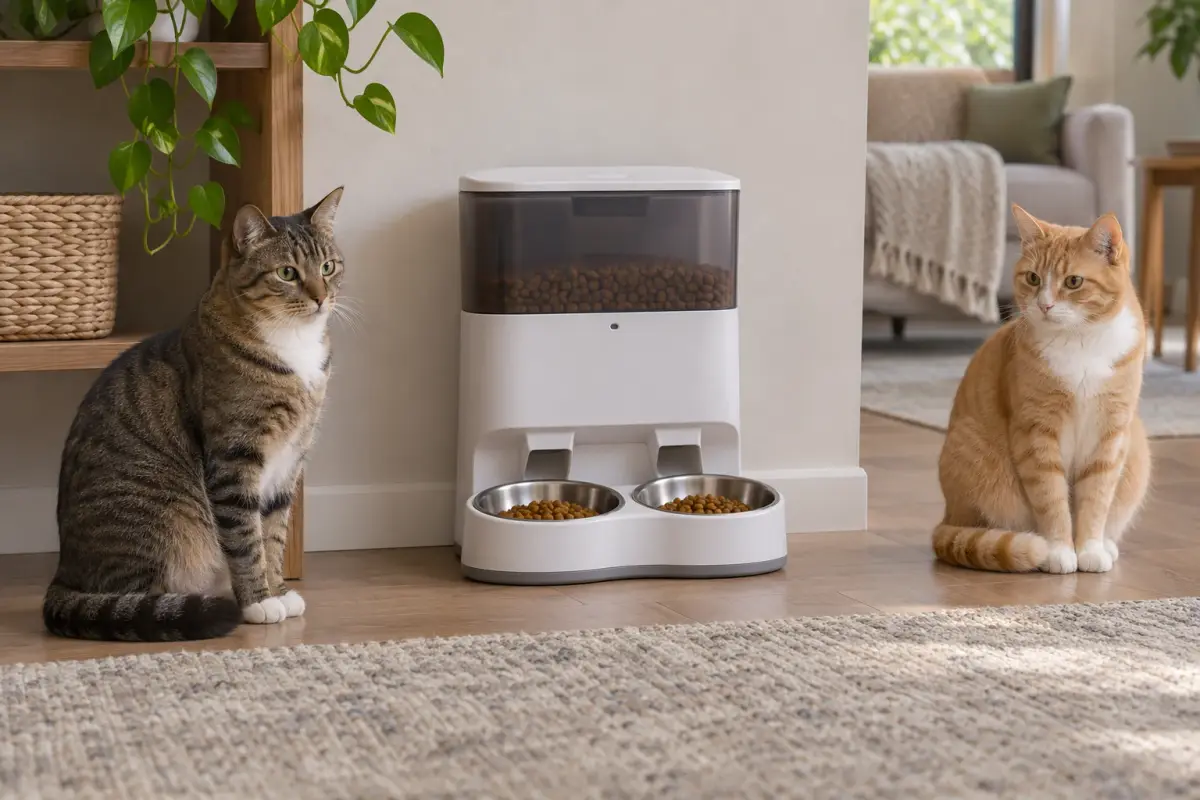
There are three basic designs. A twin-bowl unit, such as a smart automatic feeder with twin bowls, uses one body and one schedule to fill two bowls. It takes up less counter space and costs less than two machines, but both cats eat side by side, and both portions come from the same programming. That works well for two cats that share a diet and eat calmly together.
Two separate machines suit cats that need distance. Tufts' Petfoodology blog suggests automatic feeders in separate areas of the house, set to open at the same time, so each pet goes to its own feeder. Microchip or collar-tag feeders open only for the registered cat, but Tufts points out they usually accept only one tag, so you would need one machine per pet. If your cats need different foods, see our microchip cat feeders.
Features that matter for a two-cat home
Start with the bowls and the hopper. Two removable stainless steel bowls are easy to wash, which matters because a dirty bowl puts some cats off their food. A model such as this 6-liter dual-bowl timed feeder with two stainless bowls also lists a dual power supply, meaning mains plus batteries, so a power cut does not skip a meal. Check whether the portion steps are small enough for your cats, since a feeder that can only release large portions is no use for a small cat.
Next, look at the schedule. Cornell says kittens do best on about three meals a day until six months, and that once cats are adults, one or two meals a day is appropriate in most cases. So a feeder with two to four timed meals covers most households, and you rarely need a dozen slots. Most dry-food hoppers are designed for dry kibble only. If your cats eat canned food, look at wet food automatic cat feeders instead.
Which setup suits which pair of cats
Two healthy adults on the same food and similar weight are the easy case. A twin-bowl design like a household double-meal pet feeder can handle them, as long as the schedule is split into two portions. Cats that guard food, or that eat much faster than the other, usually do better with two machines in different rooms, set to open together.
If one cat is overweight, or one needs a different diet because of a health condition, ask your vet before you automate anything. Cornell and Tufts both stress that diet depends on the individual cat, and VCA says cats and dogs need different foods. A feeder only dispenses what you load, so it cannot stop a cat from stealing the other's food. A kitten and an adult are a similar case, since their meal counts differ and a shared machine cannot serve both.
What to avoid, and how to set it up
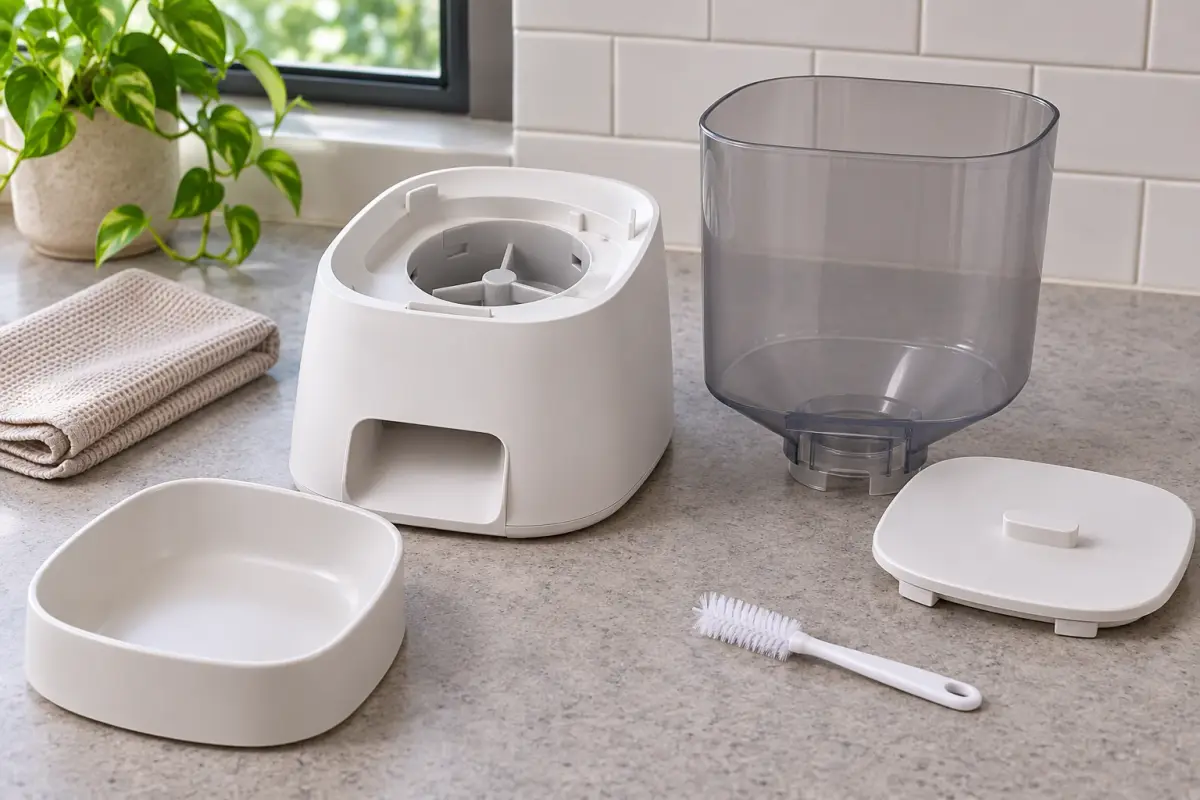
Avoid feeders with a single shared tray for both cats, hoppers you cannot take apart to wash, and any unit that relies on a single plug with no backup. Do not rely on a feeder as the only check on your cats during a trip. Have someone look in on them, and keep in mind that an automatic feeder will keep dropping food even if a cat has stopped eating.
Run the feeder while you are at home for a few days before you leave. Watch both cats use it, check the portion sizes against the amount you measured, and put the bowls where each cat can eat without being watched by the other. Keep water as a separate question; our cat water fountains cover that. If either cat skips meals or loses weight, call your vet. For general guidance, read our guide to the best automatic cat feeders, then come back to our automatic cat feeders for two cats.
Common questions
Can one automatic feeder feed two cats?
Yes, if it has two compartments or bowls and both cats eat the same food at a similar pace. Cats that guard food or eat at very different speeds usually need two separate feeders in different spots.
Do two cats need separate food bowls?
VCA recommends feeding each pet from its own bowl, because calorie needs differ and a missed meal is much easier to notice. Cornell notes that the presence of other animals can deter a cat from eating, so separating them often helps.
How many meals should an automatic cat feeder dispense?
Cornell says adult cats usually do well on one or two meals a day, and kittens on about three until six months old. Your vet can adjust this for a particular cat, so most households only need two to four timed meals.
Is it safe to free feed two cats with an automatic feeder?
A feeder is better used for timed, measured meals than for constant access. Cornell warns that free feeding dry food can cause overeating and weight gain in some cats, and in a two-cat home one cat may eat most of it.
Sources we checked
This guide is general information, not veterinary advice. If your pet is unwell or injured, contact your veterinarian.


