






Buying guides
Best Automatic Cat Feeders: How to Choose the Right Type
Choose an automatic cat feeder by the food you use and how many cats eat from it. For dry food, a gravity-free portion feeder with a timer, a locking lid and battery backup is the reliable type. For wet food, you need a chilled tray feeder. Two cats usually need two feeders, or a microchip feeder, not one shared bowl.
By Matt GarnettUpdated November 14, 20264 min read2 sources
What matters most in an automatic feeder
Reliability comes first, because a feeder that jams or loses power means a hungry cat. Look for battery backup that keeps the schedule running through an outage, a dispensing mechanism suited to your kibble size, and an alert, light or app notice when the hopper is low or food is stuck. A locking lid matters more than it sounds: determined cats learn to paw open hoppers or knock feeders over.
Portion control comes second. The Cornell Feline Health Center notes that free feeding dry food is a major factor in feline obesity and recommends distinct, owner-controlled mealtimes. A good feeder lets you set several small meals a day in measured portions, which suits a cat's natural pattern of eating little and often, and makes it easier to stick to the amount your vet suggests.
Types of automatic cat feeders compared
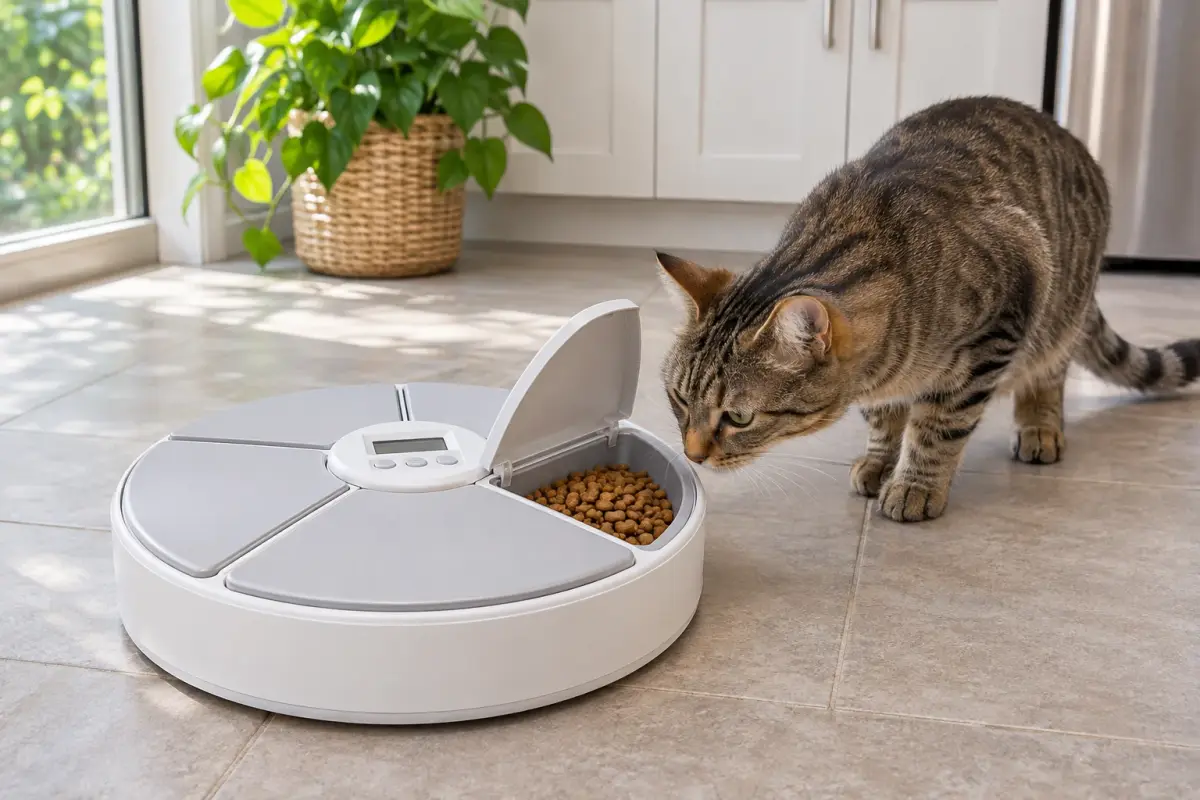
Count the meals you want to prepare. A five-tray feeder with a timer lets you portion each meal into its own compartment. A programmable hopper stores dry food in one reservoir and dispenses a portion at each scheduled time. A gravity feeder tops up the bowl whenever the food level drops, so it gives you less control over when your cat eats.
Rotating tray feeders have several covered compartments that open on a timer, usually with an ice pack underneath, and are the only practical type for wet food for a day or so. Microchip feeders open only for a registered cat's chip or tag, which solves the multi-cat problem of one cat eating everyone's food. Camera feeders add video and remote treat-tossing, which is convenient but not essential.
The best type for each situation
For a single cat on dry food, a programmable hopper with battery backup and four to six small daily meals is the best fit. For a cat on wet food, choose a covered tray feeder with an ice pack and use it only for short gaps, because wet food should not sit warm for long. For a cat on a prescription or weight-loss diet, accurate small portions matter most, so check how finely each meal can be set.
For two or more cats, the honest answer is usually one feeder per cat placed apart, or a microchip feeder if one cat steals. Dual-bowl feeders split one portion into two bowls but cannot stop a bully eating both. For travel, a feeder is not a substitute for someone checking on your cat at least daily for water, litter and health.
Features that matter less than they seem
Cameras, voice recording and app charts are pleasant extras, but they do not feed your cat any better. If you choose a connected feeder, make sure it keeps dispensing on its own schedule when Wi-Fi drops, because some depend on the app for timing. A feeder that only works when the internet does is a weak point in exactly the situation you bought it for.
Large hopper capacity also sounds useful but can work against freshness, because kibble exposed to air goes stale and oils go rancid. Fill only what your cat will eat in about a week, and look for a sealed hopper with a desiccant pocket. Stainless steel bowls are easier to keep clean than plastic and are worth choosing where offered.
Setup, cleaning and lifespan
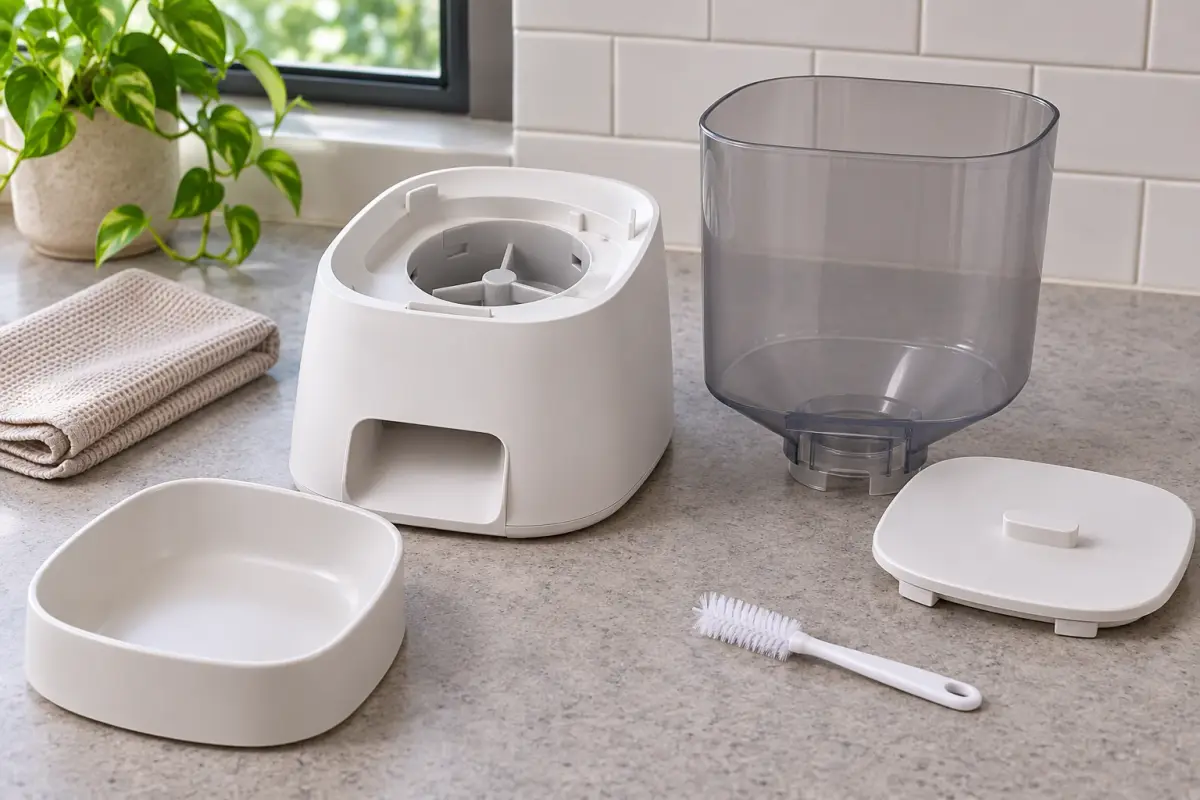
Run the feeder for a few days while you are home, watching that portions drop correctly and your cat is not frightened by the motor sound. Weigh a few portions on a kitchen scale, because settings in cups or grams vary with kibble size. Introduce it beside the usual bowl, then phase the old bowl out over a week.
Wash the bowl every day or two and the hopper weekly, drying it fully so leftover oils and moisture do not cause mold. Check the batteries monthly. Most automatic feeders last a few years; replace one sooner if it starts skipping meals. If your cat stops eating its scheduled meals for more than a day, call your vet, because cats can become seriously ill quickly when they do not eat.
Automatic feeder access mechanisms
| Type | How food becomes available | Verify on the exact model |
|---|---|---|
| Hopper | Food drops from a reservoir | Food size and portion controls |
| Gravity | Food refills an open bowl as space appears | Reservoir and bowl cleaning access |
| Rotating tray | A cover exposes prepared compartments | Compartment size,timer and cooling arrangement |
| Chip or tag access | A registered identifier opens a lid | Supported identifier and registration method |
| Camera feeder | A camera views a feeding area | Actual view,app support and dispensing functions |
Common questions
Are automatic cat feeders good for cats?
Yes, when used for portion control and regular meals. They help prevent overeating and suit cats that like small meals, but they do not replace daily checks on water, litter and your cat's health.
What is the best automatic cat feeder for wet food?
A covered rotating tray feeder with an ice pack under the compartments is the practical choice for wet food. Use it only for short gaps, because wet food should not sit warm for long.
Can two cats share one automatic feeder?
Sometimes, but one cat often eats more than its share. One feeder per cat, placed apart, or a microchip feeder that opens only for a registered cat, is more reliable.
How long can I leave my cat with an automatic feeder?
A feeder can cover a day or so between visits, but a cat still needs someone checking on it at least daily for fresh water, a clean litter box and signs of illness.
Sources we checked
This guide is general information, not veterinary advice. If your pet is unwell or injured, contact your veterinarian.


