






Care & how-to
How Much Wet Food Should I Feed My Cat?
Most 10 lb adult cats eating only wet food need roughly 200 to 260 calories a day, which works out to about two to three 3-ounce cans or one and a half 5.5-ounce cans for many brands. Calories per can vary a lot, so read the label, divide your cat's daily calories by the can's calories, and adjust by body shape. If you also feed dry food, cut the wet portion to match.
By Matt GarnettUpdated November 9, 20264 min read4 sources
The can math, step by step
Step 1: Estimate your cat's daily calories. For an average, healthy, indoor 10 lb adult, Tufts University's Petfoodology works from about 260 calories a day, and the usual veterinary formula gives a little over 200; your vet can give you a precise target. Step 2: Find the calories per can on the label, listed as kcal per can.
Step 3: Divide the daily calories by the calories per can. If your cat needs 230 calories and the can holds 90, that is about two and a half cans a day. Step 4: Take off around 10% if you give treats, then split the total across two or more meals. Write the number on the fridge so everyone feeds the same amount. Some owners deliver those measured meals with an automatic feeder designed for wet food, such as the smart app automatic wet food feeder, though the 30-minute pick-up rule below still applies.
Typical amounts by can size
Calories vary by recipe, but many 3-ounce cans fall somewhere around 70 to 100 calories, and many 5.5-ounce cans around 140 to 200. Pâtés tend to be denser than chunks in gravy, and some light or broth-style foods are much lower. That is why two cats eating 'two cans a day' of different brands can be eating very different amounts.
Pouches and trays work the same way: the label gives calories per package. Some brands list calories per kilogram of food as well; per can or per pouch is the easier number to use at home.
Feeding wet and dry together
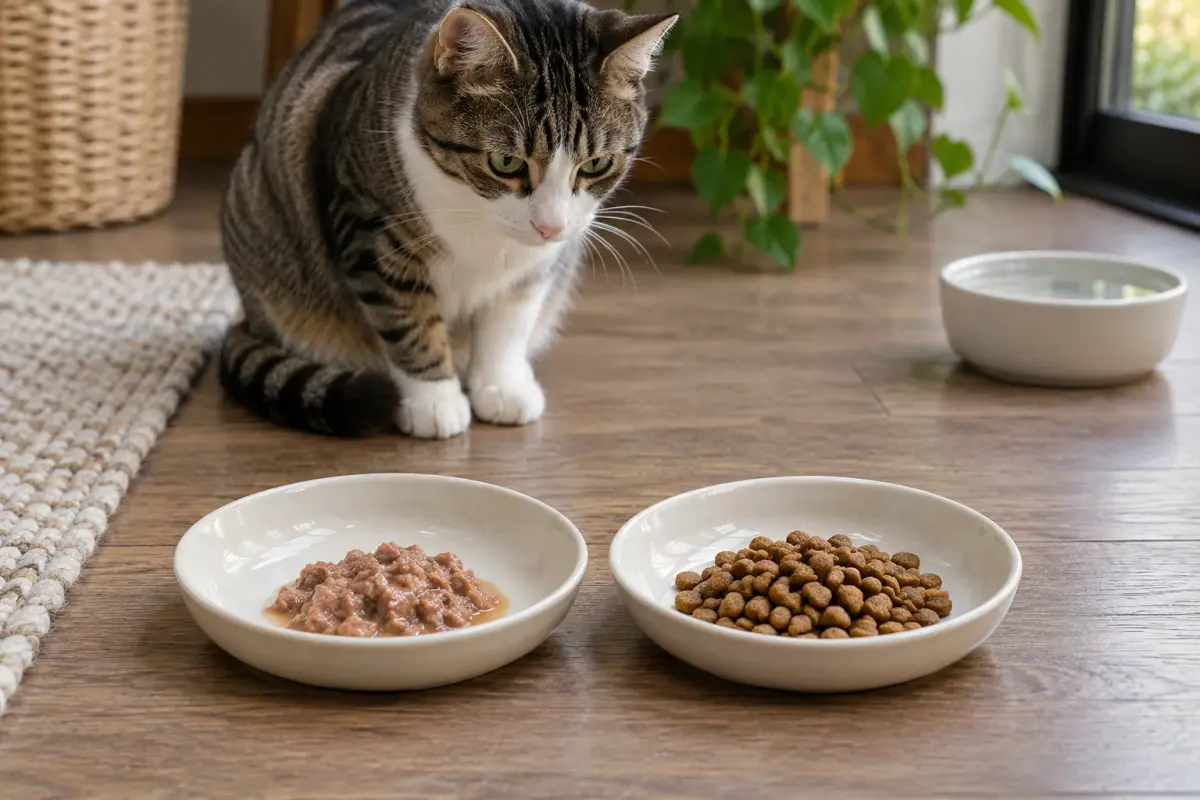
VCA notes there is nothing wrong with feeding dry food, canned food or a combination. If you mix, decide what share of the day's calories comes from each. A common split is half and half: for a cat needing 240 calories, that might be one 3-ounce can of about 80 calories twice a day, plus a measured portion of dry food providing the remaining 80.
The key is to reduce both. Adding a full ration of wet food on top of a full bowl of dry is one of the most common ways indoor cats gain weight. Cornell Feline Health Center lists obesity as the most common nutrition-related problem in cats.
Why wet food helps with water intake
Canned cat food is at least 75% water, according to Cornell, and the Merck Veterinary Manual notes that cats eating mostly canned food drink less from the bowl as a result. For cats that do not drink much, wet food is one of the easiest ways to raise total water intake.
Cats eating wet food may therefore seem to drink very little, which is normal. A cat on mostly dry food that suddenly drinks much more than usual, though, is worth a call to your vet.
Serving and storing wet food
Serve wet food at room temperature or slightly warmed, never hot, and pick up leftovers after about 30 minutes. VCA notes moist food spoils quickly if left out. Cover opened cans and refrigerate them, and use them within the time on the label, usually a few days.
Wash cat bowls between meals. Cornell points out that dirty bowls and noisy, busy feeding spots can put cats off their food, and a shallow, wide dish is easier for many cats to eat from than a deep bowl.
Checking the amount is right, and when to call your vet
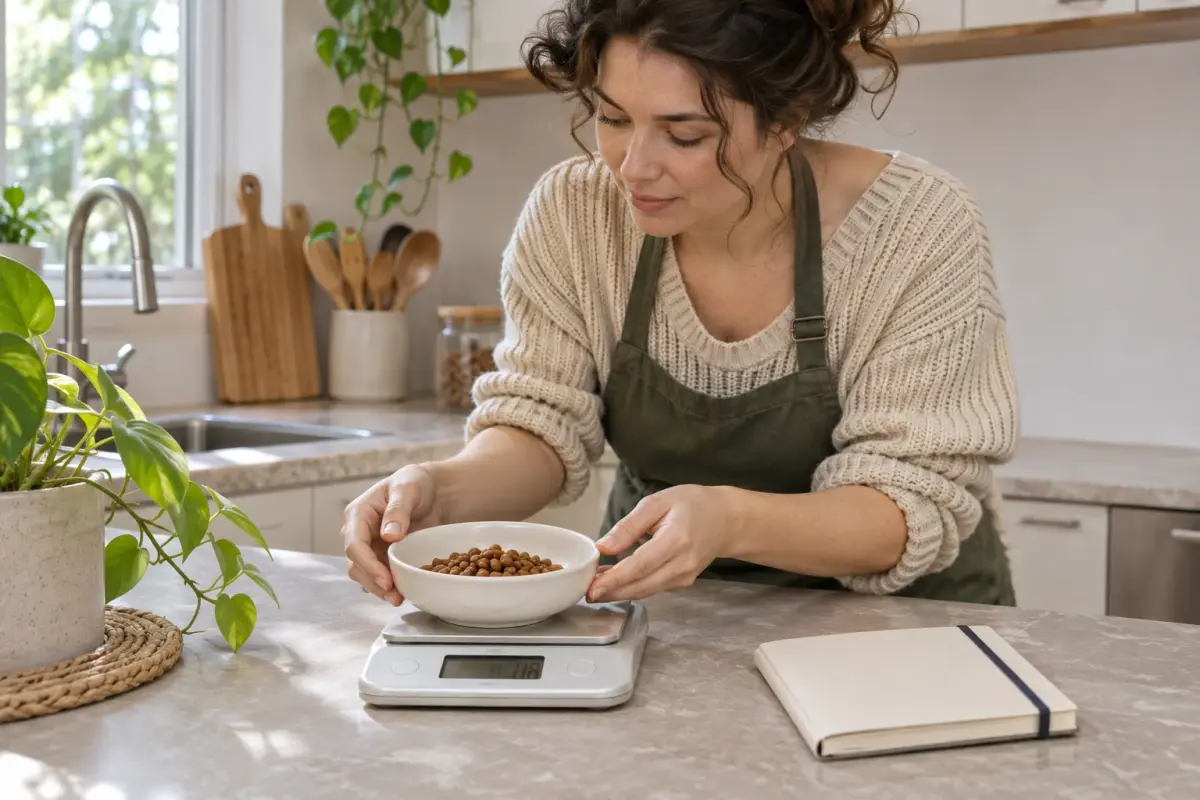
Weigh your cat monthly and check body shape: ribs easy to feel under a thin layer, a visible waist from above. If weight creeps up, reduce by about one-tenth of a can per day and recheck in a month. If your cat seems hungry all the time and is losing weight, call your vet rather than adding more food.
Also call your vet if your cat skips meals for more than a day, vomits regularly after eating or has diarrhea for more than a day or two. Cats that stop eating can become seriously ill quickly.
This page is general information, not veterinary advice, and it cannot replace an examination by the vet who knows your pet.
Common questions
Is one can of wet food a day enough for a cat?
One 3-ounce can is not enough on its own for most adult cats, since it often provides only 70 to 100 calories. One 5.5-ounce can may be close for a small, sedentary cat. Check the label calories.
How many ounces of wet food should a cat eat a day?
Many 10 lb cats on wet food alone eat roughly 6 to 9 ounces a day, depending on the calorie density of the food. Calories per can are a more reliable guide than ounces.
Can I leave wet cat food out all day?
No. Wet food spoils at room temperature, so pick up leftovers after about 30 minutes, or sooner in warm weather. Use a measured portion of dry food or a timed feeder for grazing.
Is wet food better than dry food for cats?
Both can be complete and balanced. Wet food adds water and is often easier for weight control, while dry is convenient and cheaper. Many cats do well on a mix; see our wet vs dry guide.
Sources we checked
This guide is general information, not veterinary advice. If your pet is unwell or injured, contact your veterinarian.


