






Care & how-to
How to Clean a Cat Water Fountain
Clean a cat water fountain every one to two weeks: unplug it, empty it, take it apart, scrub the basin and pump with warm water and unscented dish soap, flush the tubes, rinse well, fit a fresh filter if due and refill. Top up with fresh water daily. More cats or hard water mean more frequent cleaning, and slime or a pink film means it is overdue.
By Matt GarnettUpdated November 14, 20264 min read3 sources
Why fountains need regular cleaning
Moving water stays fresher than still water, but a cat water fountain is a warm, wet machine with a pump and tubing. Saliva, food crumbs, fur and dust collect in the basin and around the pump, and within days a slippery film called biofilm can form. In hard-water areas, white mineral scale builds up and slows the pump.
Cats are sensitive to stale or dirty water. VCA recommends washing ordinary water bowls daily and cleaning a fountain's filter weekly or as the maker directs. A dirty fountain can be less appealing than the bowl it was meant to replace.
What you need
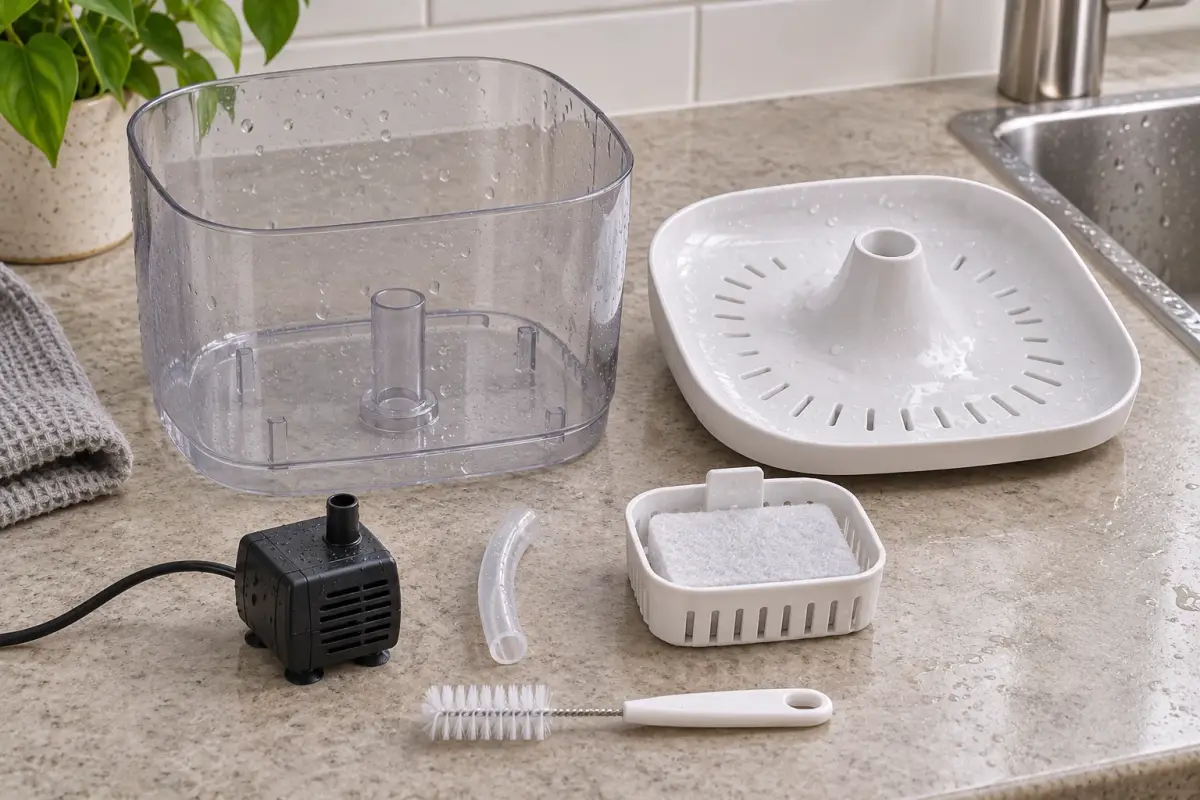
You will need unscented dish soap, a soft sponge or cloth, a small bottle brush or pipe cleaner for the pump and tubes, an old toothbrush for corners, and a replacement filter if one is due. White vinegar is useful for scale, as long as you rinse it away completely.
Avoid bleach, strong disinfectants and scented cleaners unless your fountain's instructions specifically allow them and you rinse until no smell remains. Cats have sensitive noses, and leftover chemical smells can put them off drinking.
Keep a spare replacement filter on hand so you can swap one in on cleaning day.
Step-by-step: cleaning the fountain
Step 1: Unplug the fountain before touching the water or pump. Step 2: Empty the water and remove the filter, lid and any spout pieces. Step 3: Take the pump out of its housing and open its cover; most pumps have a small impeller that pulls out. Rinse it under warm water and use a toothbrush or cotton swab to remove hair and slime.
Step 4: Push a pipe cleaner or small brush through any tubing and the pump intake. Step 5: Wash the basin and all parts with warm, soapy water, scrubbing seams and corners. Step 6: Rinse everything thoroughly in clean water. Step 7: Reassemble, fit the filter, fill with fresh water and plug back in, checking the pump is running smoothly before your cat drinks.
Removing scale and pink slime
For white mineral scale, soak the basin and pump parts in equal parts white vinegar and warm water for 15 to 30 minutes, then scrub and rinse very thoroughly until there is no vinegar smell. Repeat the rinse; it is the most important step.
A pink or orange slimy film is usually bacteria that thrive in damp places. It scrubs away with soap and a brush, and coming back quickly is a sign to clean more often. Ceramic and stainless steel fountains are easier to keep clear than scratched plastic, where film can hide.
How often to clean and change the filter
Top up or change the water every day so the level never drops near the pump. Do a full strip-down clean every one to two weeks for one cat, and weekly for two or more cats, hot weather or hard water. Many owners simply do it on the same day they change the litter.
Change the filter as the manufacturer directs, often every two to four weeks; VCA suggests weekly attention to the filter. Replace it sooner if it looks clogged or slimy, and replace the pump if it becomes noisy or weak after cleaning. A fountain with a detachable pump design for easy cleaning makes the strip-down quicker, and our cat water fountain buying guide lists what else to look for.
Safety checks and when to call your vet
Each time you clean, check the cord for chew marks and the pump for overheating. VCA warns that cats can bite through cord insulation, causing burns or electrical injury, so route the cord behind furniture or use a protector. Never let the pump run dry.
Call your vet if your cat stops drinking, seems lethargic, or suddenly drinks much more than usual; Cornell Feline Health Center lists dehydration and increased thirst as signs that need checking.
This page is general information, not veterinary advice, and it cannot replace an examination by the vet who knows your pet.
Common questions
How often should you clean a cat water fountain?
Top up with fresh water daily and give it a full clean every one to two weeks, or weekly with several cats or hard water. Change the filter on the schedule in the instructions.
Can I put a cat fountain in the dishwasher?
Many ceramic and stainless steel basins are dishwasher-safe, but pumps and filters almost never are. Check the instructions, wash the pump by hand, and run an extra rinse if you use detergent.
Is vinegar safe for cleaning a cat fountain?
Diluted white vinegar is useful for removing mineral scale, but it must be rinsed away completely. Cats dislike the smell, and any left behind may stop them drinking from the fountain.
Sources we checked
This guide is general information, not veterinary advice. If your pet is unwell or injured, contact your veterinarian.


