






Buying guides
Best Cat Water Fountains: How to Choose One Your Cat Will Use
The best cat water fountain is one made of stainless steel or glazed ceramic, with few parts you can take apart in a minute, a quiet pump and a wide, shallow drinking area that keeps whiskers off the sides. Material decides hygiene, the number of parts decides whether you will actually clean it, and flow style decides whether your cat drinks from it. Capacity and cordless batteries come after those.
By Matt GarnettUpdated November 14, 20265 min read2 sources
Why a fountain can help, and what matters most
Cats often drink less than they should. Cornell's Feline Health Center notes in its kidney disease guidance that many cats prefer drinking from fountains, and that clean bowls with fresh water in several places encourage cats to drink more. Moving water stays cooler, tastes fresher and catches a cat's attention, which is why a fountain is worth trying for a cat that barely touches its bowl. You can see the full range under cat water fountains.
The features that decide whether one works are simple. First, the material should be easy to keep clean. Second, the whole thing should come apart and go back together quickly, because a fountain that is a chore to clean will not be cleaned often enough. Third, the pump should be quiet. Fourth, the drinking surface should be wide enough that your cat can drink without its whiskers brushing the edges.
Stainless steel, ceramic or plastic
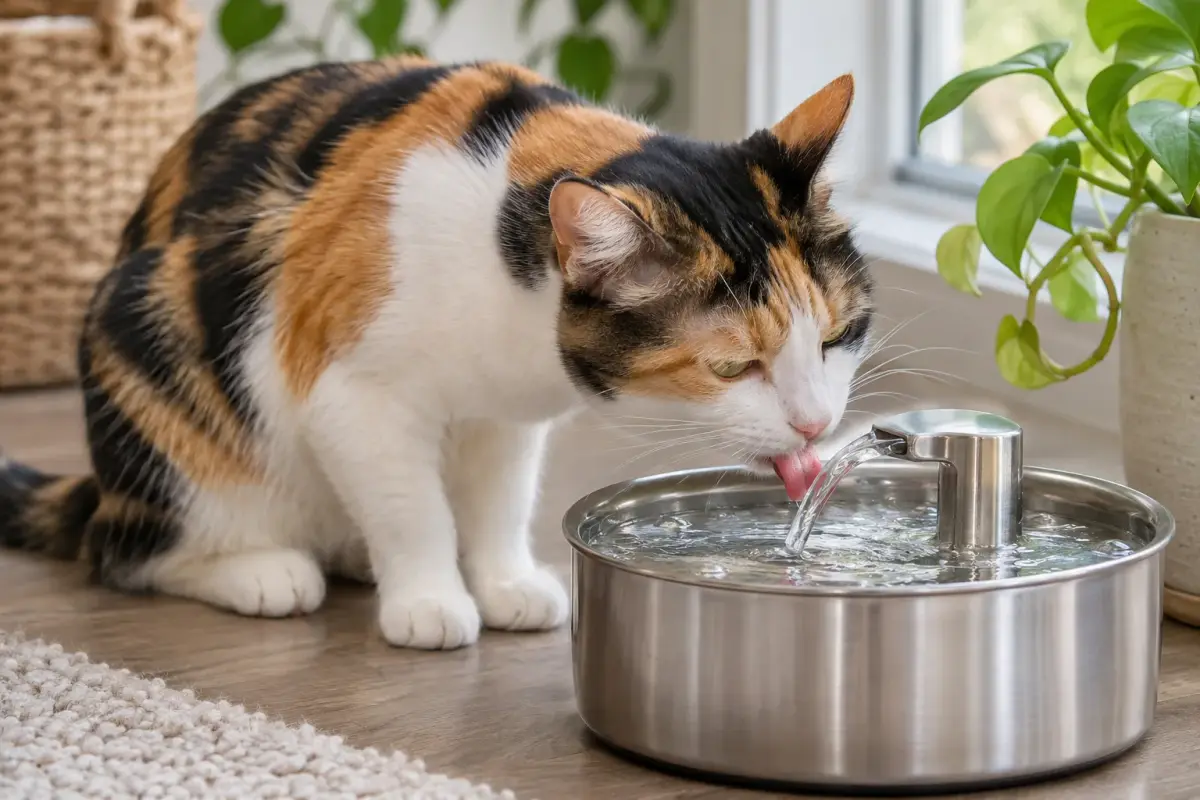
Stainless steel cat water fountains are the most hygienic and durable choice. A 304 stainless steel pet water fountain is one example of the type. It does not scratch easily, so there are fewer grooves for biofilm to hide in, and it survives drops and the dishwasher. Ceramic is also easy to clean and heavy enough that cats cannot push it around, but it can chip or crack, and a chipped glaze should be replaced. Both are good choices for a cat that has had chin acne.
Plastic fountains are light and inexpensive, but plastic scratches over time and those scratches hold slime and bacteria, the same point the AKC makes about plastic water fountains for dogs. If you choose plastic, look for BPA-free material, plan to replace it sooner and pay extra attention to cleaning. The pump housing is usually plastic in every fountain, so clean it whatever the bowl is made of.
Flow styles and which cats prefer which
There are three common designs. A flower or bubbler top, as on a stainless steel pet water fountain with a flower spout, sends a gentle stream up through the center and suits most cats. A free-falling stream, like a small tap, appeals to cats that like to drink from a faucet, though it splashes more. A flat sheet of flowing water over a wide lip is the gentlest and the best for whisker-sensitive cats.
If you are unsure, pick a fountain with an adjustable or interchangeable top so you can switch styles. Some cats are wary of any new object, so place the fountain beside the old water bowl for a week before removing the bowl. If your cat ignores it entirely, keep a still bowl available as well, because the goal is more water, not a particular device.
Best fountain for each home
For a single cat in an apartment, a compact stainless steel fountain with a capacity of around 50 to 70 ounces is plenty, as long as you refresh the water often. In a multi-cat home, choose a larger reservoir, or better, two fountains in different rooms so that one cat cannot guard the water. Senior cats and cats with arthritis do best with a low, wide drinking area.
For homes where outlets are hard to reach, cordless fountains with a rechargeable battery or a battery-pack pump help, but check how many days a charge lasts and whether the pump runs constantly or only when a sensor detects your cat. Motion-activated pumps save power and reduce noise, which suits a fountain placed near a bedroom.
What to avoid
Avoid fountains with many small parts, deep crevices or hard-to-reach tubing, because they will be cleaned less thoroughly. Avoid pumps that run dry noisily; a low-water shutoff or a clear window to see the level is useful. Avoid placing the fountain right beside the litter box or the food bowl, since many cats prefer water away from both.
Do not rely on the filter to keep water clean. Filters reduce hair and debris, but they do not replace emptying and washing the bowl. If your cat starts drinking much more than usual from any water source, that change is worth raising with your vet, because increased thirst can be an early sign of kidney disease, diabetes or thyroid problems.
Cleaning schedule and lifespan
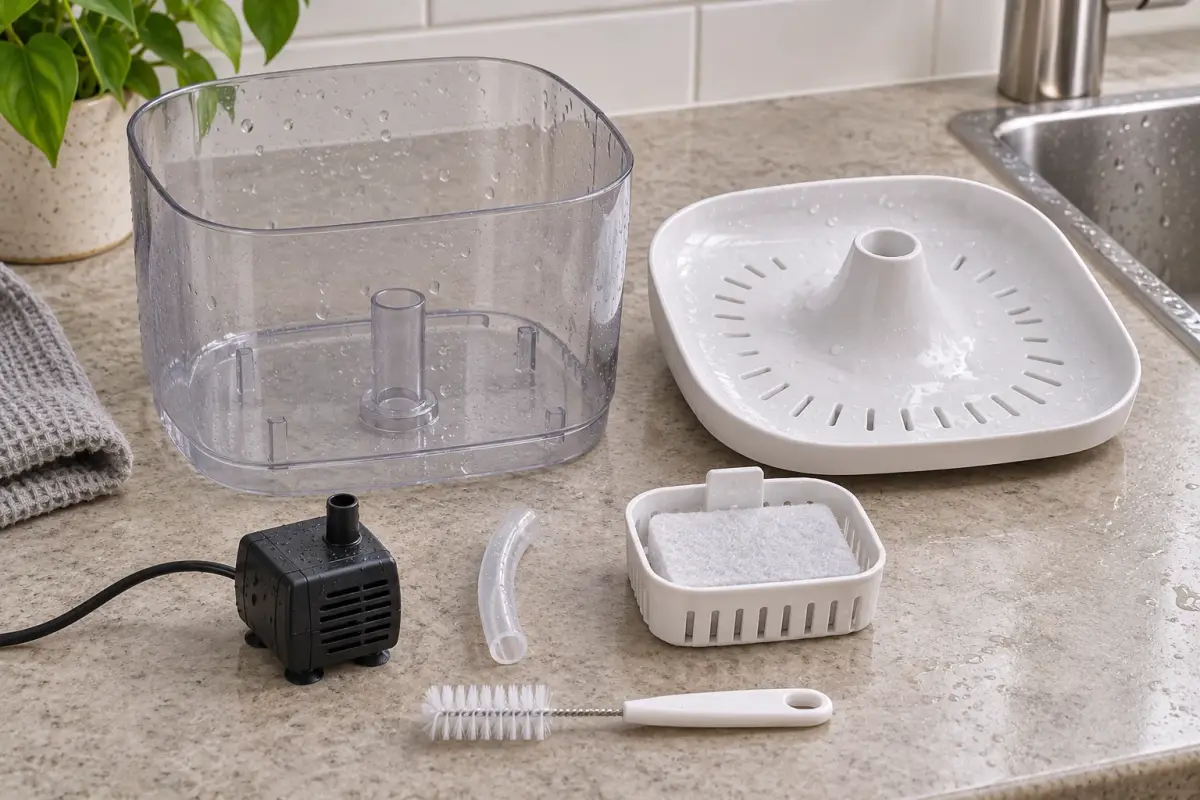
Top up or change the water daily. Every week, take the fountain apart, wash the bowl and pump housing in warm soapy water, use a small brush on the pump impeller and rinse well. Replace the filter on the maker's schedule, often every two to four weeks, and sooner in a home with several cats or a heavy shedder. Hard water leaves scale on the pump, which a soak in diluted white vinegar removes; rinse thoroughly afterwards.
A well-kept stainless steel or ceramic bowl lasts for years. The pump is the part that wears out, often within one to three years, so choose a fountain whose replacement pumps and filters are sold separately. Browse cat water fountains to check what each one offers, and keep a still bowl from cat bowls available as well. A pump that gets louder, slower or starts to rattle is usually telling you it is time to replace it.
This page is general information, not veterinary advice, and it cannot replace an examination by the vet who knows your pet.
Fountain outlet shapes
| Outlet | How water leaves the top | Check on the exact fountain |
|---|---|---|
| Flower or bubbler | Water emerges around a central top | Top removal and cleaning access |
| Free-falling spout | A stream falls into a basin | Spout height and splash area |
| Wide lip | Water travels over a broader edge | Lip access and basin shape |
| Interchangeable top | Outlet pieces change configuration | Included pieces and pump compatibility |
Common questions
Is a stainless steel cat water fountain better than plastic?
Usually, yes. Stainless steel resists scratches where bacteria can grow, survives the dishwasher and lasts longer. Plastic is lighter and cheaper but scratches over time, so it needs more careful cleaning and earlier replacement.
How often should I clean a cat water fountain?
Refresh the water daily, take the fountain apart and wash it weekly, and change the filter on the maker's schedule, often every two to four weeks. Multi-cat homes and heavy shedders need more frequent cleaning.
Are cordless cat water fountains any good?
They are useful where an outlet is hard to reach. Look for a battery that lasts at least several days per charge and a motion-activated pump, which saves power and runs more quietly.
What if my cat will not drink from the fountain?
Place it next to the old bowl for a week, try a different flow setting and keep it away from the litter box. Some cats never take to fountains, so keep a still bowl available too.
Sources we checked
This guide is general information, not veterinary advice. If your pet is unwell or injured, contact your veterinarian.


