






Buying guides
Best Ceramic Cat Water Fountains: What Actually Matters
The best ceramic cat water fountain for your home has a smooth, fully glazed bowl, a reservoir that suits your cat and household, a pump that runs quietly, and parts that come apart for washing. Ceramic is a good material because an intact glaze is smooth and the bowl is heavy enough to stay put, but only if you can clean it easily. Here is how to judge each feature.
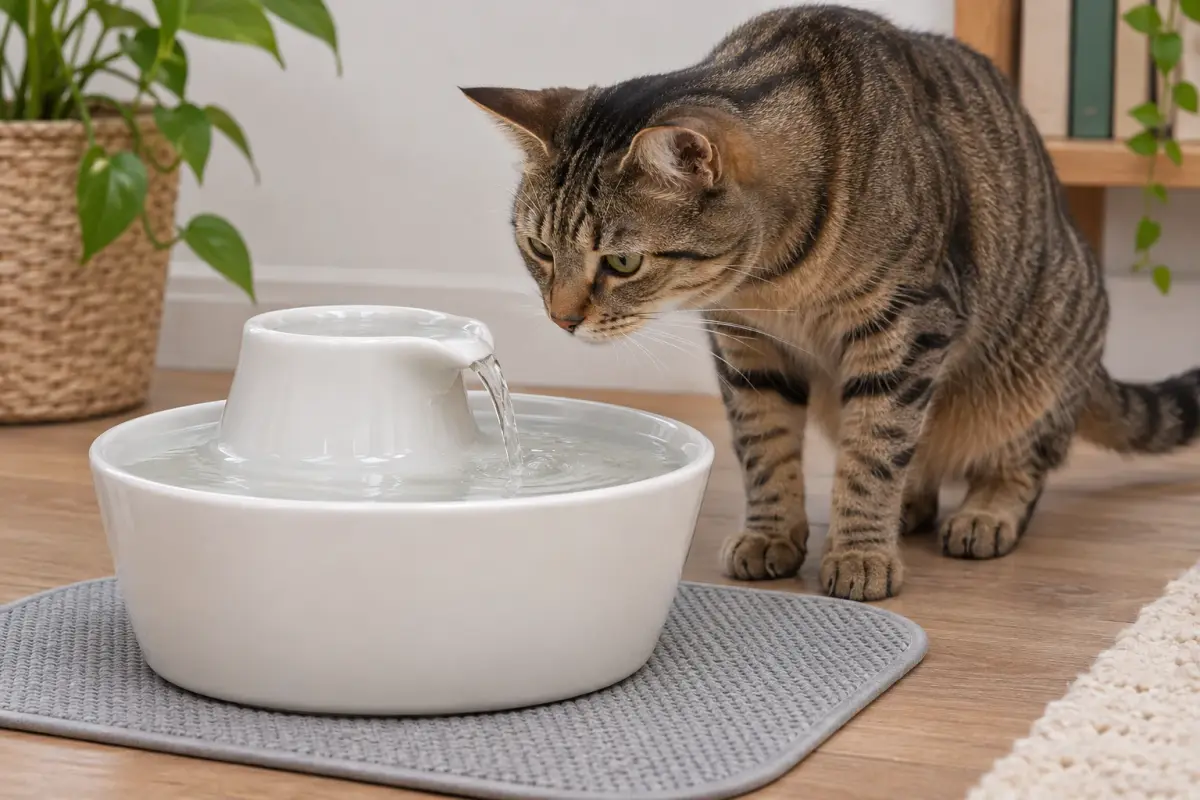
By Matt GarnettUpdated November 14, 20265 min read2 sources
What matters most in a ceramic fountain
Four things decide how well any ceramic fountain, including those in our ceramic cat water fountains range, works day to day: the glaze, the reservoir, the pump and how easily the whole thing comes apart for cleaning. Style and color come a distant fifth. VCA Hospitals advises washing and rinsing water bowls daily to limit bacteria buildup, and cleaning a fountain's filter weekly or as directed, so a design is only as good as your willingness to maintain it.
Ask whether every part that touches water can be lifted out and washed by hand: the bowl, the cover, the pump housing and the tubing. Fewer crevices mean fewer places for film to settle. A plain bowl with a short spout is simpler to keep clean than a design with several tiers, narrow channels or tight corners, and the simple one is the one that will actually get cleaned.
Why ceramic, and what to check on the glaze
VCA notes that cats generally prefer glass, metal or ceramic water bowls over plastic ones. Its page on feline chin acne adds that there may be an association between plastic food and water dishes and chin acne, because scratches and irregular surfaces can harbor bacteria. That page recommends smooth, non-porous dishes such as glass or stainless steel and does not name ceramic, but a fully glazed ceramic surface is smooth in the same way for as long as it stays intact.
The glaze is the part that does the work, so inspect it. Look for a fully glazed interior with no bare or rough patches, and check for chips and hairline cracks when the fountain arrives and again every few months. A chip is a rough spot where residue collects, so a damaged bowl should be replaced rather than kept in use. Ceramic is also heavy, which keeps it steady when a cat leans on the rim, but it needs two hands when you empty it and will break if dropped on a hard floor.
Reservoir size and where the fountain goes
Reservoir size mostly decides how often you refill. A 3 liter reservoir, roughly 100 fluid ounces, such as a 3 liter ceramic cat water fountain, suits a household with one or two cats and a working week, while a small tabletop unit needs topping up more often. Whatever the size, do not let the water drop below the pump. VCA also suggests keeping a water bowl filled to the top, since some cats dislike their whiskers touching the edge.
Placement matters as much as the model. VCA suggests putting the water near your cat's bed or in a quiet part of the house, and always away from the litter box. A fountain in a busy hallway or beside the food bowl may be ignored. Keep the power cord out of reach of chewing, run it along a wall, and pick a spot where a spill on a hard floor is easy to wipe up.
Pump, noise and filters
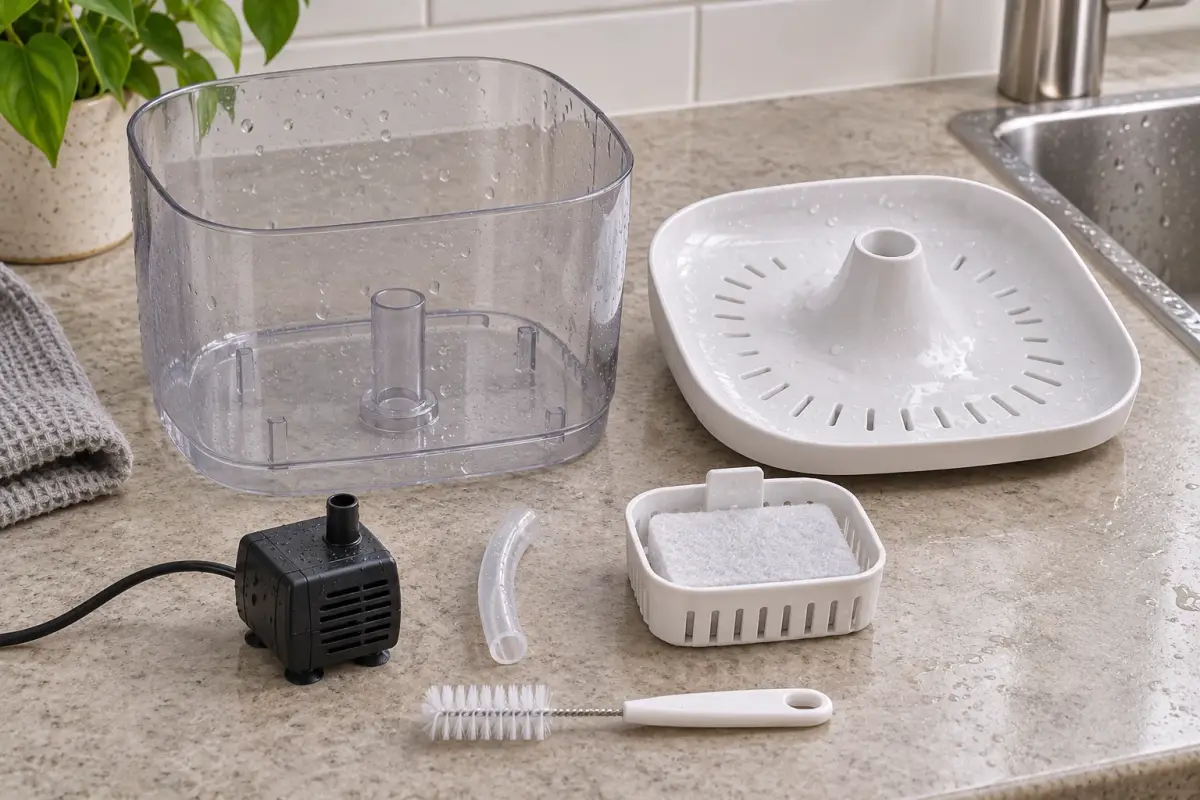
VCA says some cats like running water, and that a filtered fountain keeps the water flowing while the filter helps keep it fresh. That is the real argument for a pump. It is not a guarantee: fountains are one tip on VCA's list, alongside fresh water, a full bowl and trying different bowl materials, so treat a fountain as something to try rather than a cure for a cat that drinks little.
Choose a pump that runs quietly and has a filter you can replace, such as the ceramic filtered pet water fountain, and plan the filter schedule before you buy. If your cat is wary of the sound or the moving stream, set the fountain in the cat's usual spot with the pump off for a day so it becomes a familiar object, then switch it on. A pump that hums, rattles or runs dry is worth fixing or replacing, because a noisy machine is one cats avoid.
Which design suits which cat
For a single adult cat in an apartment, a compact pump fountain with a replaceable filter is usually enough. For a multi-cat home, favor a larger reservoir and a wide, stable bowl that two cats can reach, and put a second water station in another room. A leaf-style ceramic dispenser, like this automatic ceramic leaf water dispenser, offers a gentle trickle for cats that prefer a slower stream.
Senior cats and cats with sore joints do better with a low, wide bowl that does not require stretching or jumping. A whisker-sensitive cat may prefer a wide, shallow basin kept full. If your cat ignores running water entirely, a plain bowl is a perfectly good choice: see our ceramic cat bowls, and for the wider field of designs read our guide to the best cat water fountains.
What to avoid, and when to call the vet
Avoid a fountain with a chipped or crazed glaze, one with parts you cannot take apart, one placed next to the litter box, and one whose filter you will not replace. Also skip any unit with an unprotected cord within a cat's reach. Where a fountain advertises a glaze or finish, check the product details for what it is made from before you buy.
A fountain does not replace watching your cat. VCA says poor water intake can contribute to bladder crystals or stones, kidney disease and urinary tract infections, and that your veterinarian is the best source for deciding your cat's hydration needs. If your cat suddenly drinks much more or much less than usual, strains in the litter box, or seems lethargic, see your vet promptly. When you are ready to choose, browse our ceramic cat water fountains.
This page is general information, not veterinary advice, and it cannot replace an examination by the vet who knows your pet.
Common questions
Are ceramic cat fountains better than plastic ones?
VCA says cats generally prefer glass, metal or ceramic bowls to plastic, and notes a possible link between plastic dishes and chin acne because scratches harbor bacteria. An intact glazed ceramic surface is smooth, so it is a sound choice.
How often should I clean a ceramic cat water fountain?
VCA advises washing and rinsing water bowls daily and cleaning a fountain's filter weekly or as directed. In practice that means a quick rinse every day and a full teardown with the pump cleaned on a regular schedule.
Do cats prefer running water?
Some do. VCA says some cats like running water and that a filtered fountain keeps it moving and fresh, but not every cat cares. If yours ignores the fountain, try a different bowl material or placement before giving up.
Where should I put a cat water fountain?
VCA suggests a quiet spot near your cat's bed and always away from the litter box. Avoid busy hallways and the spot right beside the food bowl, and keep the cord out of reach.
Sources we checked
This guide is general information, not veterinary advice. If your pet is unwell or injured, contact your veterinarian.


