






Buying guides
Best Cordless Cat Water Fountain: What Actually Matters
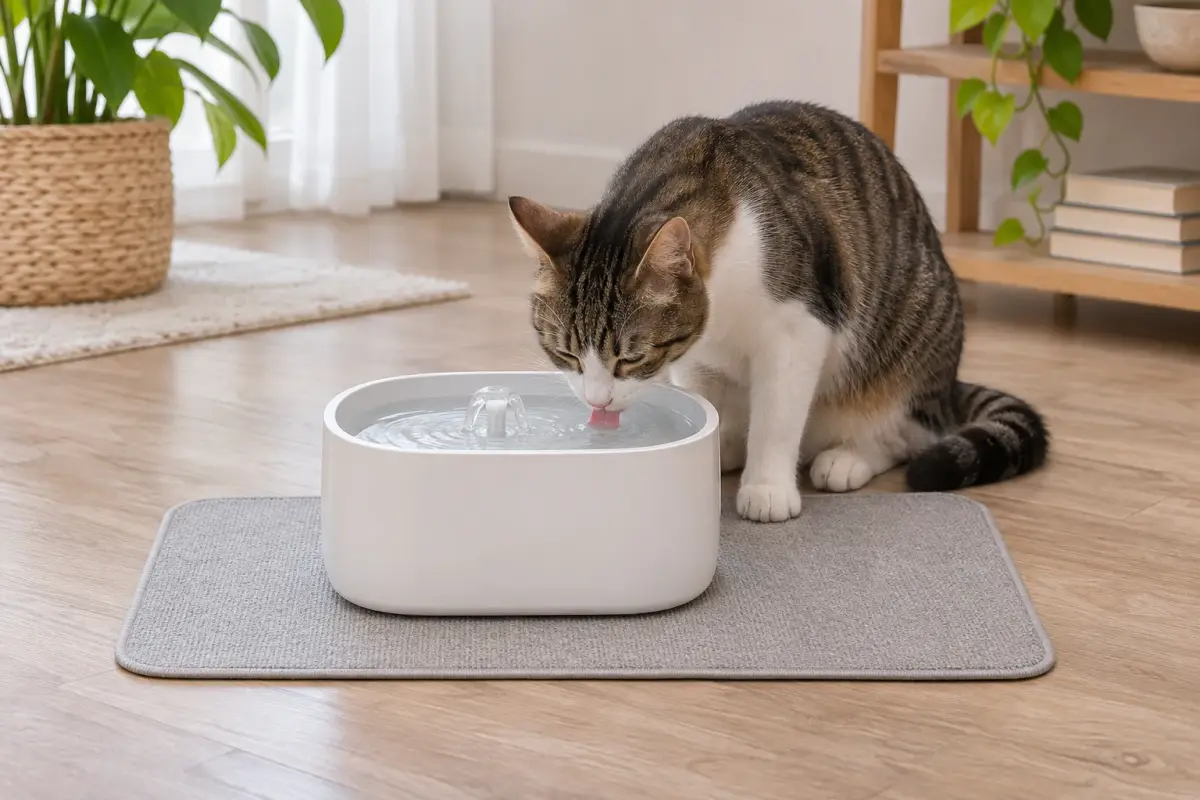
The best cordless cat water fountain has a rechargeable or battery power source you will actually keep charged, a stainless steel or ceramic water surface, and parts that come apart for daily cleaning. Cordless suits spots without an outlet and removes a cord a cat can chew. Fountains help some cats drink more, but not all, so keep a bowl as a backup.
By Matt GarnettUpdated November 14, 20264 min read3 sources
What cordless really means
A cordless fountain runs its pump from a rechargeable battery or batteries instead of a plug in the wall. The AKC notes that wireless pumps reduce safety risks and give you more flexibility in where you place the fountain. That helps in a flat with no outlet near the cat's quiet corner, and it removes a cord that a curious cat could chew or pull.
The trade-off is that you must keep the power source charged. A fountain that stops mid-week leaves the cat with a dry dish, so decide whether you will remember to recharge it. Check how the fountain signals a low battery, and always keep a clean, filled bowl nearby as a backup, which the AKC recommends for any pump-driven fountain.
Do cats actually drink more from fountains?
Cornell's Feline Health Center says some cats drink more from fountains, but preferences vary. VCA likewise notes that some cats like running water, and suggests a filtered fountain as an alternative to leaving a tap running. Neither promises that your cat will switch, so treat a fountain as an experiment rather than a fix.
Cornell puts a cat's daily need at about 4 ounces of water per 5 pounds of lean body weight, so a 10 pound cat needs roughly a cup. Wet food contains much of this water, so cats eating it may drink less. If your cat suddenly drinks much more or much less than usual, call your vet rather than relying on a gadget.
Material, capacity and noise
VCA says cats generally prefer glass, metal or ceramic bowls over plastic, and the AKC calls stainless steel the most hygienic and durable fountain material. A cordless stainless steel cat water fountain or a wireless charging stainless steel fountain fits that advice better than a plastic bowl, though it is the water surface and the cleaning that matter most.
Capacity decides how often you refill. A larger tank, such as a 3 liter cordless rechargeable fountain, suits a multi-cat home, while a smaller one is fine for one cat. Most pumps hum slightly, and a noise-sensitive cat may avoid a loud one, so introduce the fountain gradually and put it somewhere calm.
Cleaning matters more than features
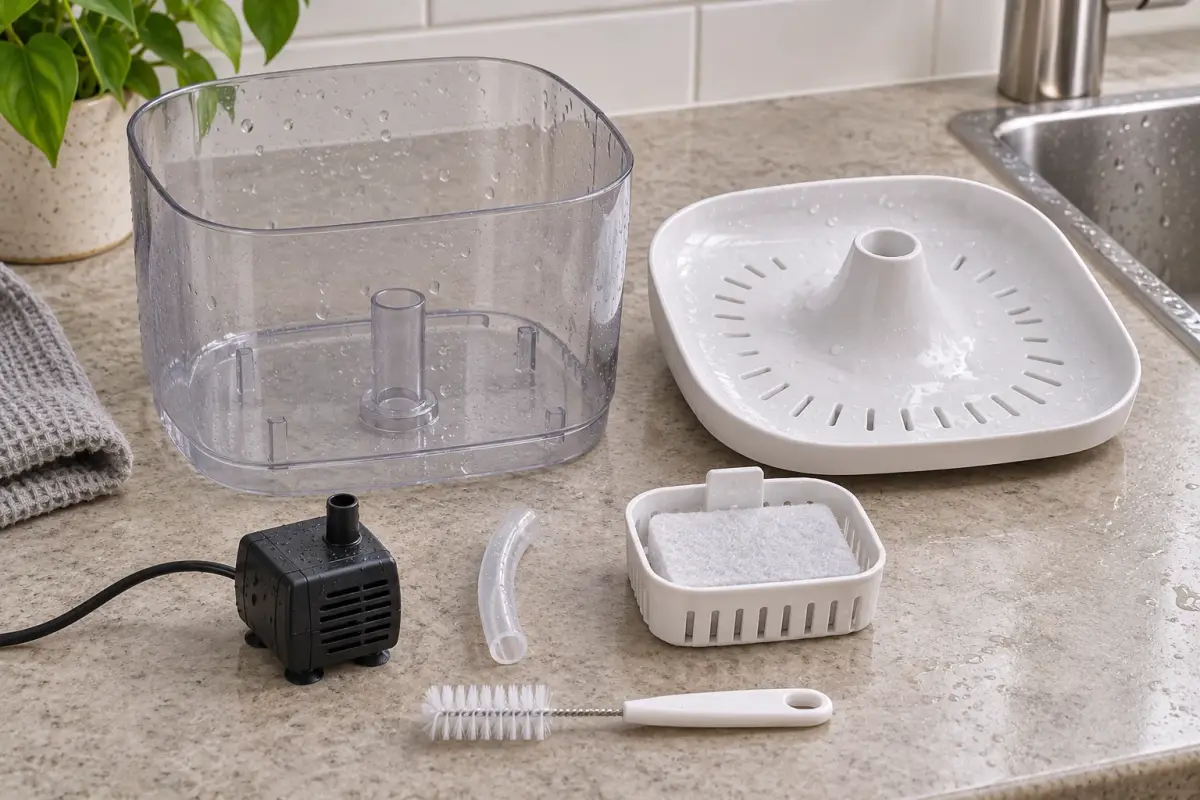
VCA says to wash and rinse bowls daily to prevent bacteria buildup and to clean a fountain's filter weekly or as directed. The AKC advises choosing a model with few parts that is easy to assemble, ideally with dishwasher-safe pieces, and changing the filter regularly. A battery compartment should be sealed from the water but a cordless unit still needs to come apart fully.
Before buying, check that you can reach every surface the water touches, including the pump housing and the spout. Our guide to cleaning a cat water fountain walks through a routine, and a cat water fountain that is hard to scrub will quickly become the one the cat avoids.
Keep spare replacement filters on hand so a dirty filter never stays in longer than it should.
Placement and getting your cat to use it
VCA suggests putting water near the cat's bed or in a quiet area and keeping it away from the litter box, with several bowls around the home if you can. It also advises filling a bowl to the top, since some cats dislike their whiskers touching the rim. Cornell adds that other pets can block access, so place the fountain where a bullying housemate cannot guard it.
Introduce it beside the old bowl, and leave the old bowl in place for a few days. Cats vary in whether they like cold or room temperature water, so watch your cat. If it refuses the fountain entirely, go back to bowls and talk to your vet if drinking looks low. For a wider comparison, see our best cat water fountain guide.
Browse the full cordless cat water fountains range, or compare stainless steel cat water fountains.
This page is general information, not veterinary advice, and it cannot replace an examination by the vet who knows your pet.
Common questions
Are cordless cat water fountains any good?
They can be, especially where there is no outlet or you want to avoid a cord. The AKC notes wireless pumps reduce safety risks and add placement flexibility, but you must keep them charged and clean them daily, and a bowl should stay available as a backup.
How often should I clean a cordless cat water fountain?
VCA says to wash and rinse bowls daily and to clean the filter weekly or as directed. Take the fountain fully apart, including the pump housing, and let it dry so bacteria do not build up in the water.
Do cats drink more from a water fountain?
Some do. Cornell's Feline Health Center says some cats drink more from fountains, but preferences vary. If your cat ignores the fountain, keep offering fresh water in bowls and ask your vet if you are worried about hydration.
How much water should my cat drink each day?
Cornell says about 4 ounces per 5 pounds of lean body weight, so roughly a cup for a 10 pound cat. Wet food provides much of that. A sudden change in drinking is a reason to call your vet.
Sources we checked
This guide is general information, not veterinary advice. If your pet is unwell or injured, contact your veterinarian.


