






Care & how-to
How to Get Your Cat to Drink More Water
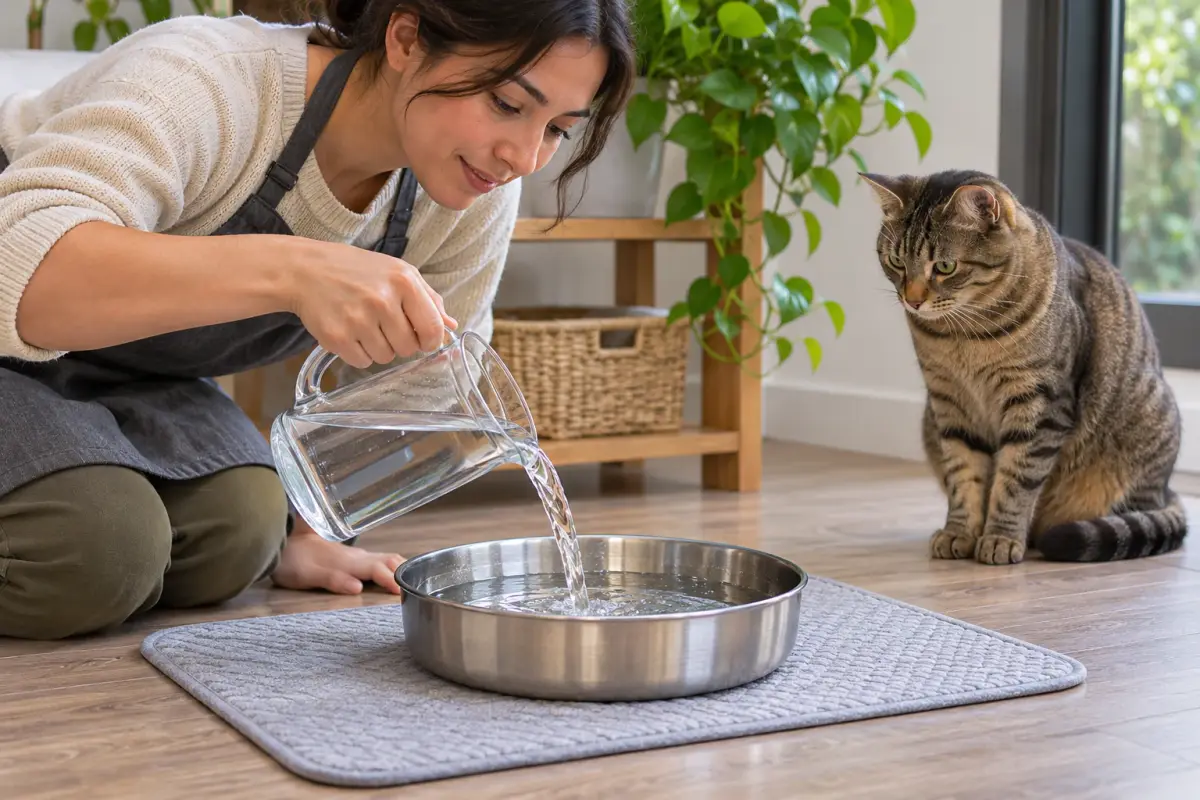
To get a cat to drink more, add water to the diet first: feed some wet food or stir water into meals. Then make drinking easier and more appealing, with several wide, full bowls of fresh water away from the food and litter box, a fountain if your cat likes moving water, and bowls washed daily. If your cat has stopped drinking, call your vet.
By Matt GarnettUpdated November 13, 20264 min read3 sources
Why many cats drink so little
Cats descend from desert-dwelling ancestors that got most of their water from prey, and many still have a weak urge to drink. The Merck Veterinary Manual notes that cats often do not drink much, which is why it recommends offering several water sources, and a few extra cat bowls around the house is the easy way to do that. A cat on dry food has to make up the difference from the bowl, and many do not quite manage it.
Low water intake matters most for cats with, or prone to, urinary or kidney problems, and VCA notes these cats may need more water. For a healthy cat, the goal is simply steady hydration. Our guide to how much water a cat should drink gives the daily target.
Step 1: Add water through food
This is the most reliable lever. Canned food is at least 75% water, according to Cornell Feline Health Center, compared with 6 to 10% for dry. Switching some or all meals to wet food can supply most of a cat's daily water without any extra drinking.
If your cat prefers kibble, VCA suggests adding a small amount of water to dry food and increasing it gradually, or stirring extra water into wet food. Offer moistened food as a meal and pick it up after about 30 minutes. If your cat refuses it, go back to the usual food; never let a cat go without eating to make a point.
Step 2: More bowls, in better places
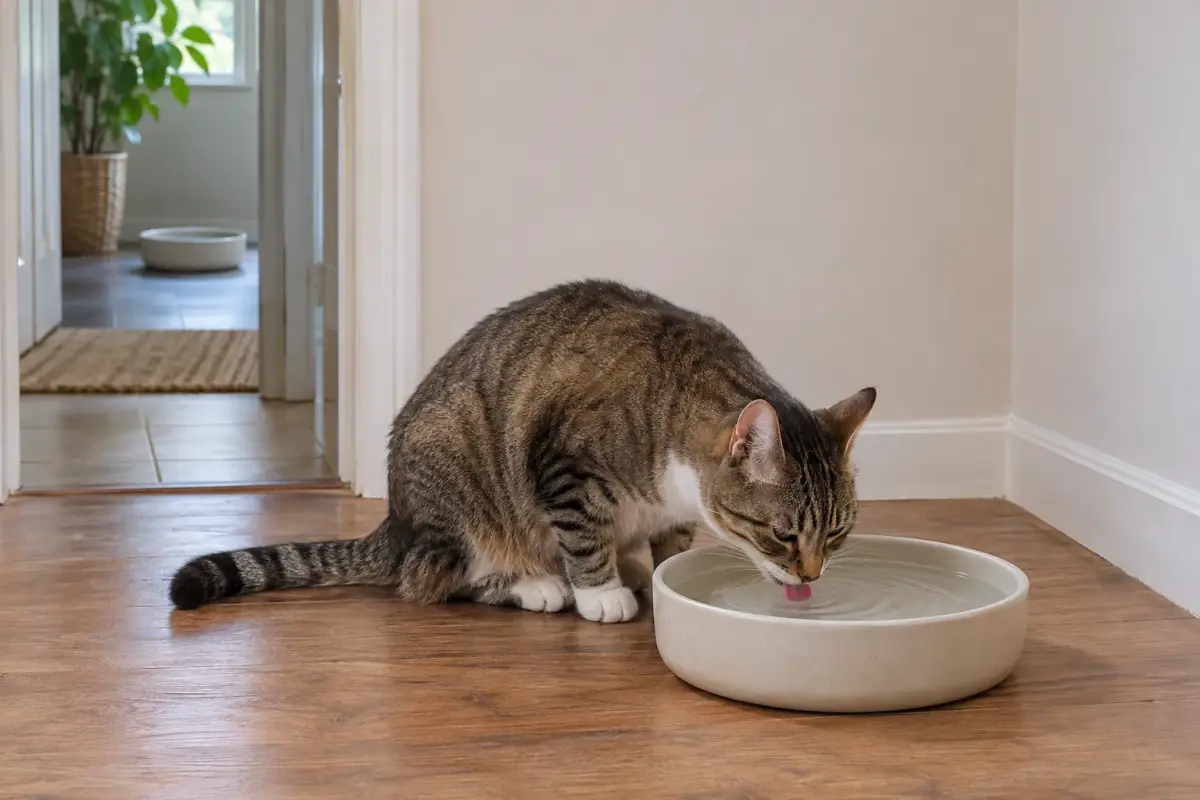
Put water in several places, not just next to the food. VCA recommends bowls near your cat's bed or in quiet areas and well away from the litter box, and in multi-cat homes Cornell warns that another pet can block access to a single bowl.
Try a bowl on each floor and one near a favorite window or resting spot. Some cats like water placed up high, away from dogs. Keep one bowl where you can easily see it, so you notice how fast the level drops.
Step 3: Choose bowls cats like
Use wide, shallow cat water bowls made of glass, ceramic or stainless steel; VCA reports these are generally preferred to plastic. Fill the bowl right to the top, because VCA notes some cats dislike their whiskers touching the sides, and a full bowl lets them drink without pushing their face in.
Experiment, because preferences are individual. Some cats like a glass of water on a nightstand, some like a wide pasta dish, some prefer cold tap water and others room temperature. VCA suggests offering a few options to see which your cat uses most.
Step 4: Keep it fresh, or keep it moving
Wash and rinse bowls daily and change the water at least once a day, as VCA recommends. Water that has been sitting, collecting dust and hair, is less appealing to a cat than it looks to us.
Many cats are drawn to moving water, which a circulating water fountain provides. Cornell and VCA both say a fountain helps some cats drink more, though not every cat likes one. A filtered cat water fountain keeps water circulating; clean it and change the filter as the maker directs, at least every week or two. Some owners also add a teaspoon of low-sodium chicken broth with no onion, garlic or seasoning to one bowl, changing it daily.
When to call your vet
Call your vet promptly if your cat has stopped drinking, is lethargic, has dry or tacky gums, or has been vomiting or has diarrhea. Cornell lists these as signs of dehydration, which needs veterinary treatment and a search for the cause. Dental pain, nausea and many illnesses can make cats drink less.
A cat that suddenly drinks much more than normal also needs a check, since kidney disease, diabetes and an overactive thyroid all increase thirst.
This page is general information, not veterinary advice, and it cannot replace an examination by the vet who knows your pet.
Common questions
Why is my cat not drinking water?
Cats on wet food often drink very little, which is normal. Others avoid dirty, badly placed or narrow bowls. If your cat is on dry food and rarely drinks, or seems unwell, call your vet.
Do water fountains make cats drink more?
Some cats clearly drink more from a fountain, but Cornell notes preferences vary. Try a cat drinking fountain alongside an ordinary bowl, keep it clean, and see which your cat chooses before replacing all the bowls.
Can I give my cat flavored water?
A teaspoon of plain, low-sodium chicken broth with no onion, garlic or seasoning in a separate bowl can tempt some cats. Change it daily and always keep plain water available too.
How can I tell if my cat is dehydrated?
Look for lethargy, poor appetite and dry, tacky gums. Gently lifted skin over the shoulders that falls back slowly is another sign. Call your vet promptly if you see these.
Sources we checked
This guide is general information, not veterinary advice. If your pet is unwell or injured, contact your veterinarian.


