






Buying guides
Best Microchip Cat Feeder: How to Choose One for a Multi-Cat Home
A microchip cat feeder opens only for the cat it recognizes, so the best one for you reliably reads your cat's chip, keeps other cats out, and is easy to clean. It suits homes where one cat needs a different diet or portion. Ask your vet before changing what any cat eats, and expect to train your cat to use it.
By Matt GarnettUpdated November 14, 20264 min read2 sources
What a microchip feeder does
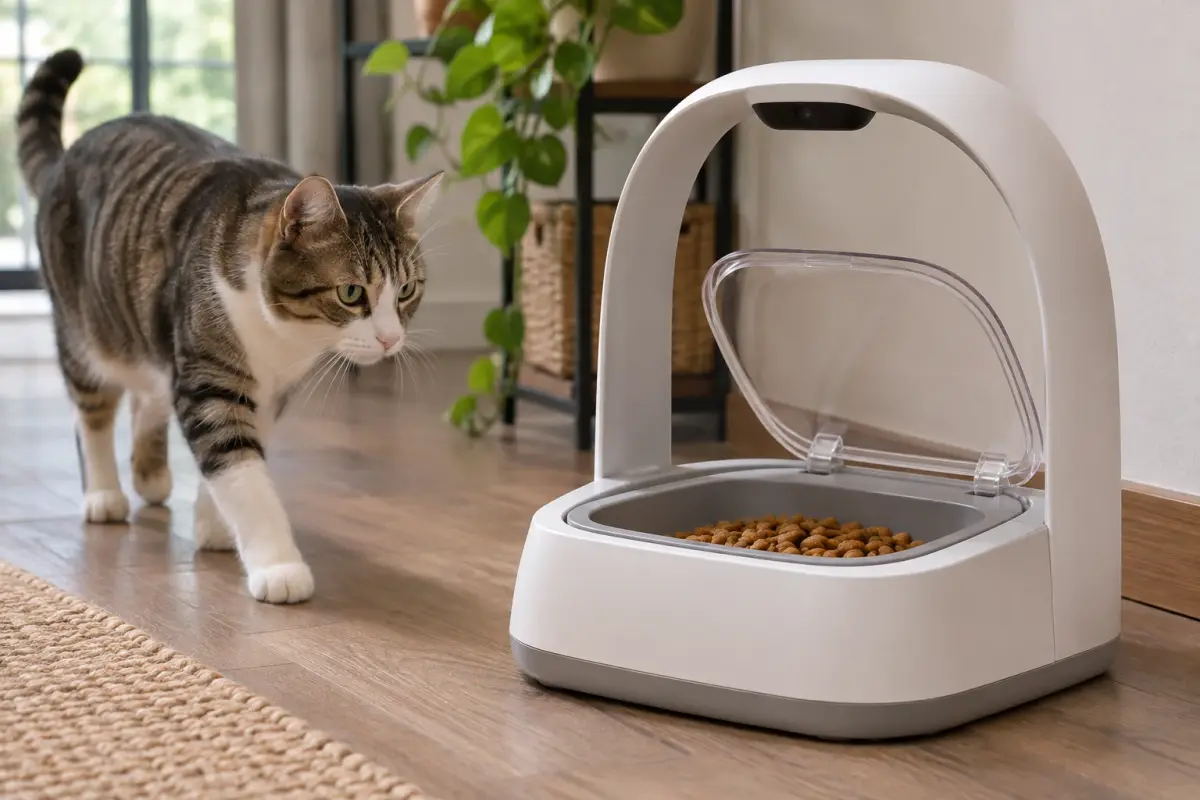
A microchip feeder is a feeding station with a lid or door that opens only when it recognizes a registered cat's microchip. VCA Animal Hospitals describes it as a commercial feeding station that opens only when it recognizes your cat's microchip, and lists it among the ways to keep one cat out of another's food. Browse our microchip cat feeders when you are ready to compare.
This is a different tool from a timed dispenser. A timer-based feeder releases food at set times to whichever cat arrives first. A microchip feeder controls who can eat, which is the whole point in a multi-cat home. If you only need scheduled meals, our guide to the best automatic cat feeders is the better place to start.
Who actually needs one
The classic case is a multi-cat home where one cat is on a special or weight-loss diet. VCA's guidance for feeding a household with one overweight cat stresses that cats should not share a dish or steal from each other, because that adds calories. Its low-tech answers are feeding in separate rooms, feeding the other cat up high, and a door that opens just enough for a thinner cat.
A microchip feeder automates those answers. It also suits a household with a cat that gobbles a housemate's food, or a young cat that should stay out of an older cat's diet; VCA's multiple-pets page names automatic feeders that read microchips as one option. If your cats eat the same food and get along, a simpler feeder will do.
What to check before you buy
Start with how the feeder recognizes the cat. Some read the chip your vet implanted, and others use a collar tag. A chip-reading feeder needs your cat's chip to be readable at the right distance, so ask your vet to scan it and confirm the number. A collar tag is easier to program, but a cat can lose it.
Then check the practical details: how many cats it can register, how wide the opening is for a large cat, how quickly it closes after the cat steps away, and whether the lid is strong enough to resist a determined cat. A lid that closes too fast frightens some cats, and a lid that stays open too long lets a housemate steal a bite.
Capacity, cleaning and wet food
Think about what you feed. Dry food stays fresh in a closed hopper, but wet food spoils and attracts pests if left in a bowl, so a feeder that holds a single meal in a removable, dishwasher-safe bowl is easier to keep clean. Check that the bowl is shallow and wide enough for your cat's whiskers.
Wash the bowl and any parts the cat touches on a regular schedule, because stale food leaves a smell that cats notice. Set meals at designated times and remove leftovers afterward, as VCA recommends, rather than leaving food out for hours. Do not leave food out while you are away, since you cannot control which cat eats it unless the feeder is working.
Training your cat to use it
Introduce the feeder with the lid held open so your cat learns that food lives there, then let it close slowly. Practice with a treat or a small portion, praise your cat, and be patient. Some cats take days to trust a moving lid.
If your cat will not use it after a fair try, step back rather than force it. Forcing a fearful cat risks it skipping meals, which is a problem for any cat on a special diet. Call your vet if your cat goes more than a day without eating.
Alternatives and what we list
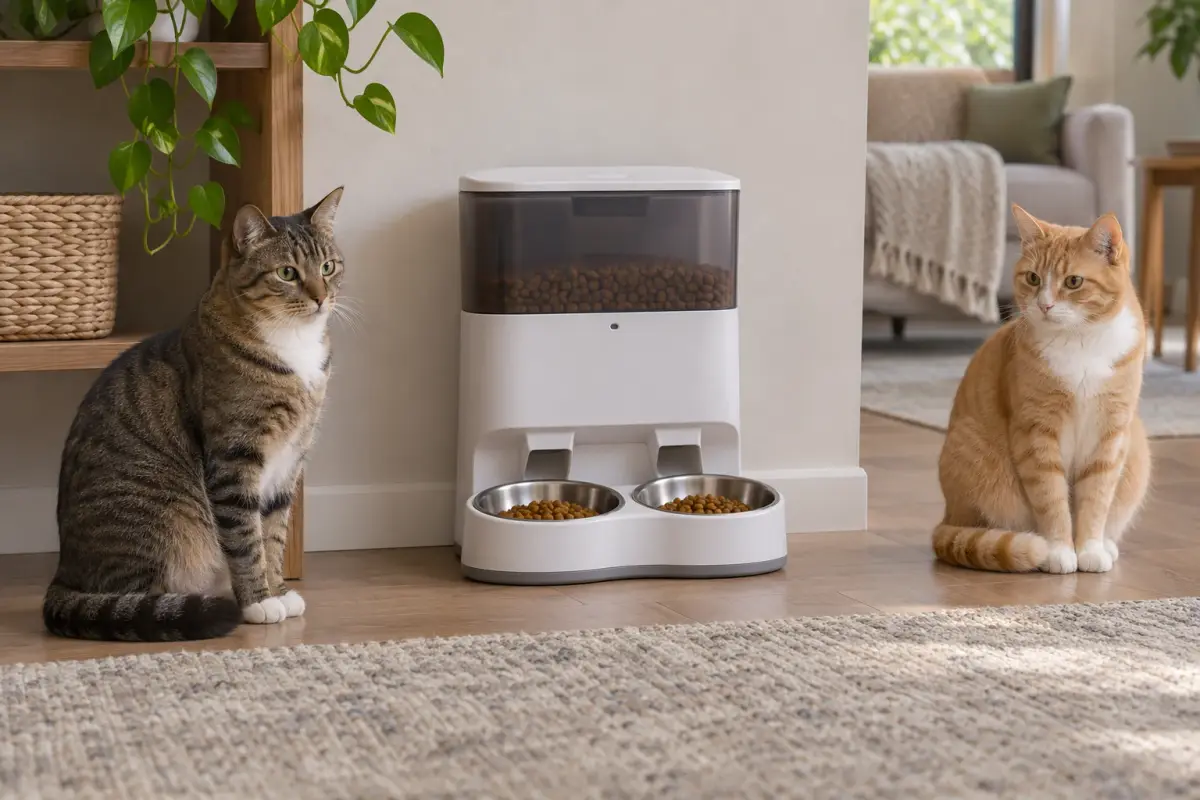
None of the feeders we list at the moment is microchip-activated, so be wary of any product that implies otherwise. If you only need two cats fed on a schedule, a timed twin-bowl feeder such as this automatic feeder for two cats or a smart feeder with twin bowls feeds both on schedule, but it will not stop one cat eating the other's portion. See our multi-cat automatic feeders for the full range.
If your cats are on different diets, talk to your vet before choosing any feeder. VCA suggests separate bowls in separate areas as the simplest approach, and a vet can tell you the right portion for each cat.
This page is general information, not veterinary advice, and it cannot replace an examination by the vet who knows your pet.
Common questions
How does a microchip cat feeder work?
It has a lid or door that stays shut until it recognizes a registered cat's microchip, then opens for that cat only. VCA describes it as a feeding station that opens only for your cat.
Do I need a microchip feeder for two cats?
Only if the cats need different food or portions. If they eat the same diet and get along, a timed twin-bowl feeder or simply separate bowls usually works, and VCA suggests separate bowls in separate areas as the low-tech option.
Can a microchip feeder read my cat's existing chip?
Some models read the chip your vet implanted, while others use a collar tag. Ask your vet to scan the chip and confirm the number, and check the product's instructions before buying.
How do I stop one cat eating another cat's special diet food?
VCA recommends separate rooms or locations, feeding the other cat up high, set mealtimes with leftovers removed, or a feeder that opens only for one cat. Talk to your vet about the diet itself.
How long does it take a cat to learn to use a microchip feeder?
It varies. Some cats take a few days to trust a moving lid. Start with the lid held open, reward with treats, and close it slowly. Call your vet if your cat skips meals for a full day.
Sources we checked
This guide is general information, not veterinary advice. If your pet is unwell or injured, contact your veterinarian.


