






Buying guides
Best Automatic Cat Feeder With a Camera: What Actually Matters
The best automatic cat feeder with a camera dispenses accurate, scheduled portions first and lets you check on your cat second. Look for reliable timed meals, a clear wide-angle view, an app that works when wifi drops, and battery backup. A camera helps you see that meals happen, but it cannot replace a daily in-person look at your cat. Browse automatic cat feeders with cameras once you know what you need.
By Matt GarnettUpdated November 13, 20264 min read2 sources
Start with the feeder, not the camera
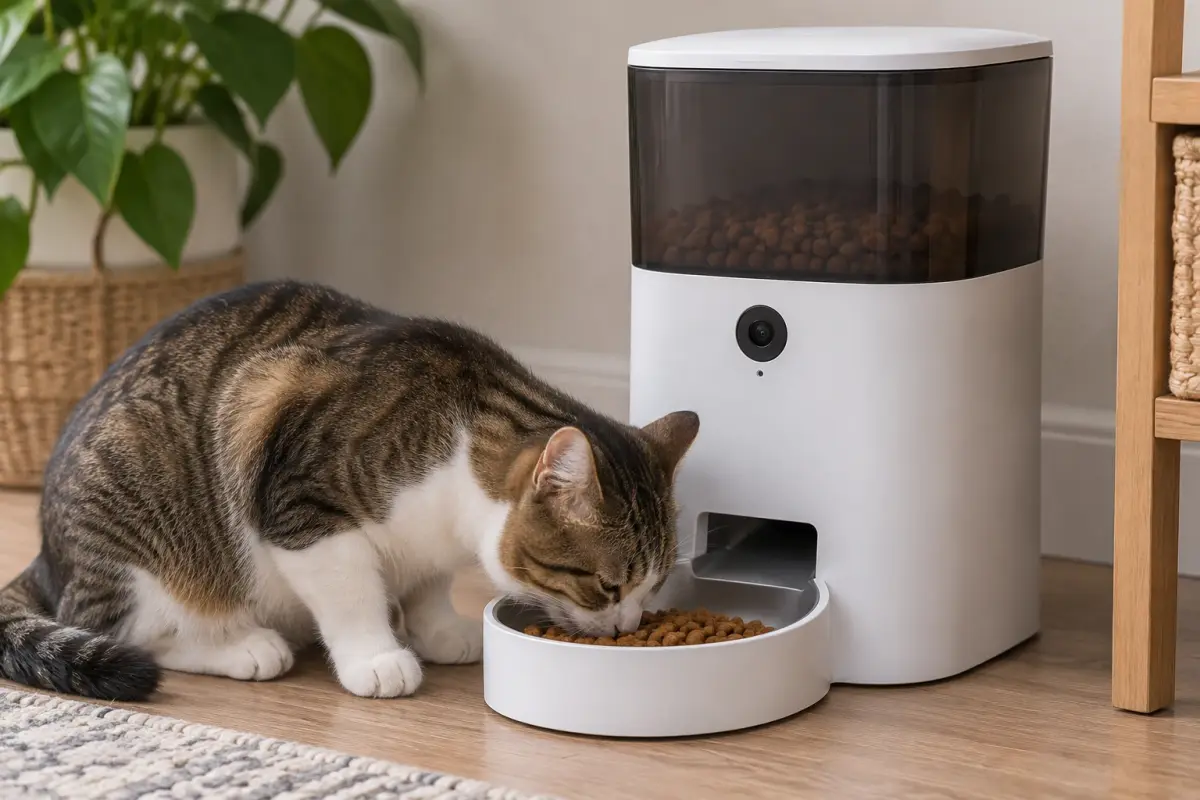
The feeder does the important job; the camera is an extra. A feeder with a sharp picture but a jam-prone dispenser is worse than a plain one that delivers on time. Look for set, repeatable portions, programmable meal times, a locking lid and a hopper that keeps dry food from going stale, and check that the schedule is stored on the device itself so meals still happen when wifi or the power fails.
Plan the schedule around your cat. VCA recommends at least two meals a day for most adult cats, because hunger starts to build after 8 to 10 hours without food, and says some cats do better with three or four smaller meals. Cornell says adult cats are typically fed once or twice a day. Both stress measuring the day's portion and asking your vet how much and how often. Our guide to automatic cat feeders goes through the basic types.
What the camera is actually good for
A camera lets you confirm that a meal was dispensed and eaten, watch for a cat that is not coming to the bowl, and check on a kitten or senior cat while you are out. That matters because VCA says leftover food at a scheduled meal can signal illness and warrants a vet visit. Seeing a pattern of skipped meals early is the strongest reason to pay for a camera.
Camera quality matters less than reliability. A wide-angle view that covers the bowl and the surrounding floor is more useful than a narrow, high-resolution one. Night vision lets you see after dark, and a two-way speaker is a nice extra that some cats ignore. Check that the app shows a live view and not only snapshots, and that it keeps working on a normal home network. Products such as a smart cam feeder with remote wifi monitoring and a wide-angle camera feeder bowl with app control show the range of designs.
Best choice for each situation
For one adult cat on dry food, a timed hopper feeder with a camera is enough: schedule two or three measured meals and check the live view a couple of times a day. For a cat that gobbles, pick a feeder with small portions, and consider a slow-feeding bowl underneath or alongside; see our cat slow feeders.
For two or more cats, a camera shows who is eating, but a single bowl does not stop one cat from taking the other's share. Cornell suggests feeding cats separately in multi-cat homes, so use one feeder per cat or place feeders in separate rooms. For a kitten or a cat on a medical diet, ask your vet about the schedule first, and do not rely on a feeder alone. A feeder with a built-in camera and video is one example for a single-cat home.
What to avoid
Avoid relying on one device for a long trip. Machines jam, batteries die and wifi drops, so arrange for a person to check on your cat daily if you are away more than a day. Test the feeder for a week while you are home, and watch the camera for a few days to see that the schedule matches what you set.
Avoid free feeding by leaving the hopper open. Cornell notes that free feeding often leads to overeating and weight gain, and VCA says free feeding is not recommended for kittens. Also avoid placing a camera where it points at windows, bathrooms or anywhere you would not want a recording stored, and read how the app handles your video and login, since cloud-connected cameras need a strong, unique password.
Setup, cleaning and when to call your vet
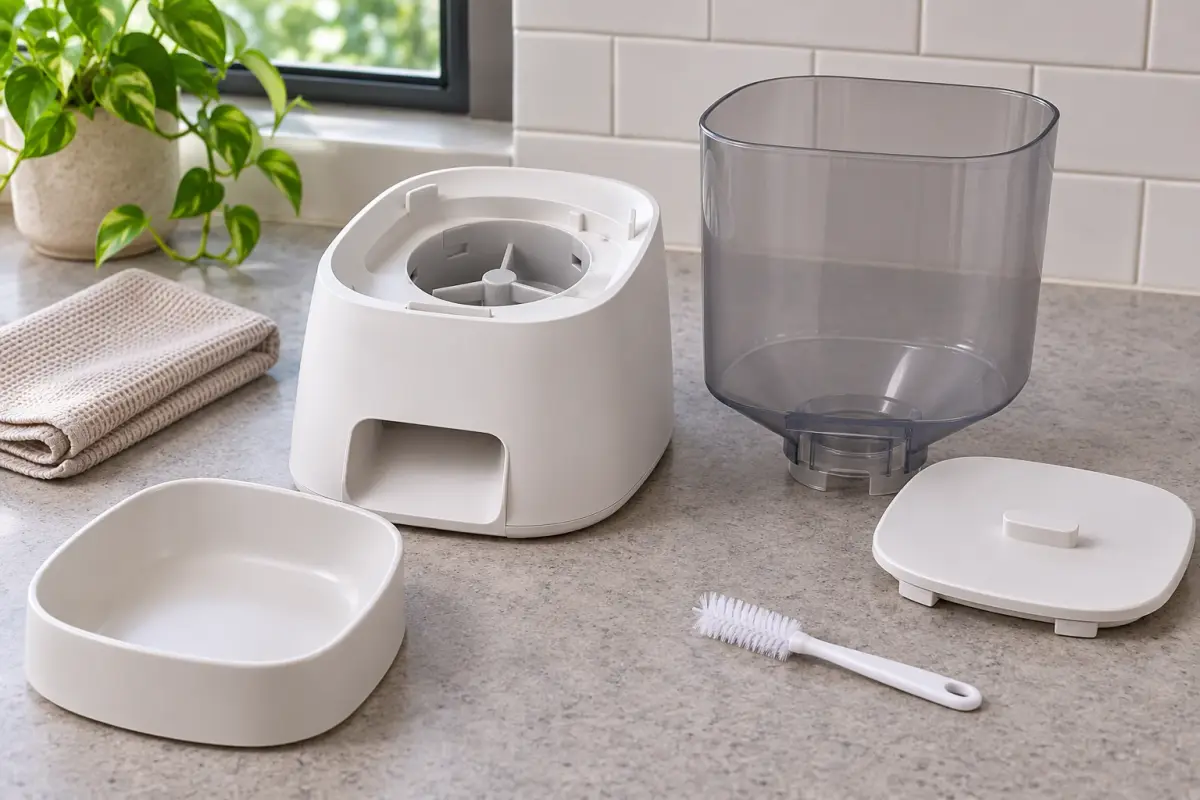
Wash the bowl and any parts that touch food regularly, replace wet or stale food promptly and wipe the camera lens so the picture stays clear. Cornell notes that food left out for grazing should be replaced daily. If you use dry food, empty and clean the hopper between refills so old crumbs and oils do not build up.
Call your vet if your cat leaves food at scheduled meals, loses weight, vomits, drinks far more than usual or changes behavior. A camera can show you the change, but it cannot say why it happened.
This page is general information, not veterinary advice, and it cannot replace an examination by the vet who knows your pet.
Common questions
Is an automatic cat feeder with a camera worth it?
It is worth it if you are away from home for long stretches or have a cat whose appetite you want to watch. The camera lets you confirm meals happen, but the feeder's reliable portions matter more than the video.
How many times a day should an automatic feeder dispense?
VCA recommends at least two meals a day for most adult cats, and Cornell says adults are typically fed once or twice daily. Some cats do better with three or four smaller meals. Ask your vet for your cat.
Can a camera feeder work for two cats?
A camera can show which cat eats, but it cannot stop one cat from taking the other's food. Cornell suggests feeding cats separately in multi-cat homes, so use one feeder per cat or separate rooms.
What happens to a camera feeder if the wifi goes down?
It depends on the model. Look for a feeder that stores its schedule on the device so meals still dispense, and for backup batteries for power cuts. Do not rely on any single device for a trip of more than a day.
Sources we checked
This guide is general information, not veterinary advice. If your pet is unwell or injured, contact your veterinarian.


