







Slow feeder dog bowls
Ceramic Slow Feeder Bowl for Cats and Dogs with Optional Wood Stand
- Options
- 6 to choose from
From $27.99
Free US shipping over $49 · 30-day free returns · Happy pets, happy homes
Pet care guidesCats
Little things. Happy cats.
16 items picked for everyday life with your pet, with shipping estimates on every item.
 A happy life, one little thing at a time.
Slow feeder dog bowls
From $27.99

Cat slow feeders
$21.99

Automatic cat feeders
From $23.99




Slow feeder dog bowls
From $15.99


Slow feeder dog bowls
$22.99


Slow feeder dog bowls
$28.99

A little guidance
Buying guides and care advice written for this range: what to measure, what matters and what to skip.
Shop slow eating cat bowls for cats that gulp: dual-purpose bowls that switch between slow and normal feeding, large slow feeder bowls with a switchable insert, a raised slow feeder with a water dispenser, cat-shaped slow bowls, non-slip slow lick bowls and fish-shaped silicone lick mats for wet food. This page is for owners of cats that eat too fast, vomit after meals or are gaining weight. Below is how slow feeders work and how to introduce one.
Cats that eat in a rush often swallow air and large mouthfuls, and some bring the meal straight back up minutes later. Fast eating is common in multi-cat homes, where a cat races to finish before another one arrives, and in cats that were once strays or went hungry as kittens.
Eating quickly can also make it easier to overeat. The Cornell Feline Health Center calls obesity the most common nutrition-related problem in cats, linked to arthritis and diabetes. Slowing a meal down gives the stomach time to signal fullness.
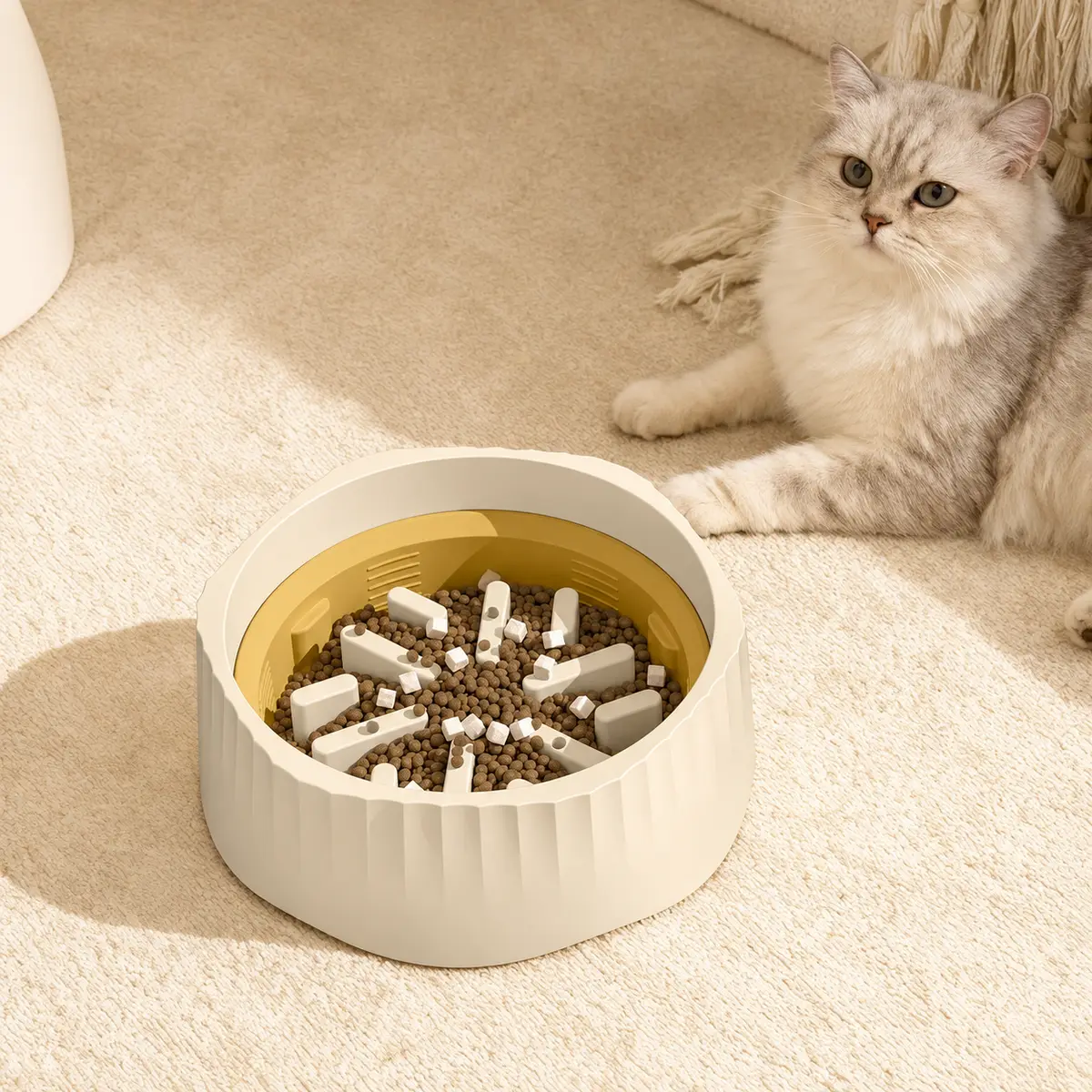
A slow feeder bowl has raised ridges, mazes or pockets across the base. Your cat has to work kibble out of the gaps with its tongue and paw, which turns a ten-second gulp into a few minutes of eating and adds a little mental exercise. VCA Animal Hospitals suggests making meals more active with puzzle-style feeders.
Dual-purpose bowls in this range have a removable or reversible insert, so you can use the slow side for dry food and the open side for water or wet food. That makes it easy to start gently and increase the challenge.
Wet food spreads into a slow bowl's grooves rather than sitting in a lump, so your cat has to lick it out. The silicone lick mats and lick bowls here are designed for pâté-style food, treats and purees, and the licking itself can be calming.
Shallow designs matter for cats. Many cats dislike deep bowls that brush their whiskers, so look for wide, low ridges that a cat's face can reach comfortably. Wash lick mats after every wet meal, since food left in the grooves spoils quickly.
A raised slow feeder lifts the bowl off the floor, which some cats find more comfortable, especially older cats with stiff necks or joints. The raised model here also includes a water dispenser, keeping food and water together.
Place any slow feeder on a non-slip surface or choose one with a rubber base, because cats working hard at a bowl can push it across the floor. A feeding mat underneath catches scattered kibble.
Start on the easiest setting, or with the open side, so your cat succeeds at the first meal. Scatter a few favorite treats on top to make it interesting. Move to the slow side over several days, watching that your cat finishes its meals.
If your cat gives up or gets frustrated, go back a step. Keep feeding measured portions as your vet advises, rather than topping up because the bowl takes longer. If vomiting continues even with a slow bowl, or your cat is losing weight, book a vet visit, as both can have medical causes.
Yes, for most cats that gulp. Ridges and mazes force smaller mouthfuls and a slower pace, which can reduce vomiting after meals and help cats feel full. Choose a shallow design so whiskers are not squashed.
Yes. Wet food spreads into the grooves and has to be licked out. Lick mats and lick bowls are designed for pâté-style food. Wash them after every meal so food does not spoil in the ridges.
Eating too fast is a common reason, and a slow feeder often helps. Vomiting can also have medical causes such as hairballs, food sensitivities or illness, so see your vet if it continues.
Some cats, particularly older cats with stiff necks, find raised bowls more comfortable. A raised slow feeder combines both benefits. Watch how your cat eats and choose what suits it.
Start with the easiest setting or the open side, add a few treats on top, and move to harder settings over several days. Go back a step if your cat walks away without eating.