






Buying guides
Best Hay Feeders for Rabbits and Guinea Pigs: How to Choose
The best hay feeder for a rabbit or guinea pig holds a full day of hay, keeps it off the floor and out of the litter, and lets your pet pull it out easily. Hay is the core of the diet, so the feeder should make unlimited hay effortless. A wall rack, manger or built-in cage feeder can all work if it fits your enclosure.
By Matt GarnettUpdated November 14, 20265 min read2 sources
Why the hay feeder matters
Hay is not a side dish for rabbits and guinea pigs. The House Rabbit Society says hay should make up about 85 percent of an adult rabbit's diet and that large, unlimited amounts of fresh hay should be offered daily. VCA Animal Hospitals says the same for guinea pigs: offer unlimited timothy or another low-calcium hay throughout the day.
Both sources give the same reasons. Hay supplies roughage that helps prevent blockages, supports healthy gut bacteria, and wears down teeth that grow constantly. A feeder is simply the tool that keeps that supply constant and clean. If hay runs out or ends up trampled, your pet eats less of it, so the right feeder protects the most important part of the diet. Browse our hay feeders once you know your enclosure size.
Feeder types compared
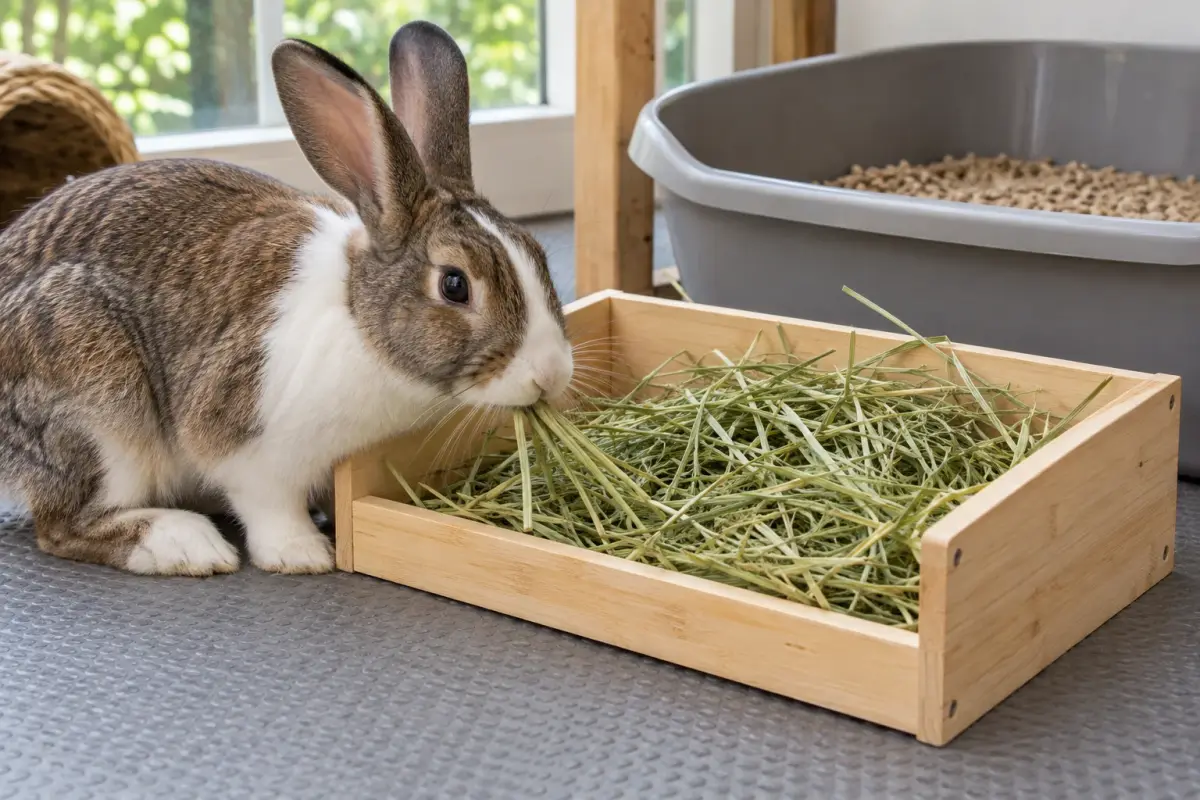
A hanging or wall-mounted rack holds hay at chest height and keeps the floor clear, which suits cages and pens with solid sides or wire you can clip to. Racks are easy to refill, but a shallow one can let hay drop out, so look for a deep back panel or a lip. A manger or floor box sits at ground level and works for larger rabbits and for pens with no wall to hang from.
A cage with a built-in feeder is the simplest option for a new setup, since the feeder is sized to the enclosure. A small animal cage with a hay feeder and platform bundles the feeder with a food dish and water bottle, and a rolling rabbit cage with a hay feeder does the same on wheels. The trade-off is that a built-in feeder cannot be replaced or moved if it does not suit your pet.
Matching the feeder to your pet
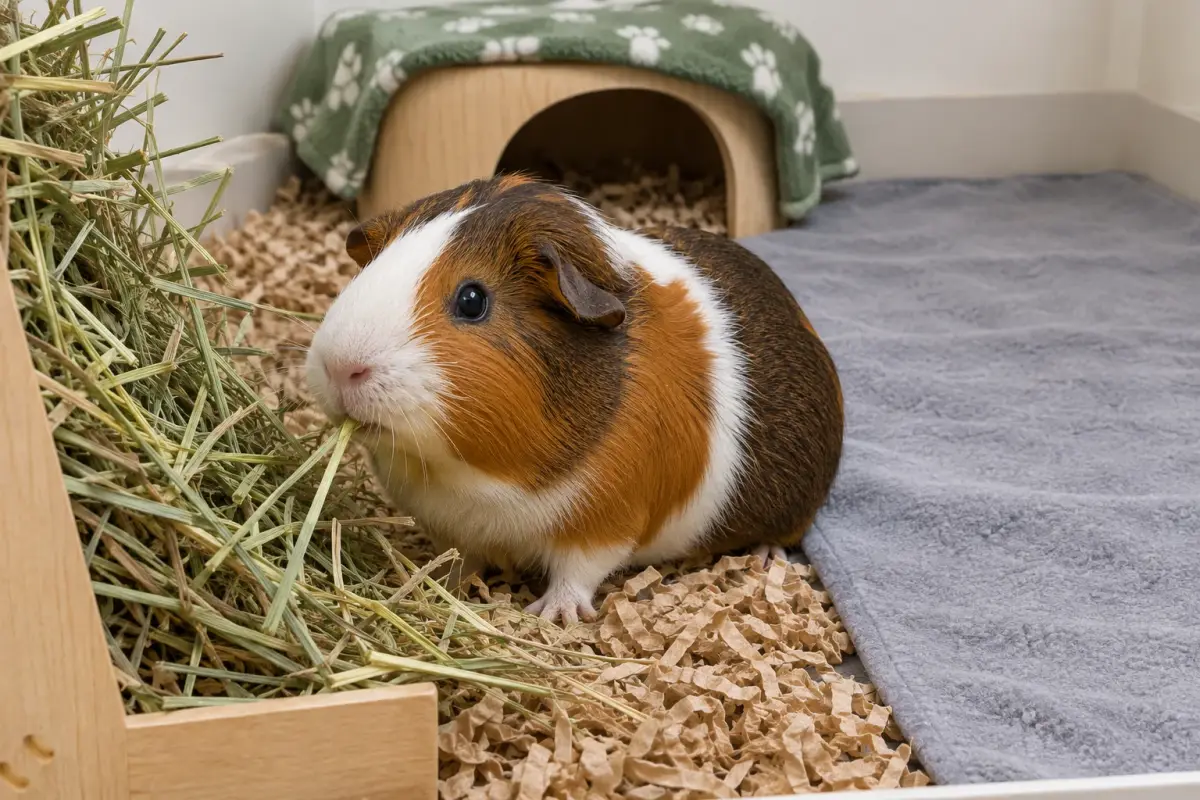
Size comes first. A rabbit needs a feeder opening wide enough for its head and a pile deep enough to stay full for the day, while a guinea pig needs a lower position it can reach without climbing. For a pair or a group, a feeder that holds more hay, or two feeders in different places, reduces squabbles over the pile.
Think about habit too. Pets that like to sit in their hay or dig through it may scatter it from an open rack, and a manger with a lid or bars helps. Pets that tip things over do better with a feeder attached to the enclosure rather than a loose box. Match the feeder to how your pet actually behaves, not to the picture on the label.
Where to place it, and what to keep apart
Place the hay feeder away from the litter box and away from the spot where your pet sleeps, so hay stays clean and dry. Many rabbits like to eat while they use the litter box, in which case a feeder positioned near the box, rather than inside it, keeps hay accessible without soiling it.
Hay should be your pet's main food, so make it the easiest thing in the enclosure to reach. Keep it fresh by topping it up daily and removing damp or soiled hay rather than leaving it. Our guide to the best rabbit hutches and our rabbit cages show how the layout around the feeder works at different sizes.
Materials and what to avoid
Metal racks and mangers are the most durable and the easiest to wipe clean, which suits chewers. Wood is natural and pets like to chew it, but it absorbs moisture and has to be replaced eventually. Plastic is light, cheap and easy to clean, but a determined chewer can damage it, and small plastic pieces are not something you want a rabbit swallowing.
Avoid feeders with gaps where a head or foot could be trapped, and anything with sharp wire ends or rough edges. Check that the bars are spaced so your pet can pull hay through but not push its whole head in. Replace any feeder that cracks or rusts, because damaged edges can injure a mouth.
Choosing the hay itself
The feeder is only as good as what you put in it. The House Rabbit Society says adult rabbits do best on timothy and other grass hays, which are lower in calories and calcium than alfalfa, and that alfalfa is for babies, nursing mothers, and elderly or injured rabbits. VCA recommends timothy or another low-calcium hay for guinea pigs.
If your pet stops eating hay, produces fewer droppings, or seems to have trouble chewing, call your vet promptly, because changes in eating can be serious in small animals. A rabbit-savvy or exotics vet can advise on your pet's specific diet.
This page is general information, not veterinary advice, and it cannot replace an examination by the vet who knows your pet.
Hay feeder placement and refill arrangements
| Format | Where it sits | What to check |
|---|---|---|
| Hanging rack | Attached to a cage or pen side | Attachment compatibility and refill access |
| Wall-mounted rack | Fixed to a supporting surface | Mounting points and hay-retaining lip |
| Manger or floor box | At ground level | Footprint,edges and gaps |
| Built-in feeder | Part of an enclosure | Access and whether it can be replaced or moved |
Common questions
How much hay should my rabbit or guinea pig have?
Unlimited. The House Rabbit Society recommends large, unlimited amounts of fresh hay daily for adult rabbits, and VCA recommends unlimited timothy or other low-calcium hay throughout the day for guinea pigs.
Is a hay rack better than a hay manger?
Neither is better in every case. A rack keeps hay off the floor and suits cages with walls to attach it to, while a manger works at floor level for larger rabbits and for free-standing pens.
Should the hay feeder be next to the litter box?
Near it is fine, and many rabbits like to eat while they use the box. Keep the feeder beside the box rather than inside it, so hay stays clean and dry.
What type of hay should go in a feeder?
For adult rabbits, timothy and other grass hays are the usual choice, per the House Rabbit Society. VCA recommends timothy or another low-calcium hay for guinea pigs. Alfalfa suits young, nursing or elderly rabbits.
How do I know my pet is eating enough hay?
A hay pile that shrinks steadily, plenty of droppings and normal activity are good signs. If hay sits untouched, droppings drop off or your pet seems unwell, contact your vet the same day.
Sources we checked
This guide is general information, not veterinary advice. If your pet is unwell or injured, contact your veterinarian.


