






Buying guides
Best Rabbit Litter Box: Size, Litter and Setup Guide
The best rabbit litter box is a sturdy box sized to your rabbit, with low sides it can hop in and out of easily, placed in the corner your rabbit already uses. Fill it with a litter that is safe if eaten, such as paper pellets, topped with hay. Skip clumping, clay and wood-shaving litters, which can cause blockages if swallowed.
By Matt GarnettUpdated November 14, 20264 min read2 sources
What matters most: size, entry and placement
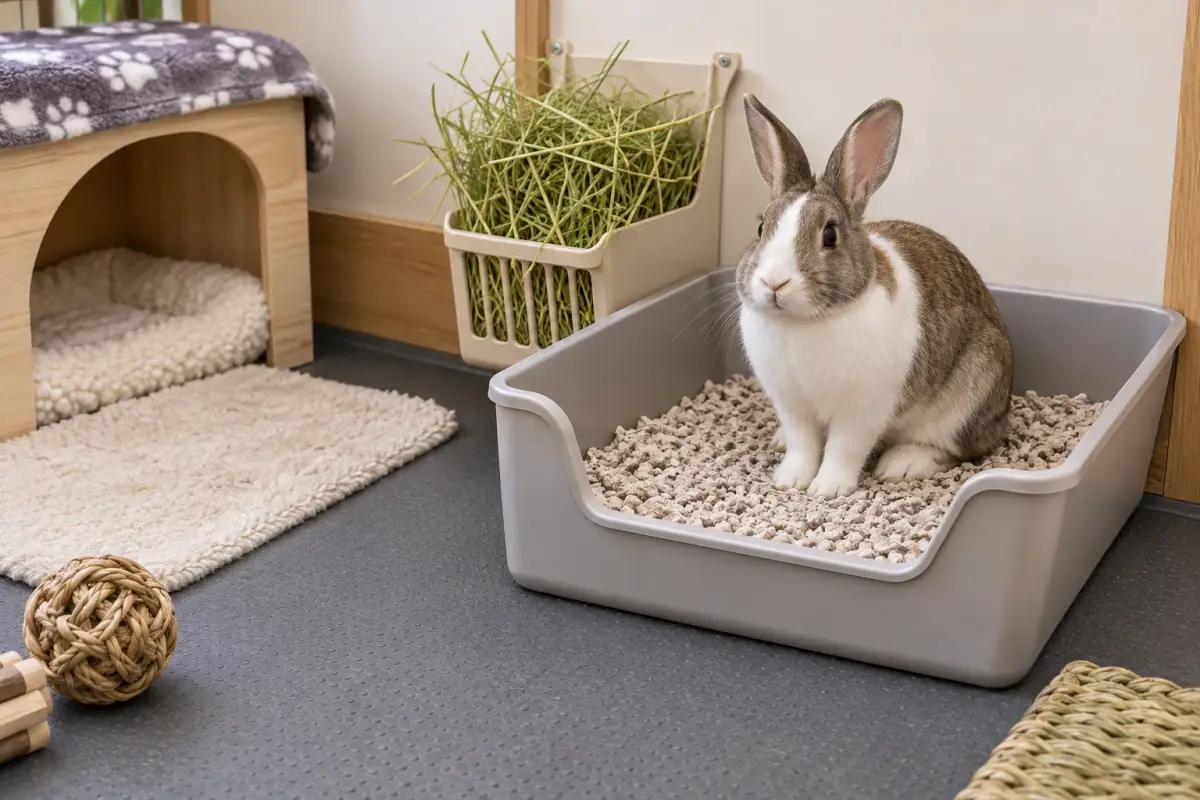
The Merck Veterinary Manual advises a medium box for small rabbits and a large or extra-large box for bigger ones, and the box should be sturdy and easy to enter and exit. Lower sides help older rabbits with arthritis. Size is the first filter when you browse rabbit litter boxes: a rabbit that cannot sit in the box comfortably will use the floor beside it.
Placement matters as much as the box. Rabbits like one bathroom spot, so put the box where your rabbit already goes, and add a few droppings when you first introduce it. If your rabbit keeps picking a different corner, move the box to that corner rather than fighting the choice. Habits take weeks or months to settle, depending on how mature the rabbit is, and you should not expect a fully house-trained rabbit at six weeks.
Types of litter box compared
Open rectangular pans are the simplest choice: the rabbit can hop in from any side, see out and eat hay while it sits. A cat-style pan can serve as a rabbit box when it is big enough for the rabbit and open at the front or sides. An 18.9-inch litter box is a size for a small rabbit, while a larger rabbit needs a bigger pan, and a low open litter basin leaves the entry easy to step over.
Corner boxes save floor space and suit a rabbit that chooses a corner, but check that the rabbit can fit its whole body in. For a senior or arthritic rabbit, look for a cutaway front or a very low side. If you consider a covered box, make sure the doorway is wide and low, and that hay still fits inside. A box the rabbit hesitates to enter will not get used, however good it looks.
Which litter is safe, and which to avoid
Rabbits nibble what they sit on, so choose litter that is safe if eaten. Merck lists recycled newspaper pellets, paper pulp or hay, and says to replace hay daily. The House Rabbit Society lists paper fiber, mountain grasses, wheat and specially processed woods with reduced phenols as safe options.
Avoid wood shavings, corncob litter, clay litter and clumping litter, which can cause digestive blockages if swallowed. The House Rabbit Society also warns against highly aromatic softwood shavings and dusty clays, and notes that even litters known to be nontoxic can cause internal damage if eaten. Sawdust and shavings are dusty and can irritate the airways too. Placing newspaper under the litter helps absorb urine.
How to fill the box and use hay
The House Rabbit Society describes three fills. One is about eight single sheets of newspaper topped with a three-inch layer of hay or straw. Another is one to two inches of litter topped with two to three inches of hay. The third is litter or shredded paper alone with a treat or toy in one corner, which suits times when hay is short. Most people pick the hay-topped version, since rabbits like to eat hay while they use the box.
If the box is shared with cats, keep hay in a hanger or basket rather than on the box floor. A hay feeder mounted beside the box keeps hay clean and in reach without sitting in waste. Fresh hay also needs replacing often, so plan for a steady supply and a spot where you can top it up each day.
Cleaning and replacement
Paper-lined boxes need changing daily, according to the House Rabbit Society, while litter-lined boxes can go two days or more between changes. Merck recommends emptying and disinfecting the box at least once a week. A box that smells or looks damp is a box the rabbit may avoid, so err on the side of changing it sooner.
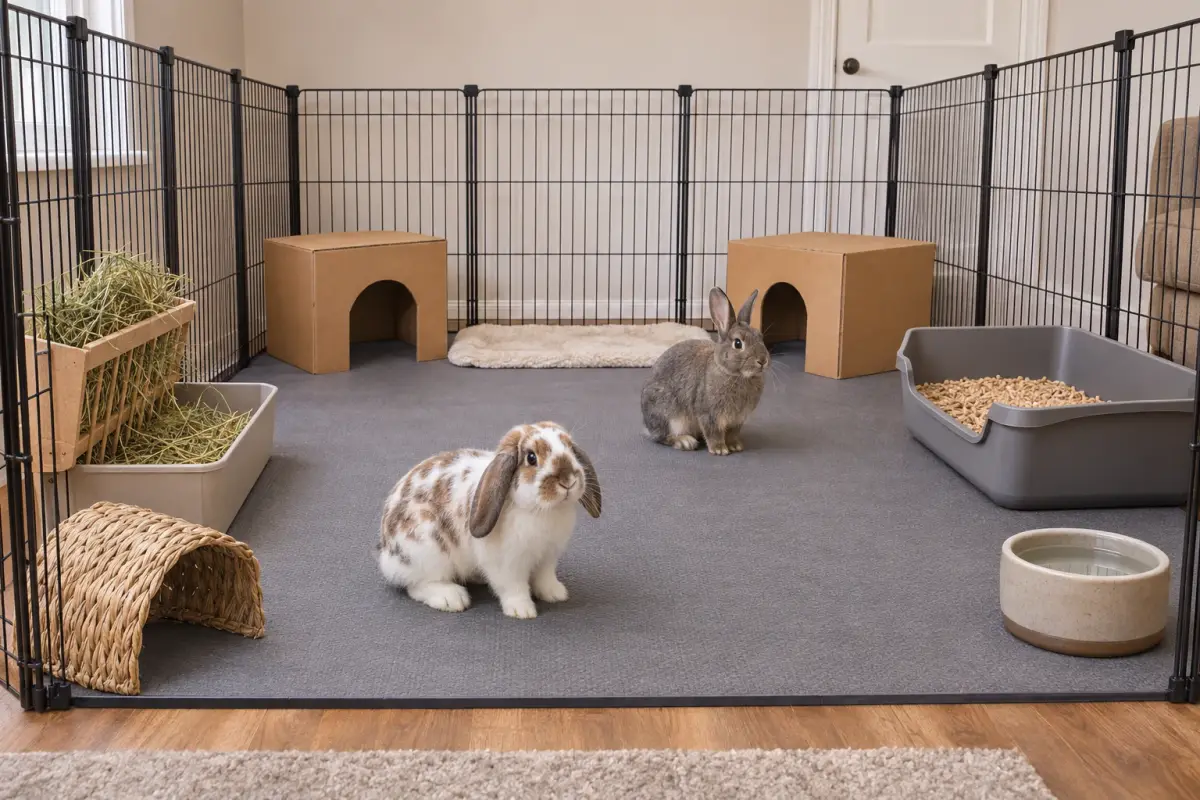
Choose a box with smooth, washable sides and no deep corners where waste sticks. Replace a pan that has cracked or become rough, and keep a second one on hand so the clean box is ready while the first dries. If your rabbit lives in a cage or pen, the box should fit alongside a resting area, and our rabbit cages and rabbit pens pages show what space that takes.
Training problems and when to call the vet
Adolescent rabbits may lose litter box habits until after spay or neuter surgery, and spayed or neutered adults are generally easier to train. Habits may slip for a while when a new rabbit is introduced. These are normal and usually settle with patience and a consistent setup.
A rabbit with an established routine that suddenly stops using the box may have a health problem, according to the House Rabbit Society. Call your vet if you see straining, a change in droppings or urine, or a rabbit that stops eating, because rabbits can decline quickly. A vet who knows rabbits can rule out a medical cause before you change the setup.
Common questions
What size litter box does a rabbit need?
Merck suggests a medium box for small rabbits and a large or extra-large box for bigger rabbits. The box should be sturdy, easy to enter and exit, and have lower sides for older rabbits with arthritis.
Can I use cat litter in a rabbit litter box?
Not clumping or clay cat litter, because both can cause blockages if swallowed. Choose a litter that is safe if eaten, such as recycled newspaper pellets or paper pulp, and top it with hay.
How often should I clean a rabbit litter box?
Paper-lined boxes need changing daily, and litter-lined boxes can go two days or more. Merck says to empty and disinfect the box at least once a week, and to replace hay daily.
Do rabbits need hay in their litter box?
Hay is a common part of the setup. The House Rabbit Society suggests two to three inches of hay over one to two inches of litter, or hay over newspaper, because rabbits like to eat while they use the box.
Sources we checked
This guide is general information, not veterinary advice. If your pet is unwell or injured, contact your veterinarian.


