






Buying guides
Best Rabbit Chew Toys: What Is Safe and What to Look For
The best rabbit chew toys are made of untreated, non-toxic natural materials such as wicker, dried wood, straw or paper, and they are safe if nibbled and swallowed in small bits. Avoid synthetic fiber, pesticide-treated mats, metal and toys that loop around a foot. Chew toys add to hay, which does most of the work of wearing teeth down.
By Matt GarnettUpdated November 14, 20264 min read3 sources
Why rabbits need to chew
Rabbit teeth keep growing for life, at roughly 0.4 inch (1 cm) a month according to VCA Animal Hospitals, so they must be worn down constantly. Chewing fibrous food does that. Merck notes that rabbits eating mostly pellets rather than hay can develop overgrown teeth, because pellets do not wear teeth as well as long strands of hay do.
That makes hay the foundation and chew toys the extra. A toy gives a rabbit something to gnaw, shred and carry, which also relieves boredom, but it does not replace unlimited hay. When you browse rabbit chew toys, look for pieces that are safe to nibble first and fun to toss second.
Safe materials to look for
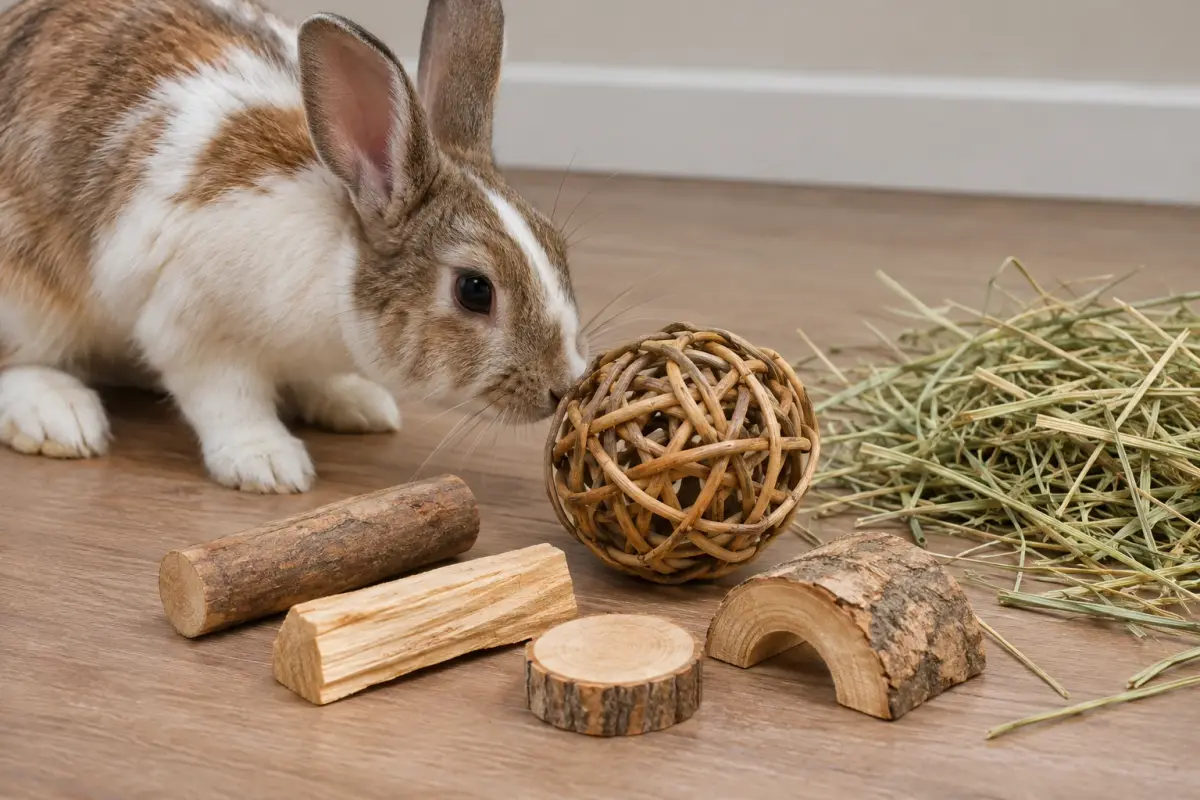
The House Rabbit Society sets one standard: untreated, non-toxic material. Its safe list includes natural wicker such as cane, rattan, willow, reed and bamboo, well-dried tree branches, non-toxic wooden blocks and furring strips. Sea-grass, rice and bamboo mats are fine if they are pesticide-free, which is worth confirming with the maker.
Loose straw, newsprint and brown paper bags are popular for shredding, and they cost almost nothing to supply. Rabbits need indigestible organic fiber, not synthetic fiber, so natural material is the rule. If a listing does not say what a toy is made of, that is a reason to pass on it.
Types of chew toy compared
Wooden blocks and sticks are the classic gnawing toy and last longest. Woven wicker balls and mats suit rabbits that like to toss and shred. Paper and cardboard toys wear out quickly but are easy to replace. Carrot-shaped molar chews, such as these rabbit molar chew carrots, are a popular style, but check the stated material against the safe list before offering one.
Gymnastic and activity toys do a different job. The House Rabbit Society says toys for climbing, leaping and running through keep rabbits fit, and smaller toys that swing, roll or make noise keep them mentally busy. Jingle and rattle toys stay popular into old age. A mix of a chew, a shred and a toss toy gives a rabbit choices, and our rabbit toys range covers the other types.
What to avoid
The House Rabbit Society advises against synthetic fiber items such as carpets and sofas, and against pesticide-treated organic mats. It also cautions about toys that are rigidly attached or looped and do not detach easily, since a rabbit's foot can become tangled. Metal toys eventually rust after contact with urine or a water bowl.
Chewing cage wire is another thing to prevent, since Merck says young rabbits may damage their teeth that way. If a rabbit is fixated on the bars, give it something better to gnaw and more room to move. Avoid any toy with paint, dye or glue that is not stated to be non-toxic, and throw out pieces that splinter into sharp fragments or break into pieces small enough to choke on.
Matching toys to your rabbit
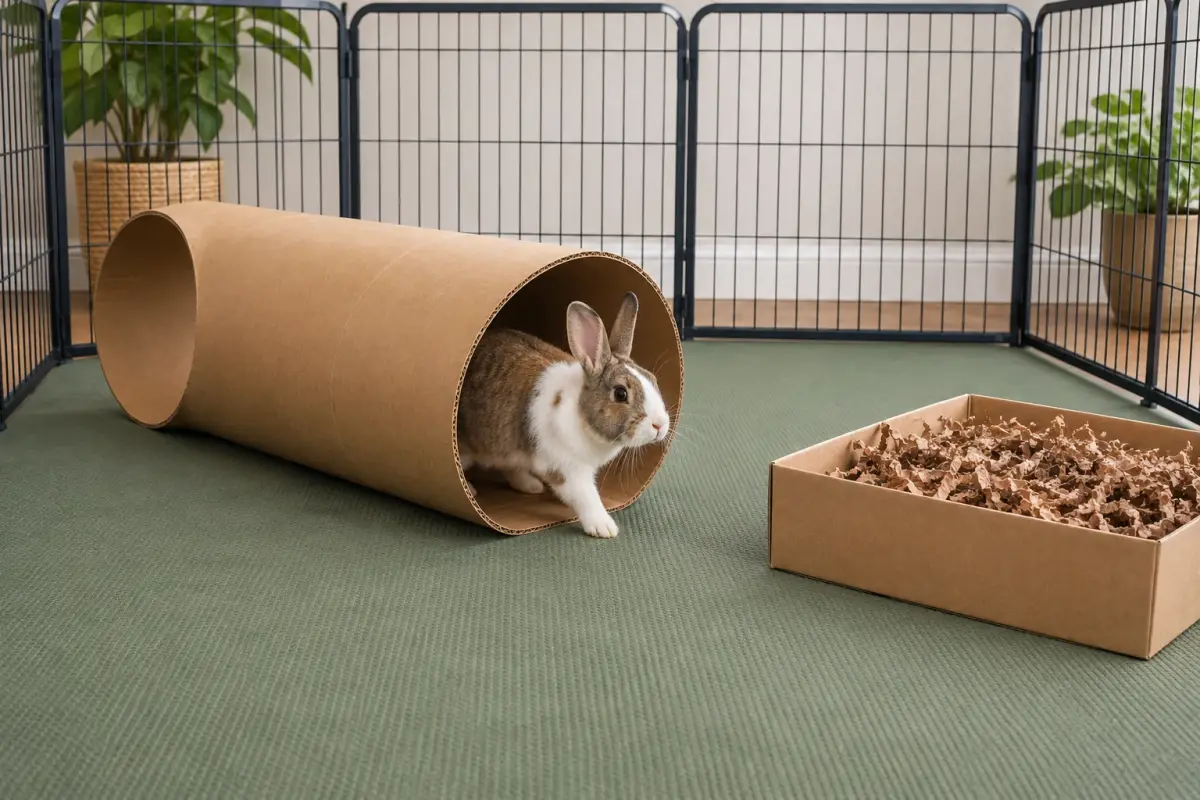
Young rabbits usually chew everything, so cheap, replaceable materials such as paper and straw let them gnaw without destroying furniture. Older rabbits may prefer soft shredding toys and lighter chews. A rabbit living indoors in a pen benefits from a few different textures spread around, and a hay feeder keeps its main chew in reach all day.
Offer one new toy at a time and watch how your rabbit uses it. If it ignores a toy, try a different material rather than a different size. Replace chewed-down wood and soaked wicker, and wash anything that gets soiled. Rabbits can tell you a lot by what they carry off and what they leave alone.
Teeth, hay and when to see a vet
Watch for signs of dental trouble: drooling, pawing at the mouth, difficulty eating, weight loss, or front teeth that look long or crooked. VCA says any rabbit with these signs needs prompt veterinary care from a vet experienced with rabbits, and that annual checkups help catch problems early. Never trim teeth yourself with nail clippers or wire cutters, which can fracture them.
Toys cannot fix misaligned teeth, and a rabbit that suddenly stops eating needs a vet the same day. Keep free-choice grass hay available every day, and treat chew toys as enrichment.
This page is general information, not veterinary advice, and it cannot replace an examination by the vet who knows your pet.
Common questions
What can rabbits safely chew on?
The House Rabbit Society lists untreated, non-toxic wicker, dried branches, wooden blocks, straw, newsprint and brown paper bags. Mats made of sea-grass or bamboo are fine if they are pesticide-free.
Do chew toys keep rabbit teeth short?
Chewing wears teeth, but hay does the main work because long fibrous strands grind the cheek teeth. Toys add enrichment and extra gnawing, and they should supplement unlimited hay rather than replace it.
Are cardboard and paper safe for rabbits to chew?
Plain brown paper bags, newsprint and untreated cardboard are popular shredding toys. Avoid anything glossy, dyed, glued or printed with heavy inks, and take away pieces once they are soiled or break into small bits.
How do I know my rabbit has a teeth problem?
Warning signs include drooling, difficulty eating, dropping food, weight loss and uneven or overgrown front teeth. Any of these means a prompt visit to a vet who sees rabbits.
Sources we checked
This guide is general information, not veterinary advice. If your pet is unwell or injured, contact your veterinarian.


