






Buying guides
Best Rabbit Hutch: How to Choose a Safe Outdoor One
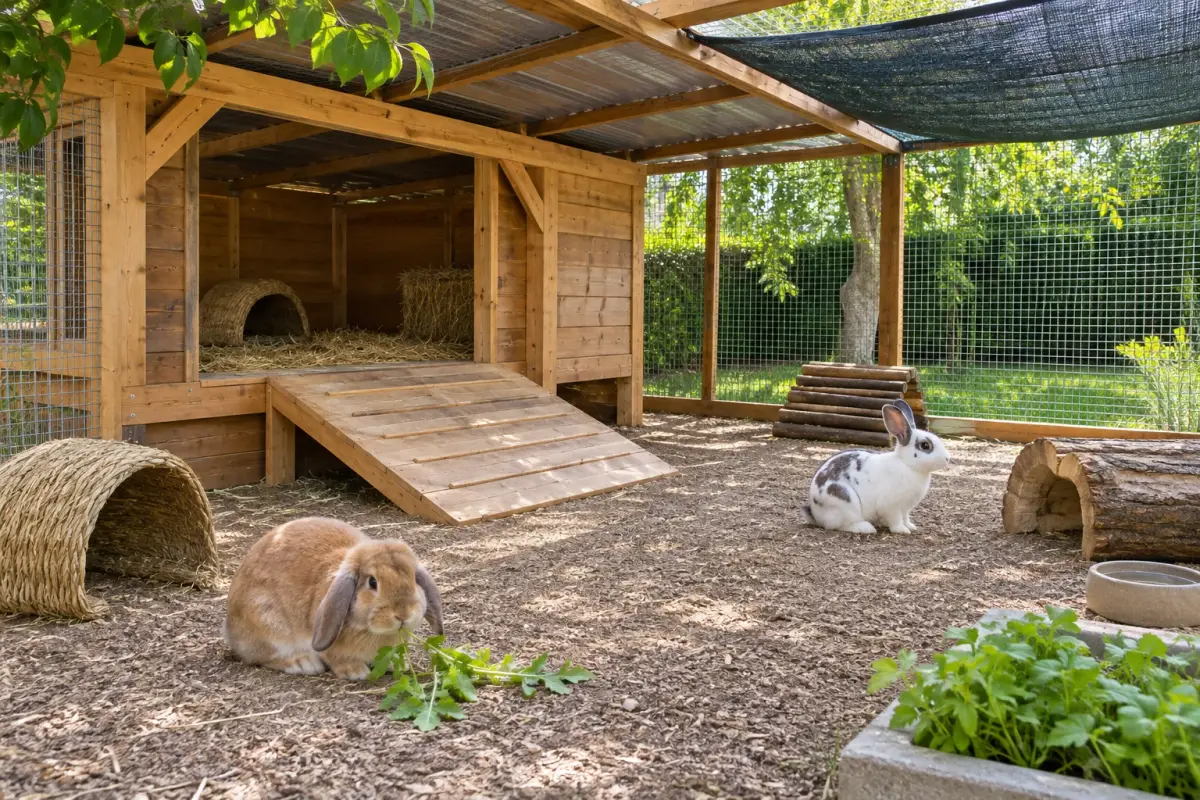
A good outdoor rabbit hutch is only half the setup: it needs a large attached run, so the House Rabbit Society's minimum of about 12 square feet of living space is met with room to hop. Choose predator-proof welded mesh and locking latches, a raised, weatherproof sleeping area, a solid floor and shade. Most small store-bought hutches are too small on their own.
By Matt GarnettUpdated November 13, 20263 min read2 sources
How much space a rabbit needs outside
The House Rabbit Society suggests at least 12 square feet of living space for a rabbit, for example 4 by 3 feet, plus daily exercise, and the more space the better. VCA warns that the biggest cage you can afford is still likely too small. A typical small hutch alone falls far short, which is why the best outdoor setups pair a hutch with a large, secure rabbit pen or run.
Your rabbit should be able to lie fully stretched out, stand up on its hind legs, and take several hops in a row. Rabbits are social, so a pair needs more space.
Predator-proofing
Raccoons, foxes, coyotes, hawks, dogs and cats can all reach or terrify a rabbit. Use welded wire mesh rather than chicken wire, which predators tear, and latches a raccoon cannot open, ideally with a clip or padlock. Bury mesh or add a mesh skirt around the run so predators cannot dig in, and roof the run.
Even without contact, a predator prowling at night can frighten a rabbit badly. Place the hutch close to the house, and consider bringing your rabbit into a secure shed, garage with good ventilation or the house overnight.
Weatherproofing and flooring
The sleeping area should be raised off the ground, insulated, draft-free and waterproof, with a roof that overhangs to shed rain. Position the hutch out of direct sun, with shade over the run in summer; rabbits are vulnerable to heat. In cold weather, add extra hay bedding and a cover on the windward side, but keep ventilation.
VCA advises that wire floors should be at least half covered with something solid to prevent sore hocks; a solid floor with bedding is better. Use hay or paper-based bedding, not wood shavings, which VCA cautions against.
Hutch types compared
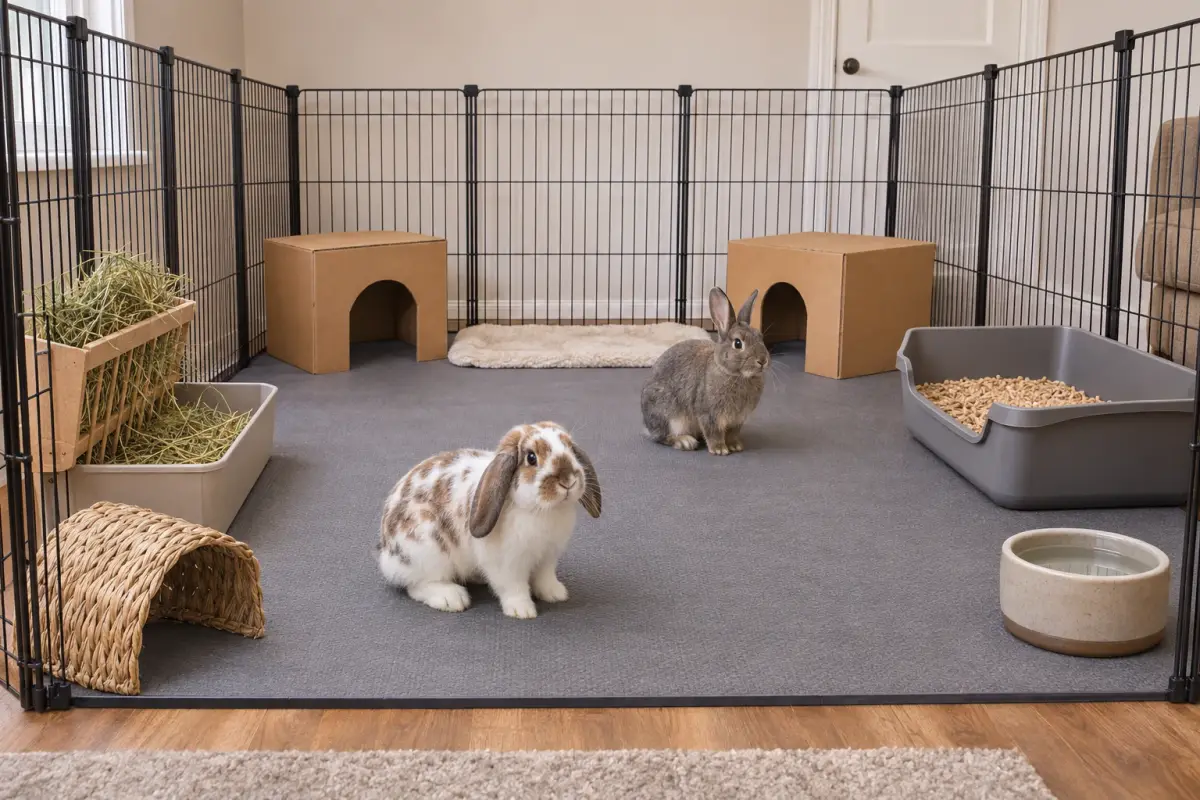
Traditional two-story wooden hutches look appealing but are often too small and can rot if untreated; check the wood is untreated and rabbit-safe, since rabbits chew. Hutch-and-run combinations are a better starting point. Walk-in runs, roofed pens such as a small animal playpen with a roof, and converted sheds or playhouses give the most space and are easiest to clean.
For any design, make sure you can reach every corner to clean, that doors open wide, and that the roof lifts or hinges for access, as on a two-level hutch with an openable top.
Daily care, winter and when to call a vet
Check a rabbit in an outdoor hutch at least twice a day: refresh water, which can freeze in winter, top up hay, spot-clean the toilet corner and look at how your rabbit is eating and moving. Replace bedding fully every week, and more often in wet weather, because damp bedding chills a rabbit and attracts flies in summer.
Rabbits hide illness. A rabbit that stops eating or producing droppings for even part of a day, sits hunched, has a dirty rear end in warm weather or seems weak needs a vet experienced with rabbits promptly. In very hot or very cold spells, move your rabbit somewhere sheltered indoors, such as an indoor rabbit cage or pen, until the weather eases.
Hutch and run access arrangements
| Format | Physical arrangement | Access check |
|---|---|---|
| Two-story wooden hutch | Two levels within a wooden body | Each floor,door and connecting route |
| Hutch-and-run | Shelter connected to an exercise area | Both spaces and the joining opening |
| Walk-in run | A larger roofed enclosure | Door width and cleaning reach |
| Converted shed or playhouse | A larger fixed shelter | Every corner and actual ventilation/access |
| Hinged-roof hutch | Upper section lifts for access | Roof support and reachable interior |
Common questions
What size hutch does a rabbit need?
The hutch plus run should give at least 12 square feet of living space, such as 4 by 3 feet, as the House Rabbit Society suggests, plus daily exercise. Bigger is better.
Is it OK to keep a rabbit outside?
It can be, with a large, predator-proof, weatherproof setup, shade, a companion rabbit and daily attention. Many owners bring rabbits indoors overnight and during extreme heat or cold.
What is the best material for a rabbit hutch?
Untreated, solid wood for the frame and shelter, with welded wire mesh rather than chicken wire, and a waterproof roof. Avoid treated wood and thin mesh predators can tear.
How do I protect my rabbit hutch from predators?
Use welded mesh, locking latches a raccoon cannot open, a roof on the run and a buried mesh skirt to stop digging, and place the hutch near the house.
Sources we checked
This guide is general information, not veterinary advice. If your pet is unwell or injured, contact your veterinarian.


