






Buying guides
Best Rabbit Cage for Indoor Bunnies: What Size and Type to Choose
For an indoor rabbit, the best setup is usually an exercise pen or very large enclosure rather than a small cage: the House Rabbit Society suggests at least 12 square feet of living space, such as 4 by 3 feet, plus daily time out. Choose a solid floor, room to stretch and hop, a litter box and a hide. Bigger is always better.
By Matt GarnettUpdated November 10, 20263 min read2 sources
How much space a rabbit needs
The House Rabbit Society recommends a minimum enclosure of around 12 square feet of living space for a house rabbit, for example 4 feet by 3 feet, paired with several hours of exercise outside it each day. VCA's guidance on rabbit housing puts it bluntly: the biggest cage you can afford is still likely too small.
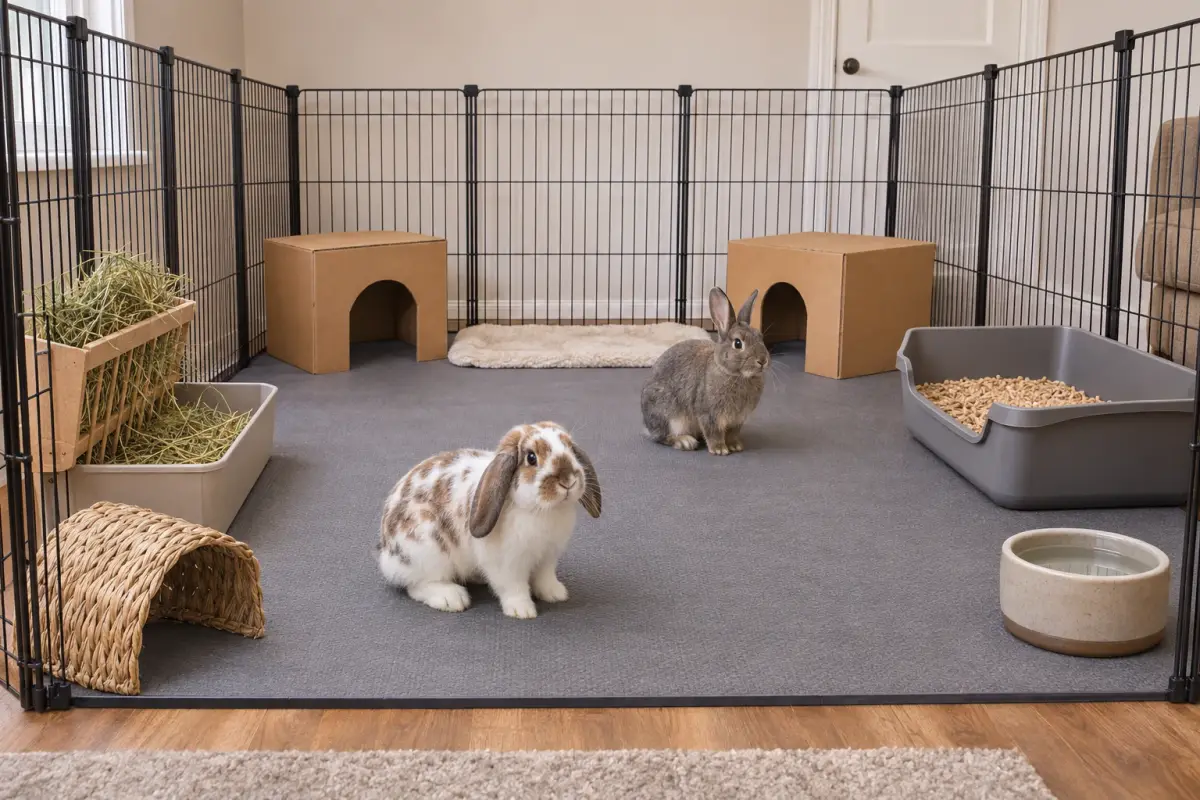
That is why many rabbit owners now prefer exercise pens to rabbit cages. A pen gives floor space for hopping and stretching out, can be reshaped to fit a room, and is often cheaper than a large cage. A rabbit should be able to lie fully stretched out, stand on its hind legs without hitting the roof, and take several hops in a row.
Cage, condo and pen compared
Pet-store rabbit cages with a plastic tray and wire top are usually far too small for anything but a base for an attached pen. Multi-level condos add climbing space, but levels do not replace floor area for hopping. Exercise pens, panels that clip together, give the most floor space and flexibility; cover the floor with washable rugs or vinyl for grip.
A dedicated rabbit-proofed room or free-roaming the house is the House Rabbit Society's ideal for many rabbits. Whatever you choose, it must be sturdy enough that the rabbit cannot chew its way out, as VCA notes.
Flooring, litter and furnishings
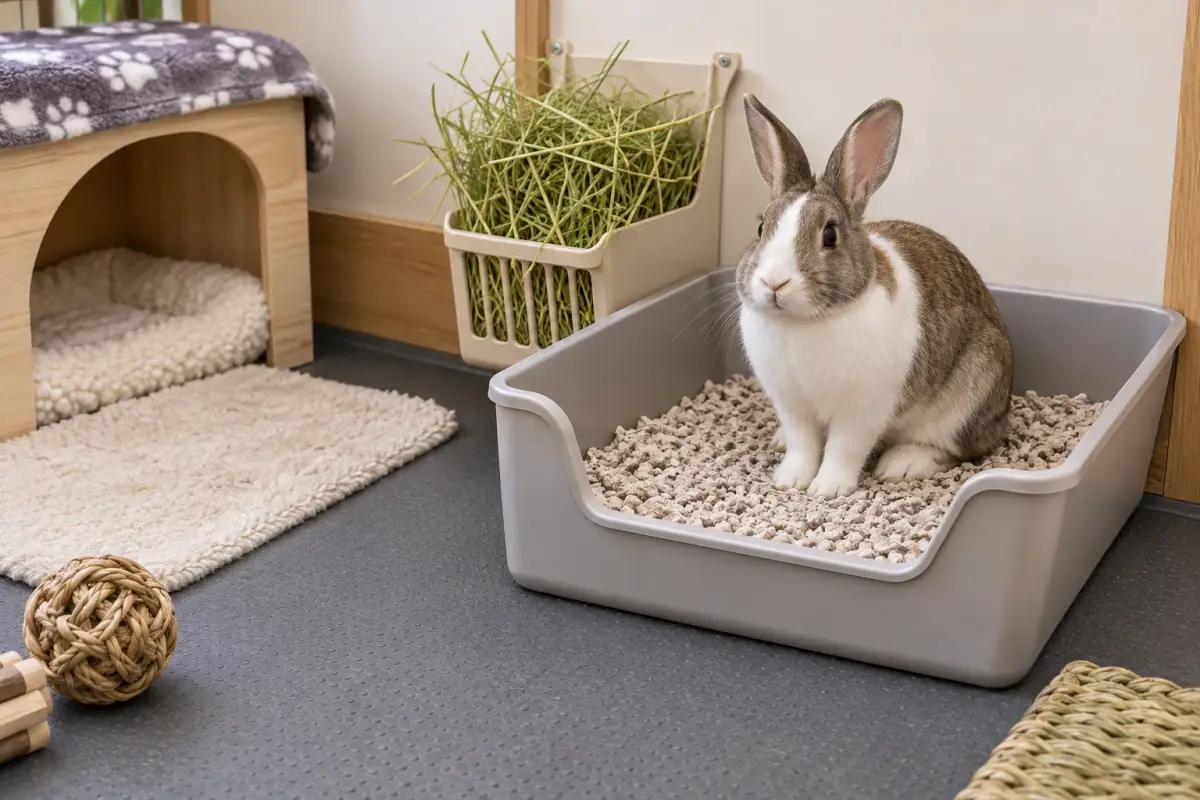
Avoid bare wire floors. VCA advises that if a cage has a wire bottom, at least half should be covered with something solid, because wire and hard floors can cause sore hocks. A solid, grippy floor is better throughout. Add a litter box with paper-based litter or hay; VCA recommends a litter box and warns against wood shavings.
Include a hiding box, a hay rack or large hay pile, a heavy water bowl or bottle, and chew toys. Rabbits are crepuscular and social; pairs need more space. Place the enclosure in a quiet room away from drafts and heat.
The best setup for each situation
For an apartment, an exercise pen of at least 12 square feet with a rug floor, plus supervised free time in a rabbit-proofed room. For a pair of rabbits, a larger pen or a room. For a large breed, larger rabbit cages with more floor space and taller sides. For a rabbit litter-trained and calm, consider free-roaming with a metal playpen as a home base.
Rabbit-proof anything within reach: cords, baseboards, houseplants and furniture legs. Rabbits chew, and electrical cords are a serious hazard.
Cleaning and when to call a vet
VCA advises spot-cleaning bedding daily and replacing it completely once a week. Clean the litter box every day or two. Wash floor coverings regularly.
Rabbits hide illness. A rabbit that stops eating or passing droppings for even part of a day, sits hunched, has sore feet or drools needs a vet experienced with rabbits promptly. Annual checkups catch dental and other problems early.
Weigh your rabbit every few weeks and check its teeth and feet when you clean, so you notice small changes early. Overgrown teeth and sore hocks are both linked to diet and flooring, so the right rabbit enclosure and plenty of hay help prevent them.
Common questions
What size cage does an indoor rabbit need?
The House Rabbit Society suggests at least 12 square feet of living space, such as 4 by 3 feet, plus several hours of daily exercise outside it. Bigger is always better.
Is a pen better than a cage for a rabbit?
For most indoor rabbits, yes. An exercise pen gives far more floor space for hopping and stretching, is easy to reshape, and is often cheaper than a large cage.
Are wire-bottom rabbit cages bad?
Bare wire floors can cause sore hocks. VCA advises covering at least half of any wire floor with something solid, and a fully solid, grippy floor is better.
What should I put in an indoor rabbit enclosure?
A litter box with paper litter or hay, a hiding box, plenty of hay, fresh water in a heavy bowl or bottle, and safe chew toys on a solid, grippy floor.
Sources we checked
This guide is general information, not veterinary advice. If your pet is unwell or injured, contact your veterinarian.


