






Buying guides
Best Cat Puzzle Toys: How to Choose One Your Cat Will Use
The best cat puzzle toy is one your cat can solve within a minute or two at first, then gradually harder. Start with an easy cat puzzle feeder that releases food with little effort, such as a treat ball or an open maze, and move up only when your cat solves it with ease. Match the type to your cat's paws and appetite, and count every piece of puzzle food in the daily total.
By Matt GarnettUpdated November 14, 20265 min read4 sources
What matters most in a cat puzzle toy
Difficulty matters more than any other feature. A 2020 review of feeding and cat behavior in Veterinary Clinics of North America advises starting with puzzles that release food with little effort, adding treats at first to build motivation, and matching difficulty to the abilities of the individual cat. A puzzle that frustrates a cat is not enrichment, it is a bowl your cat has given up on.
The opening size and the way food comes out come next. Cat puzzles rely on nimble paws, so the holes, tubes or channels need to be wide enough for a paw to reach in and hook food out. Food that drops out when the toy is nudged suits beginners, while food that must be fished out of a channel suits cats that already love the game.
Cleaning is the third criterion. Saliva and crumbs build up on feeding gear, so choose parts that come apart and wash easily, and skip anything with deep seams or glued joints. VCA Animal Hospitals notes that some cat feeders have removable tubes or dishwasher-safe plates for exactly this reason.
Cat puzzle toy types compared
Treat balls and leaking toys are the easiest starting point. A leaking-style food toy lets kibble or treats fall out as your cat bats or rolls it, so success arrives quickly. VCA describes balls with kibble pockets in this category. They suit kittens, first-time puzzle cats and any cat that is unsure what the toy is for.
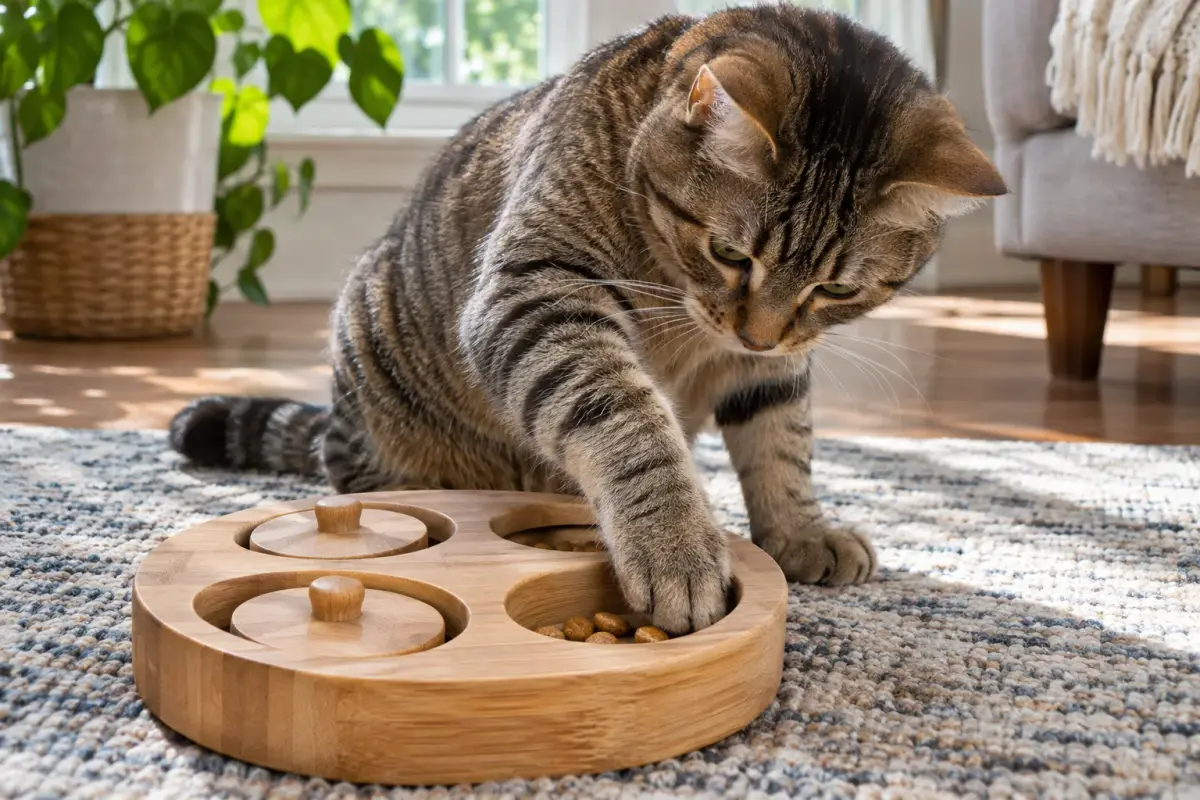
Maze and box puzzles sit in the middle. A wooden foraging maze puzzle box hides food in channels the cat has to work through with a paw, and a wooden puzzle box with catch holes works the same way with openings to scoop from. VCA says tunnel and mouse-hole feeders encourage a cat to develop a hunting strategy, which is the appeal for bright, bored indoor cats.
Rolling dispensers add movement. A rolling drum food-dispensing feeder releases food in small amounts as the cat pushes it along, which stretches a meal out and suits cats that like to chase. Simple homemade versions, such as a muffin tin or ice cube tray with food in each cup, also work, according to VCA. Snuffle mats and plate feeders with raised ridges suit cats that prefer to forage by nose and are easy to wash.
Best type for each cat
For kittens and cats new to puzzles, pick a treat ball or leaking toy with visible food. Put kibble on top and just inside the opening so your cat can smell and see it, and expect a few short sessions before the idea clicks. For confident adult cats that already solve easy toys quickly, step up to a maze box or a rolling drum.
Fast eaters and cats that gulp and then vomit benefit from anything that slows the meal. VCA notes that interactive feeders slow eating and may reduce regurgitation and vomiting. If speed is the main problem and a puzzle seems like too much, a flat-bottomed slow feeder is a simpler option. Slow or stiff older cats do best with low, stable, wide-open designs at floor level, and a vet visit is worthwhile if an older cat suddenly loses interest in food.
In a multi-cat home, give each cat its own puzzle in its own spot. The same 2020 review recommends treating cats as solitary feeders and letting each one eat alone, since a confident cat can easily guard a puzzle and leave a shy housemate hungry. Looking for more play ideas beyond food? Our guide to choosing cat toys covers wands, balls and more.
How to introduce a puzzle feeder
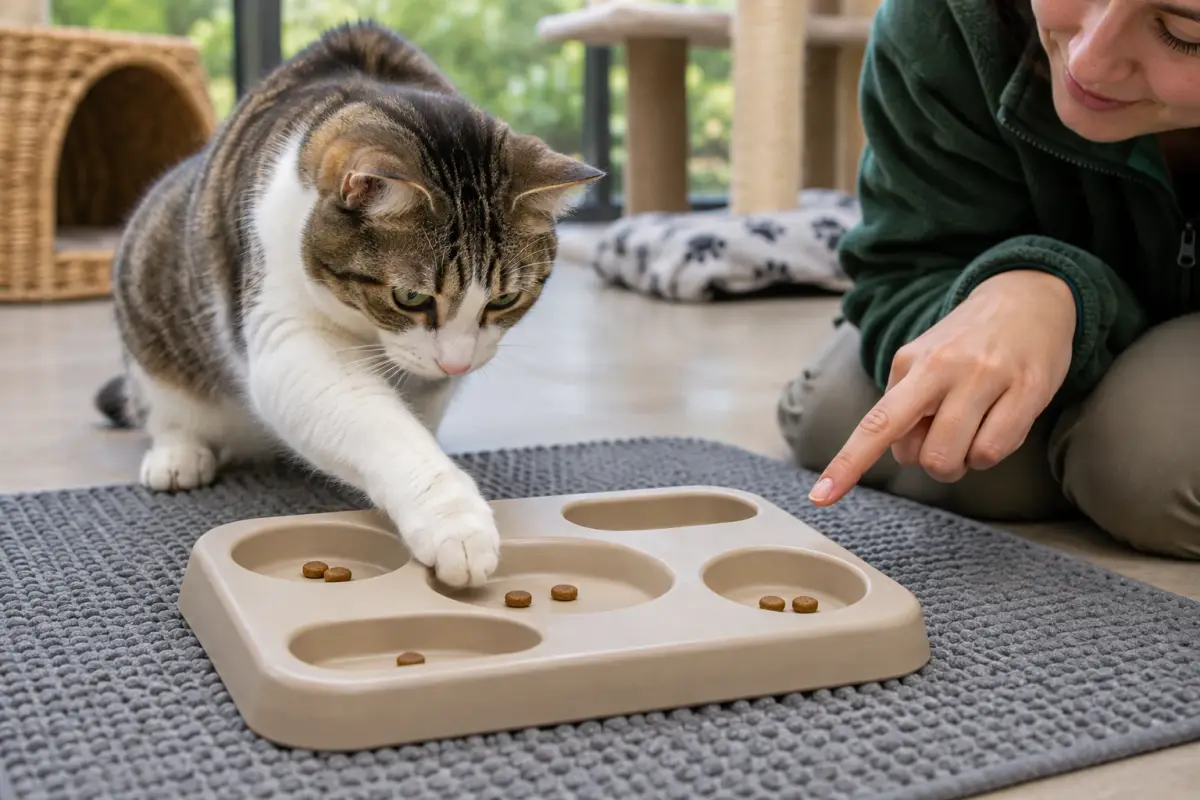
Start with part of one meal, not the whole thing. Put a small portion in the puzzle and the rest in the bowl, then raise the share in the puzzle as your cat gets quick at it. Whatever the toy, your cat still has to eat its full daily food, so never let a hard puzzle stand between your cat and dinner. VCA suggests using part of the regular daily allotment for food-motivated cats so total intake stays accounted for.
Make the first attempts easy. Scatter a few treats around the base, leave some food visible, and sit nearby for the first sessions. The Drake Center for Veterinary Care also suggests dividing meals into three or four small servings and hiding food around the house so your cat hunts for it, changing the hiding spots daily to keep the game interesting.
What to avoid
Avoid puzzles that are too hard on day one, flimsy plastic that cracks into sharp edges, and tiny parts a cat could chew off. Check any toy regularly and throw it out if it splits. VCA also advises asking your veterinarian before building a homemade puzzle, so the materials are safe.
Do not fill puzzles with foods that are dangerous for cats. VCA lists chocolate, caffeine, alcohol, grapes, raisins, onions and xylitol among foods to keep away from pets. Puzzle food also counts toward the daily total, since extra treats add up fast for a sedentary indoor cat. Finally, a puzzle does not replace play: the Drake Center suggests about five minutes of hunting-style play twice a day.
When you are ready to buy, browse our full range of cat puzzle feeders and pick the easiest design that suits your cat's paws.
Cleaning, safety and when to see a vet
Wash puzzles often, especially after wet food or treats, and let them dry fully before refilling. Residue left in seams is hard to see and quick to spoil, so a toy that is difficult to clean is worth leaving on the shelf.
Call your vet if your cat stops eating, loses weight, or seems distressed rather than curious around a puzzle. A change in appetite can be a medical sign, and a puzzle cannot fix it. This page is general information, not veterinary advice, and it cannot replace an examination by the vet who knows your pet.
Cat puzzle access mechanisms
| Puzzle | Where food sits | How access changes |
|---|---|---|
| Treat ball | Inside a movable body | Food drops through openings as the body moves |
| Maze box | In channels beneath a top | Paws reach into the channels |
| Hole box | Behind paw-sized openings | Food is drawn toward an opening |
| Rolling drum | Inside a rolling cylinder | Movement brings food to dispensing holes |
| Snuffle mat | Among fabric folds | Food is searched for within the folds |
| Ridged plate | On a textured open surface | Ridges interrupt a direct path to food |
Common questions
Do cat puzzle toys actually work?
Case studies suggest food puzzles can improve behavior and well-being, though the research is limited. They slow eating, add mental work and mimic hunting, and they work best for cats that actually enjoy food.
Should my cat get its whole meal from a puzzle?
Not at first. Begin with a small share of one meal, then raise it as your cat gets quick at the toy. Make sure your cat always eats its full daily food, and keep a normal bowl available for the rest.
How do I get my cat to use a puzzle feeder?
Use easy designs with food your cat can see and smell, scatter treats around the base, and keep early sessions short. Praise helps, and many cats take to it within a handful of tries.
Can I make a cat puzzle toy at home?
Yes. VCA suggests a muffin tin or ice cube tray with food in each cup, and the Drake Center suggests a cardboard box or plastic bottle with holes. Check with your vet that the materials are safe first.
Sources we checked
- VCA Animal Hospitals — Enriching Your Pet's Environment with Their Food
- VCA Animal Hospitals — Feeding the Mind and Body: Interactive Feeders for Dogs and Cats
- Veterinary Clinics of North America — Feeding Cats for Optimal Mental and Behavioral Well-Being (Delgado and Dantas, 2020)
- The Drake Center for Veterinary Care — Environmental Enrichment for Indoor Cats
This guide is general information, not veterinary advice. If your pet is unwell or injured, contact your veterinarian.


