






Buying guides
Best Cat Toys: How to Choose Toys Cats Actually Use
The best cat toys copy prey. A wand toy you move like a mouse or bird is the most reliable toy for almost any cat, because it lets your cat stalk, chase and pounce. Add one solo toy your cat can bat or kick, and a puzzle feeder for mental work. Then rotate them. Safety decides the rest: no loose string left out, and nothing small enough to swallow.
By Matt GarnettUpdated November 14, 20264 min read2 sources
What matters most: movement, safety and variety
Cats play in short hunting sequences: watch, stalk, chase, pounce, bite and kick. A toy that lets your cat finish that sequence holds attention far longer than one that simply sits on the floor. That is why wand toys and toys you control beat almost every self-moving gadget. VCA's enrichment guidance for indoor cats stresses interactive play for exactly this reason.
Safety is the second filter. VCA warns that string, ribbon and tinsel can become linear foreign bodies if swallowed, tangling in the intestines, which is a surgical emergency. So any toy with a string is a toy you put away when play ends. Variety is the third filter: a cat that has the same five toys out all week stops noticing them, while the same toys rotated feel new. Browse cat toys when you are ready to build a rotation.
The main types of cat toys compared
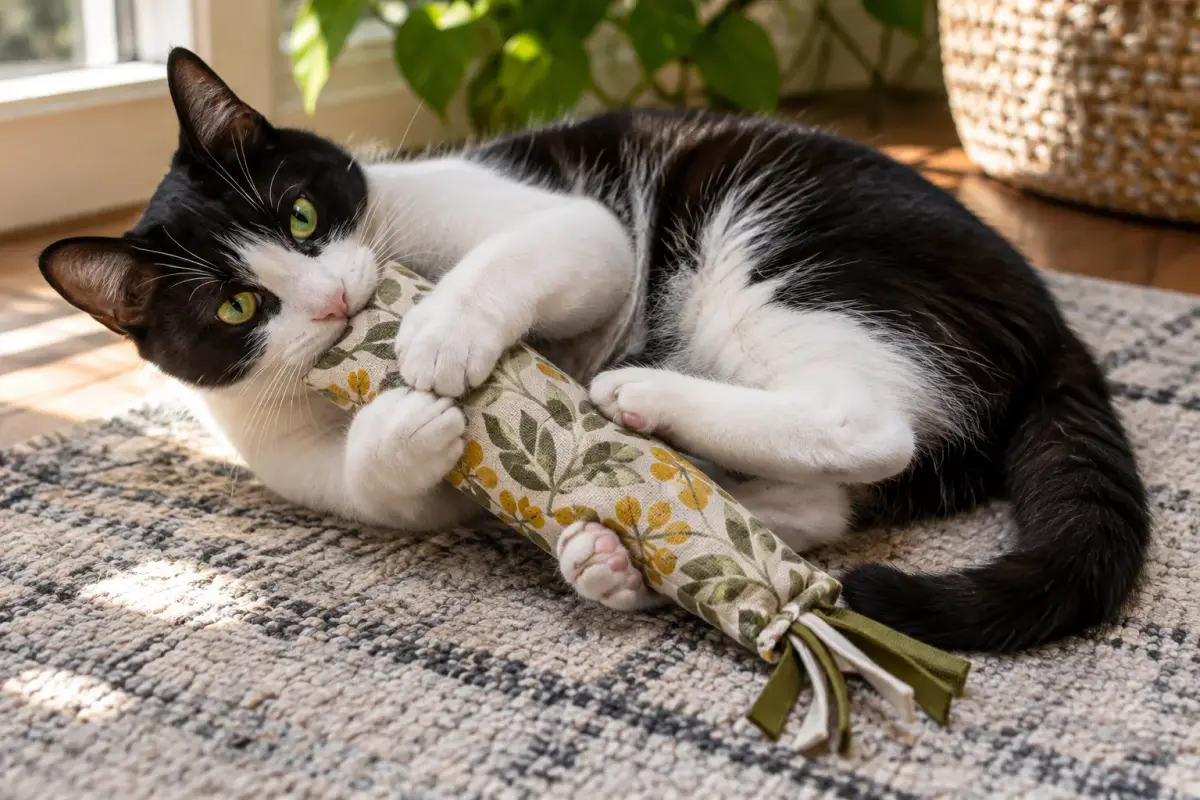
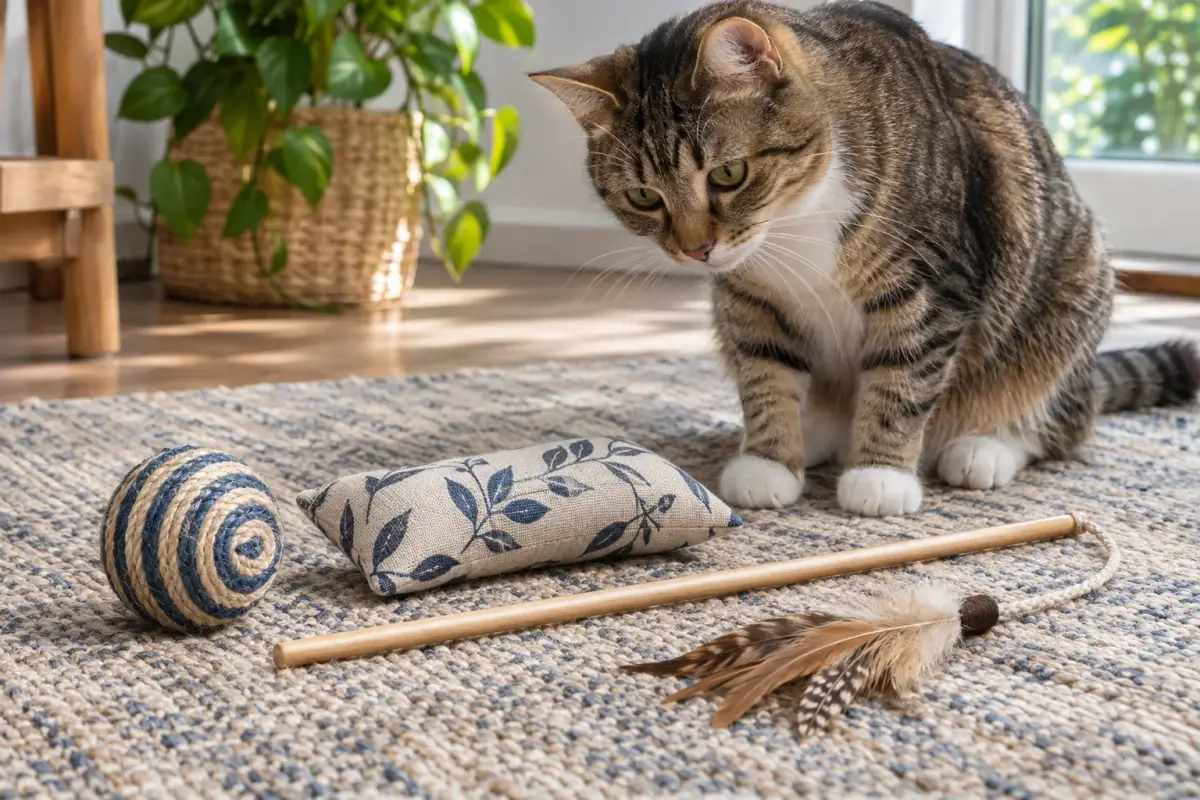
Wand toys have a flexible rod with feathers, fabric or a small plush on a cord, as in a retractable cat teaser wand set with feather refills. They are the best all-round choice and the best way to tire out a young cat. Kicker toys are long, firm plush toys a cat can grab with its front paws and rabbit-kick, which suits cats that play rough. Balls, crinkle toys and springs are good solo toys for batting, as is a cat track toy, but many cats lose interest quickly.
Puzzle feeders and treat balls, such as a rolling drum food-dispensing cat feeder, make a cat work for food, which suits indoor and overweight cats. Tunnels and boxes suit cats that like to ambush. Laser pointers trigger chasing but give nothing to catch, so always end a laser session on a physical toy or a treat. Electronic moving toys can be fun but are best used briefly and supervised.
Best toy type for each cat
For kittens, choose light wand toys, small soft balls too large to swallow and crinkle toys, and play in several short sessions a day. For an adult indoor cat, a wand toy for daily play plus a puzzle feeder at mealtime covers most needs. For a senior cat, slower wand play close to the ground and soft kickers suit stiffer joints.
For a cat that plays aggressively with hands, use long wand toys and kickers so the bites land on the toy, never your fingers. In a multi-cat home, play with each cat separately for part of the session so a shy cat gets a turn. For a cat that chews, choose sturdy fabric or rubber toys made for chewing and replace them once they tear.
What to avoid
Avoid loose yarn, thread, hair ties, rubber bands and ribbon as toys, and never leave a string toy out unsupervised. Avoid toys with small glued-on eyes, bells or feathers that pull off easily, and very small balls a cat could swallow. Avoid treating a laser pointer as the only toy, because a chase with no catch can leave some cats restless.
Watch for torn plush with exposed stuffing and frayed cords, and throw those toys away. If you ever see string or thread hanging from your cat's mouth or under its tail, do not pull it, and call your vet straight away. Vomiting, not eating or straining after a toy goes missing are also reasons to have your cat seen the same day.
How to choose the right size and texture
A good rule is that any toy left out unsupervised should be too big to fit fully inside your cat's mouth. Kicker toys work best when they are roughly as long as your cat's body from chest to hips, so it can hug and kick at once. Wand rods of two to three feet keep your hands well away from claws.
Texture preferences vary. Some cats like feathers, some like fur-like plush, some like crinkle sounds. Try a few and note which ones your cat goes for, then buy more of that kind. Catnip appeals to many adult cats but not all, and kittens rarely react to it before a few months of age, so do not judge a kitten by its response to catnip.
Rotation, care and how long toys last
Keep three or four toys out at a time and swap them every few days. Store wand toys out of reach between sessions, which also keeps them special. Two or three short play sessions a day of ten to fifteen minutes suit most indoor cats, ideally before meals, so the hunt ends with food.
Wash fabric toys occasionally and check every toy weekly for damage. Wand toy attachments are usually the first part to wear out, so replacement attachments are worth having. Check cat toys for refills before one wears out. A cat that suddenly stops playing, or seems stiff or reluctant to jump, may be uncomfortable rather than bored, and that is worth a conversation with your vet.
Cat toy movement and interaction
| Toy | Physical action | Who controls play |
|---|---|---|
| Wand | A lure attached to a rod or cord | A person moves the lure |
| Kicker | An elongated soft body | The cat grips and kicks it |
| Ball,spring or crinkle toy | A small loose object | The cat bats or chases it |
| Track | A ball moves in a constrained path | The cat moves the ball |
| Food puzzle | Openings or obstacles around food | The cat manipulates or searches |
| Tunnel | An open passage or hiding space | The cat enters and ambushes |
| Electronic moving toy | A powered movement mechanism | The selected operating mode |
Common questions
What are the best toys for kittens?
Light wand toys, soft balls too large to swallow, crinkle toys and small kickers. Play in short sessions several times a day and put away any toy with string when you finish.
Are cat puzzle toys worth it?
Yes, especially for indoor cats and cats that eat too fast. A puzzle feeder turns part of a meal into a hunt and adds mental work. Start with an easy setting so your cat succeeds.
Are laser pointers bad for cats?
They are fine in moderation, but there is nothing to catch. End each session by switching to a toy your cat can grab, or a treat, and never shine the laser into your cat's eyes.
Do cats need chew toys?
Some cats like to chew, especially kittens. Choose sturdy fabric or rubber toys designed for cats, avoid string and rubber bands, and replace a chew toy as soon as it starts to tear.
Sources we checked
This guide is general information, not veterinary advice. If your pet is unwell or injured, contact your veterinarian.


