






Care & how-to
DIY Cat Toys: Easy Homemade Toys Cats Love
The best homemade cat toys are simple: a cardboard box with holes, a paper bag with the handles cut off, a ball of scrunched paper, a treat puzzle made from a toilet paper roll, or a sock stuffed with catnip. They cost nothing and cats love them. Avoid string, ribbon, rubber bands, small parts and plastic bags, and supervise anything on a cord.
By Matt GarnettUpdated November 13, 20264 min read3 sources
Safety rules for homemade toys
Cornell Feline Health Center warns against toys with small pieces or loose strands, including string and feathers that can separate and be swallowed. Swallowed string, ribbon or yarn can cause a serious intestinal injury, and VCA advises using string only under direct supervision. So skip rubber bands, hair ties, twist ties, bottle caps, beads and anything small enough to swallow.
Use paper bags, never plastic, and cut off the handles so a cat cannot get its head stuck. Check homemade toys often and throw them away once they start to fall apart, and keep a few ready-made cat toys on hand for days when the box supply runs out.
Toys from boxes and bags
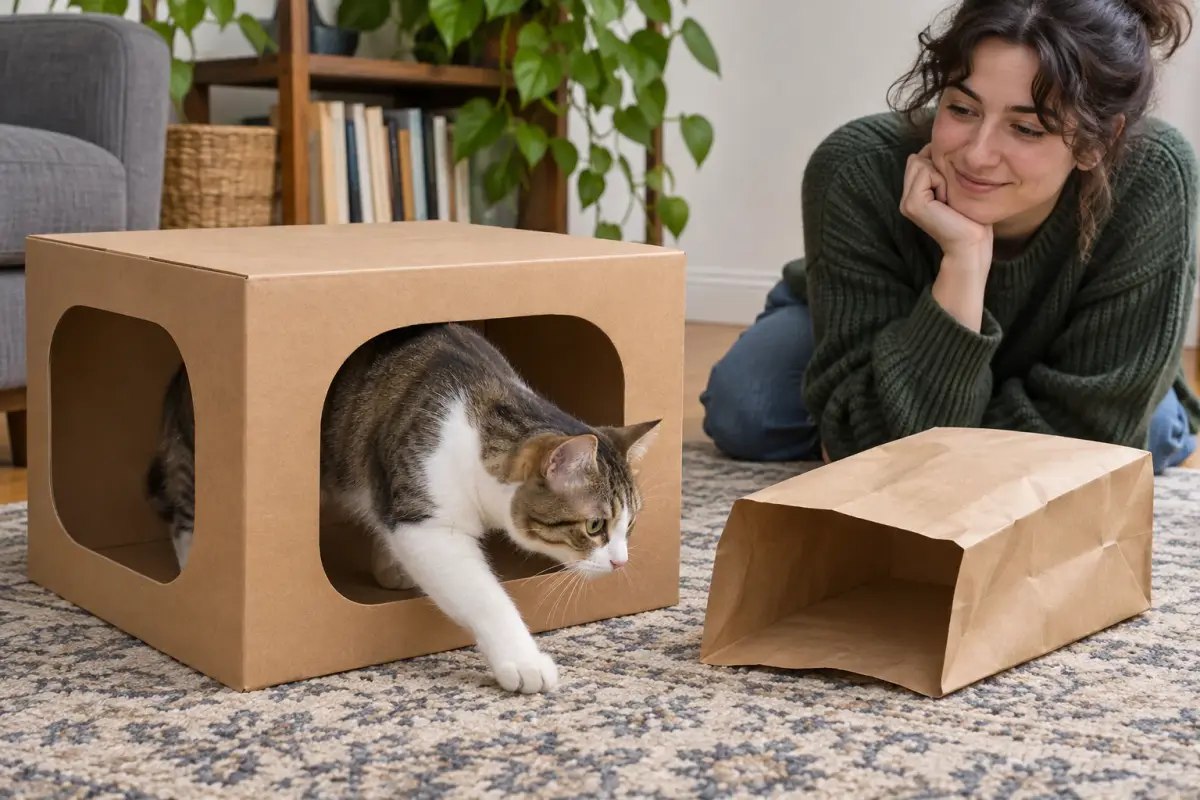
1. The box fort: cut two or three paw-sized holes in a cardboard box and drop a toy or a few treats inside. 2. The tunnel: open both ends of several boxes and tape them into a line. 3. The paper bag hideout: a large paper grocery bag, handles removed, laid on its side, with a crinkle ball inside. Cornell notes that bags, boxes and ping-pong balls can entertain cats very well.
4. The ping-pong bathtub: drop two ping-pong balls into a dry bathtub, where they bounce and roll but cannot escape under furniture. It is a favorite game for many cats and an easy one to supervise.
Food puzzles and treat toys
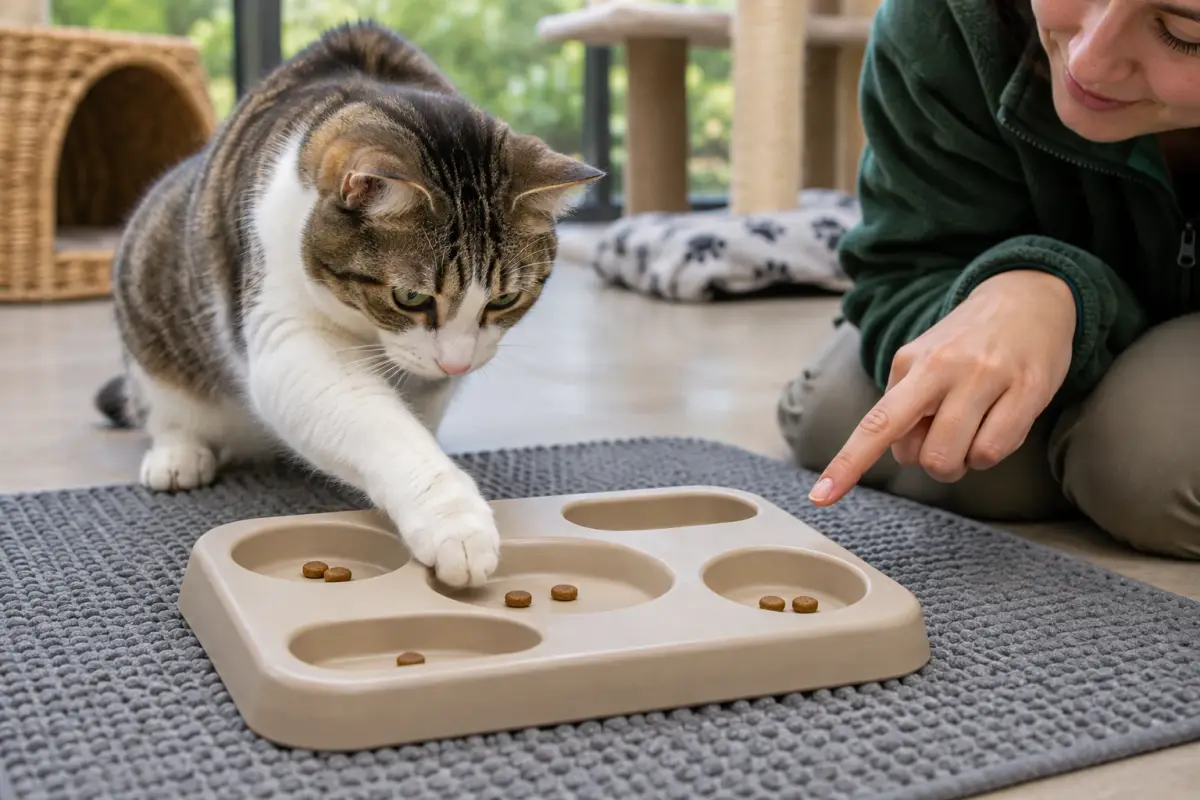
5. The toilet paper roll puzzle: fold in the ends of an empty roll, poke a few holes and put kibble inside. 6. The egg carton hunt: put a piece of kibble in each cup of a cardboard egg carton. 7. The bottle feeder: VCA suggests cutting small, smooth-edged holes in a clean plastic bottle and filling it with dry food so your cat rolls it to get the pieces out.
Count any food used in puzzles toward your cat's daily amount, and start with easy versions so your cat succeeds. VCA notes food puzzles, including store-bought interactive cat toys, are especially good enrichment for sedentary indoor cats.
Kickers, balls and a DIY wand
8. The sock kicker: stuff an old, clean sock with fabric scraps and a pinch of dried catnip, then knot or sew the end closed tightly. Cats grab these and bunny-kick them. 9. Paper balls: scrunch a sheet of paper into a ball and toss it; VCA lists rolled-up paper balls as a good catchable prey toy. If you want a ready-made version of the same chase-and-bat game, a ball track toy is one option.
10. A DIY wand: tape a strip of fleece or a folded fabric scrap securely to a sturdy stick or dowel. Keep the strip short and wide rather than thin like string. Use it only while you are playing, then put it away out of reach.
A DIY cat wheel or climbing setup?
Exercise wheels can be built at home, but they are large, need to be very sturdy and must turn without any gap where a paw or tail could be caught. Unless you are an experienced builder, a commercial wheel or a simple climbing route such as a cat tree is the safer choice.
Wall shelves, a sturdy bookcase cleared at the top, or a homemade scratching post often give more exercise for less effort. Our guide to building a cat tree covers simple designs.
Keeping toys fresh, and when to call your vet
Rotate toys so they stay interesting. Cornell recommends rotation, and VCA suggests offering four or five toys at a time from a bigger collection of cat toys and swapping them weekly. Store spare toys in a sealed bag with a pinch of catnip.
Call your vet straight away if you think your cat has swallowed string, a rubber band or part of a toy, or if it vomits repeatedly, stops eating or strains to pass stool after playing. If you see string coming from the mouth or rear, do not pull it.
This page is general information, not veterinary advice, and it cannot replace an examination by the vet who knows your pet.
Common questions
What household items can cats play with safely?
Cardboard boxes, paper bags without handles, scrunched paper balls, ping-pong balls, toilet paper tubes and clean socks stuffed with fabric are good choices. Avoid string, rubber bands, hair ties and plastic bags.
Is it safe for cats to play with string?
Only under direct supervision, and put it away afterward. Swallowed string, yarn or ribbon can cause a life-threatening intestinal injury, so never leave it where your cat can find it alone.
How do you make a cat toy with catnip?
Stuff a clean sock or fabric pouch with soft scraps and a pinch of dried catnip, then tie or sew it tightly closed. Refresh it with new catnip when your cat loses interest.
Sources we checked
This guide is general information, not veterinary advice. If your pet is unwell or injured, contact your veterinarian.


