Buying guides
Best Cat Toys for Bored Cats: How to Choose
The best cat toys for bored cats copy prey: they move unpredictably, can be caught, and sometimes pay out food. In practice that means a wand toy for daily play with you, a food puzzle for part of a meal, and one or two solo toys for the hours your cat is alone, rotated so nothing goes stale. Our interactive cat toys cover all three types.
By Matt GarnettUpdated November 13, 20265 min read2 sources
How to tell your cat is bored
A bored indoor cat often finds its own entertainment, and you may not like it. Common signs are racing around at night, ambushing ankles, knocking things off shelves, scratching furniture more than usual, pestering you or another pet for attention, and sleeping even more than a cat normally does during the day. Kittens and young adults show it most, but older cats get bored too.
Before buying anything, rule out a health cause. A cat that suddenly overgrooms, stops eating, hides, cries at night or changes its litter habits needs a vet visit first, because those can be signs of pain or illness rather than boredom. Once your vet is happy, toys and routine are the right tools, and our range of interactive cat toys is a good place to start.
What makes a toy hold a cat's interest
Ohio State University's Indoor Pet Initiative points out that cats evolved to catch 10 or 20 small animals a day, which is why they like toys that act like prey. The movements that work are the ones prey makes: darting away, stopping, hiding and fluttering. A toy that sits still on the floor is just an object to most cats after the first sniff.
The other half is reward. A cat that can finally catch, bite and carry the toy finishes the hunt, and a toy that releases a piece of kibble does the same job. Toys that only tease, with nothing to grab at the end, can leave some cats keyed up rather than satisfied. Look for a mix of chase, catch and food across the toys you own, rather than one clever gadget.
The main types compared
Wand toys are the strongest option for play together, because you control the movement and can make it look like a bird or mouse. They need you there, and they must be put away afterward. Food puzzles turn part of a meal into a task: a box with holes and balls such as the cat puzzle toy with a ball and spring-loaded wand suits a food-motivated cat, and our cat puzzle feeders go further.
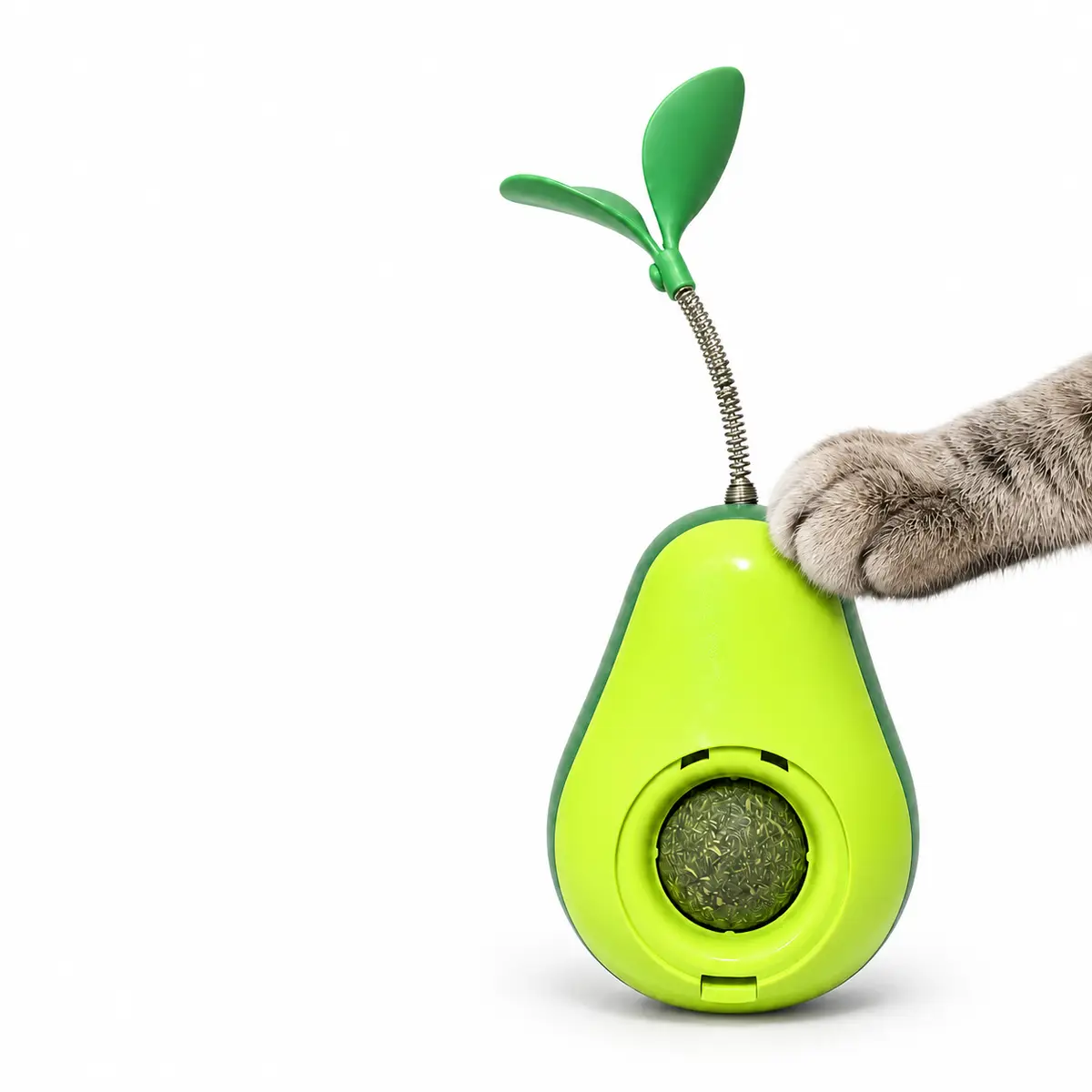
Solo toys keep a cat busy while you are out. Spring toys on a suction base, like the suction-cup spring toy with a fur ball, wobble back every time they are batted, and a hide-and-seek mouse box with nine holes gives a cat something to fish for. Electronic and track toys sit in between: good bursts of interest, but many cats lose interest faster than with a toy a person moves.
Which type suits which cat
A cat home alone all day needs solo toys plus a proper play session when you get back. A food-motivated cat does well with puzzles, which slow eating and add effort to meals. An older cat often prefers slower, ground-level play: a wand dragged along the floor, or a hole box it can paw at while lying down, rather than toys that demand big leaps.
Kittens want everything, often, and do best with sturdy toys that can survive biting. In a multi-cat home, play with each cat separately, at least for part of the time, because a confident cat often takes over the toy while a shy one watches. A cat that hunts your feet usually needs more wand play aimed at a toy, never at hands.
Routine and rotation matter more than the toy
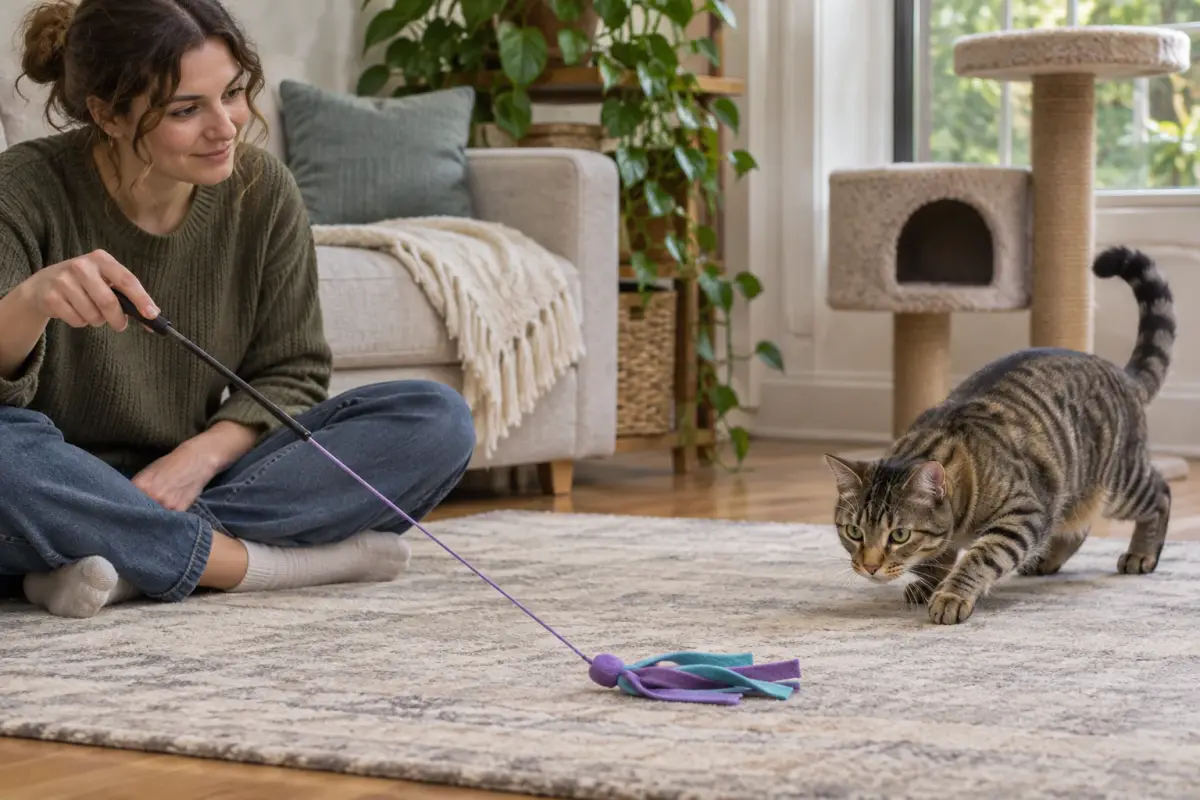
VCA Animal Hospitals suggests aiming for at least three short play sessions a day, every day, and starting them shortly before your cat's usual active times, which for most cats means dawn and dusk. Short and regular beats one long session at the weekend. End each session by letting your cat catch the toy, then offer a meal or a treat to complete the hunt.
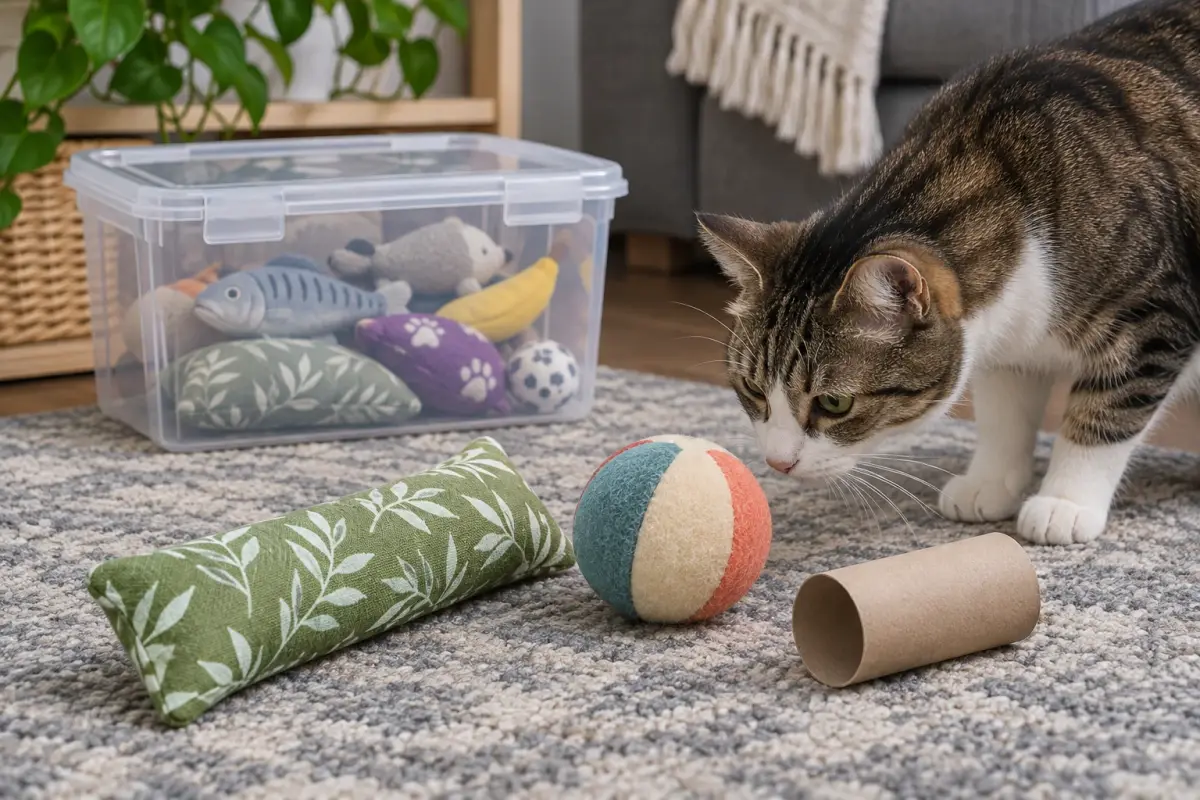
Both VCA and Ohio State recommend rotating toys so old ones seem new. Keep most toys in a closed drawer, put out three or four at a time, and swap them every few days. If your cat sleeps beside one particular toy, Ohio State suggests leaving that favorite out of the rotation. When you use puzzles for part of a meal, VCA advises checking your cat still eats enough overall.
Safety: what to avoid
VCA warns that it is very dangerous for cats to swallow ropes or strings, and Ohio State advises supervising wand play so a cat cannot chew off a piece and choke. Put wand and string toys away after every session, and never leave ribbon, yarn, hair ties or rubber bands lying around as improvised toys. Avoid any toy small enough to be swallowed whole.
Check toys weekly for loose feathers, split seams, cracked plastic and failing suction cups, and throw out anything coming apart. With a laser pointer, finish on a toy your cat can grab, since a beam can never be caught. If your cat vomits, strains or stops eating after a toy goes missing, call your vet straight away. Then go back to the interactive cat toys and pick a sturdier replacement.
Play mechanisms and handler involvement
| Format | What moves or hides | Handler role |
|---|---|---|
| Wand | A lure moves on a rod or line | Person controls play and stores it afterward |
| Food puzzle | Food is hidden behind openings or pieces | Set difficulty and clean the hiding spaces |
| Spring toy | An attached part springs back after contact | Inspect the spring and attachment |
| Hide-and-seek box | Objects sit behind holes | Check openings and removable parts |
| Electronic or track toy | Movement supplied by a mechanism or track | Check the exact operating design |
Common questions
What toys keep a cat entertained when left alone?
Solo toys that react when touched work best: spring toys on a suction base, hole boxes with balls or mice inside, and food puzzles. Leave out only toys with no strings or small loose parts while you are away.
How much play does a bored indoor cat need?
VCA suggests at least three short play sessions every day, timed just before your cat's naturally active periods. Several short, regular sessions help more than one long one, and toys you rotate keep those sessions interesting.
Are interactive toys good for indoor cats?
Yes, because they give indoor cats a way to chase, pounce and catch, which is what their hunting instincts are built for. Toys a person moves usually hold interest longest, with solo and puzzle toys filling the gaps.
Is a laser pointer a good toy for a bored cat?
It can start a chase, but the cat can never catch the dot. Finish every laser session by moving onto a toy your cat can grab and bite, or by tossing a treat, so the hunt has an ending.
Why does my cat get bored of new toys so fast?
A toy that is always on the floor stops being interesting. Rotate a few toys every few days, keep the rest out of sight, and move toys yourself so they behave like prey instead of lying still.
Sources we checked
This guide is general information, not veterinary advice. If your pet is unwell or injured, contact your veterinarian.