







Cats
Cat scratch deterrents
Stretch, climb, repeat.
11 items picked for everyday life with your pet, with shipping estimates on every item.
 A place of their own to scratch and survey.
All cats toys & play →Cat toys →Cat scratchers →Interactive cat toys →Cat tunnels →Cat scratching posts →Cat puzzle feeders →Cat exercise wheels →Catnip & silvervine toys →
↗Tracked US shippingEstimates on every item↶Returns & refundsHow it works♡Here to helpTalk to Giddy Pets
All cat scratch deterrents
Little essentials. Lots of love.


Cat scratch deterrents
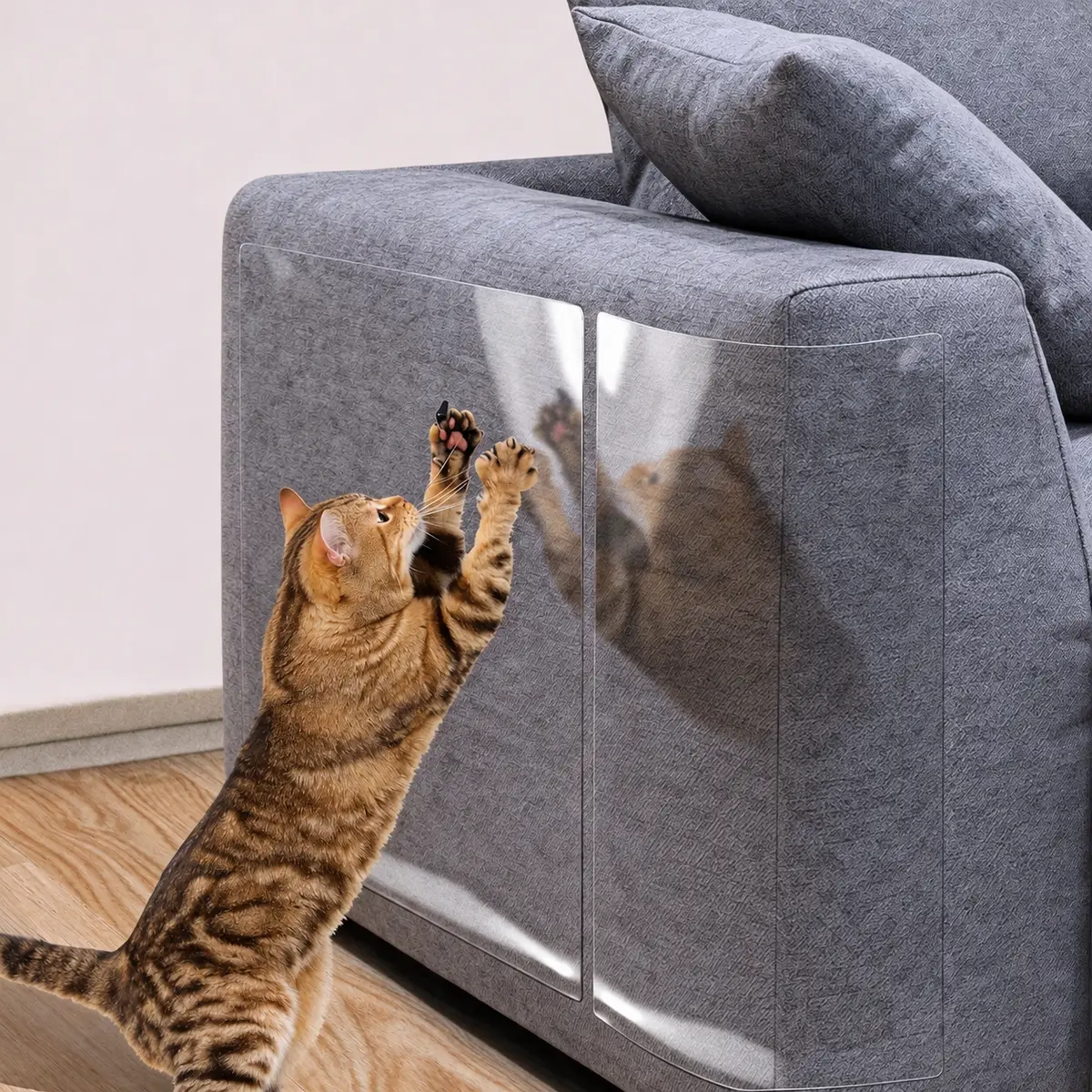
Clear Furniture Scratch Guards in Two Sheet Sizes
- Options
- 7 to choose from
From $10.99

Cat scratchers
Self-Adhesive Cat Scratching Carpet Mat, Cut to Size
- Options
- 16 to choose from
From $13.99

Cat scratchers
Self-Adhesive Cat Scratching Mat, Trim-to-Fit Furniture Protector
- Options
- 7 to choose from
$17.99

Cat scratchers
Sisal Cat Scratching Mat for Sofa Arms and Furniture
- Options
- 3 to choose from
From $17.99


A little guidance
Help choosing cat scratch deterrents
Buying guides and care advice written for this range: what to measure, what matters and what to skip.
From our guides
Shop cat scratch furniture protectors and deterrents: clear anti-scratch protector sheets sold in multi-packs for sofas, chairs and doors, cat repellent and anti-scratch training sprays in 50ml and 100ml bottles, and a bite and scratch deterrent paste. This page narrows our cat scratching range to products that make furniture less appealing. Below is why cats scratch, how to use protectors and sprays properly, and why a good scratching post nearby is the other half of the fix.
Why cats scratch furniture
Scratching is normal, necessary cat behavior. It sheds the outer layer of the claws, stretches the back and shoulders, and leaves scent and visible marks that say this is my space. The Cornell Feline Health Center notes that scratching is innate and hard to stop, but cats can be taught to use posts instead of furniture.
Cats pick furniture because it is sturdy, tall or long enough to stretch on, and placed somewhere important, such as beside a bed or the front door. Knowing that tells you what a replacement scratcher needs to offer.
Clear furniture protector sheets
Clear anti-scratch sheets attach to the sides and arms of sofas, chair legs, doors and walls. Their smooth surface gives claws nothing to grip, so the cat loses interest, and they also shield the fabric underneath if a claw does land. Cornell lists covering surfaces with plastic or double-sided tape among the deterrents that help.
Clean the surface, cut the sheet to fit and attach it with the pins or adhesive supplied, testing adhesive on a hidden area first. Cover every spot your cat has been using, because a cat blocked on one corner will simply move to the next.
Deterrent sprays and pastes
Deterrent sprays use scents most cats dislike to make a surface less inviting. Spray fabric, carpet or wood at the spots your cat targets, after testing on a hidden area for staining, and reapply regularly, since the scent fades. Never spray a cat directly.
Cornell also suggests an odor neutralizer on areas a cat has already scratched, since lingering scent marks draw it back. A deterrent paste suits small spots such as chair legs or cables. These products work best alongside an appealing scratching post, not instead of one.
Give your cat something better to scratch
Deterrents only stop the unwanted habit; the cat still needs to scratch. Cornell recommends a sturdy post at least as tall as your cat stretched out on its hind legs, with a surface that matches what it already likes, such as sisal for a cat scratching a nubby couch, and in the orientation it prefers, vertical or horizontal.
Place the new post right beside the furniture you are protecting, then move it gradually once your cat uses it. Reward with treats, praise or catnip. Keep worn posts; a shredded post is a sign that it is working.
What not to do
Do not punish scratching. Cornell warns that yelling or startling a cat teaches it to fear you, or to scratch only when you are out, rather than to stop. Spraying water at a cat has the same problem.
Trim nails regularly to blunt the damage, avoiding the pink quick. Nail caps are another option for cats that tolerate paw handling. Declawing is an amputation of the end of each toe and is not a fix for scratching; talk to your vet about alternatives first.
How do I stop my cat scratching the couch?
Cover the spots your cat uses with clear protector sheets or a deterrent, and put a tall, sturdy sisal post right beside the couch. Reward your cat for using the post, then move it gradually if needed.
Do cat deterrent sprays work?
They help many cats, especially combined with a good scratching post nearby. Reapply regularly as the scent fades, test on a hidden spot first, and never spray your cat.
Are clear furniture protectors noticeable?
Clear sheets are fairly discreet on most fabrics and protect the surface underneath. Fit them neatly to the arms and corners your cat targets and remove them once the habit has changed.
Does double-sided tape stop cat scratching?
Many cats dislike sticky surfaces, and covering furniture with tape or plastic is one of the deterrents feline health experts suggest. Pair it with a scratching post so your cat has an alternative.
Is declawing a good way to stop scratching?
No. Declawing amputates the end of each toe and is considered a last resort. Protectors, deterrents, nail trims, nail caps and good scratching posts solve most problems.