






Care & how-to
How to Fix a Scratching Post With Sisal Rope
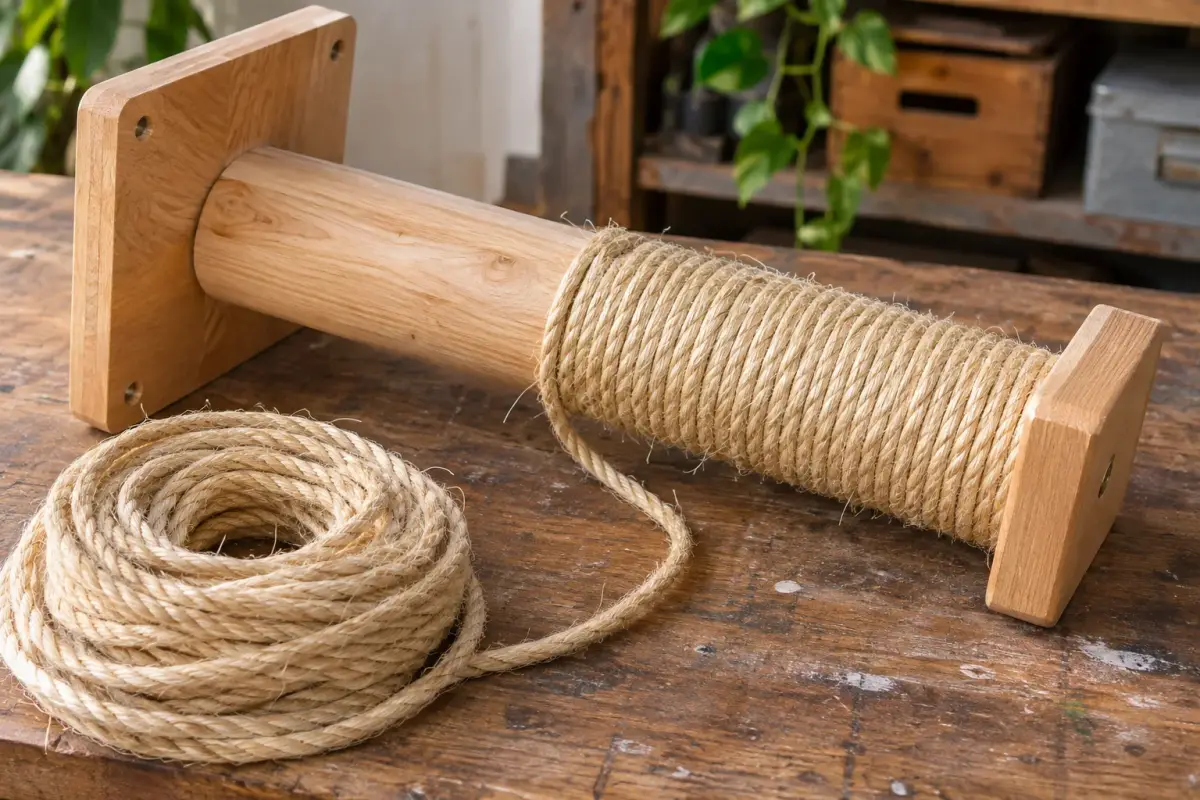
A shredded scratching post is a sign of success, and you can usually fix it by rewrapping it with natural sisal rope. Strip the worn rope, check the post is sound and stable, then wind new 1/4 to 3/8 inch sisal tightly from the bottom up, fixing each end with staples or small tacks and a non-toxic glue. Replace the post if the base wobbles or the core is cracked.
By Matt GarnettUpdated November 14, 20264 min read4 sources
Should you fix it at all?
Before you rewrap, remember that cats like a worn post. The ASPCA advises not discarding a favorite post when it gets shredded, because cats prefer the familiar, scent-marked, roughed-up texture. Cornell Feline Health Center makes the same point: wear shows the post is being used.
So only repair the post when the rope is hanging loose in long strands, the core is showing through, or your cat has started to look elsewhere. Loose strands can catch claws and, if chewed off, could be swallowed. Cornell's safe-toys guidance warns about loose string-like parts for exactly that reason. If a post is beyond repair, our cat scratching posts are a place to start looking.
Choosing the right rope
Use natural, untreated sisal rope, which is what most cats prefer. VCA notes many cats like a loosely woven material their claws can hook into, and sisal shreds in exactly that way. Avoid oiled or treated ropes, jute that has been chemically treated, and nylon or synthetic rope, which can catch claws.
A diameter of about 1/4 to 3/8 inch suits most posts. To estimate length, measure around the post and multiply by the number of turns: roughly the height in inches divided by the rope thickness. A 30-inch post about 3 inches across usually needs around 100 to 130 feet of 1/4-inch rope.
What you need
Gather the sisal rope, a utility knife or strong scissors, a staple gun with short staples or small upholstery tacks, and a non-toxic wood glue or a hot glue gun. Pliers help pull out old staples, and gloves protect your hands from the rough fiber.
Check the post first. If the base wobbles, the core is cracked, or it has started to lean, it needs tightening or replacing; Cornell stresses that a post must be sturdy enough not to tip during use, and a cat that has had a post fall on it may avoid posts altogether.
Step-by-step: rewrapping the post
Step 1: Cut and pull off the old rope, removing staples or tacks with pliers. Step 2: Sand or scrape off loose old glue so the new rope sits flat. Step 3: At the bottom, staple or tack the rope end firmly to the post, then add a small line of glue around the first few inches of the core.
Step 4: Wind the rope tightly around the post, pushing each turn down hard against the one below so no gaps show. Add a short line of glue every few turns. Step 5: At the top, staple the end, trim it, and tuck or glue the cut end so it cannot fray. Let the glue dry fully, ideally overnight, before your cat uses it.
Getting your cat back on the post
A newly wrapped post smells of rope and glue rather than of your cat, so expect some hesitation. Put it back in exactly the same place, rub a little dried catnip into the rope, and drag a wand toy up the post to invite a grab.
Reward the first few scratches with a treat. If your cat has started scratching furniture while the post was worn, cover that spot with a throw or double-sided tape for a few weeks, as the ASPCA suggests.
When to replace instead, and safety
Replace the post if it is too short for your cat to stretch fully, the base is too small to stay steady, or the wood core is split. Cornell recommends a post at least as tall as your cat at full stretch. A wider, heavier base is the single best upgrade. If you do replace it, our scratching post buying guide covers what to look for, and a large cat scratching post, a flat sisal scratching floor mat or other cat scratchers can take over while you decide. Browse all cat scratching posts for more.
Watch for chewing on the new rope and remove loose strands as they appear. If your cat swallows rope or string and then vomits, stops eating or strains to pass stool, call your vet promptly.
This page is general information, not veterinary advice, and it cannot replace an examination by the vet who knows your pet.
Common questions
What kind of rope is safe for a cat scratching post?
Natural, untreated sisal rope is the standard choice. Avoid oiled, dyed or chemically treated rope and slippery synthetic rope. Make sure the ends are fixed and trimmed so loose strands cannot be chewed off.
Is hot glue safe for cat scratching posts?
Once fully cooled and set, hot glue and non-toxic wood glue are commonly used. Keep glue under the rope rather than on the surface, and let it cure before your cat scratches.
Can I use jute instead of sisal?
Untreated jute is softer and can work for cats that prefer a gentler texture, but it frays faster. Many cats prefer sisal. Avoid jute treated with oils or chemicals.
Sources we checked
This guide is general information, not veterinary advice. If your pet is unwell or injured, contact your veterinarian.


