






Training & behavior
How to Get a Cat to Use a Scratching Post
Cats do need somewhere to scratch, and a post is the easiest way to protect your furniture. To get a cat to use one, choose a post that is tall, heavy and covered in a material your cat likes, place it where your cat already scratches or wakes up, make it interesting with catnip or a wand toy, and reward every scratch.
By Matt GarnettUpdated November 14, 20264 min read3 sources
Do cats need a scratching post?
Yes. Scratching is an instinct, not a habit you can train away. Cornell Feline Health Center explains that it keeps claws in condition by shedding their outer sheaths, leaves scent from the paw glands and stretches the whole body. VCA adds that it is a visual territory marker. A cat with nowhere suitable to scratch will choose something, usually your couch or carpet.
Even declawed cats keep the urge, according to Cornell. A post is not a luxury accessory; it is the cat equivalent of a tree, and most homes benefit from more than one. You can browse cat scratching posts and flat cat scratchers to see the range of styles.
Why cats ignore scratching posts
The usual reasons are that the post is too short, too wobbly, in the wrong place or covered in the wrong material. Many inexpensive posts are short carpet-covered tubes that tip when a cat leans on them. A cat that is startled by a falling post will often avoid it from then on.
Location is the other big one. A post in a back room or a corner nobody uses misses the point; cats scratch where they want to leave their mark, which is where they and you spend time.
Step 1: Choose the right post
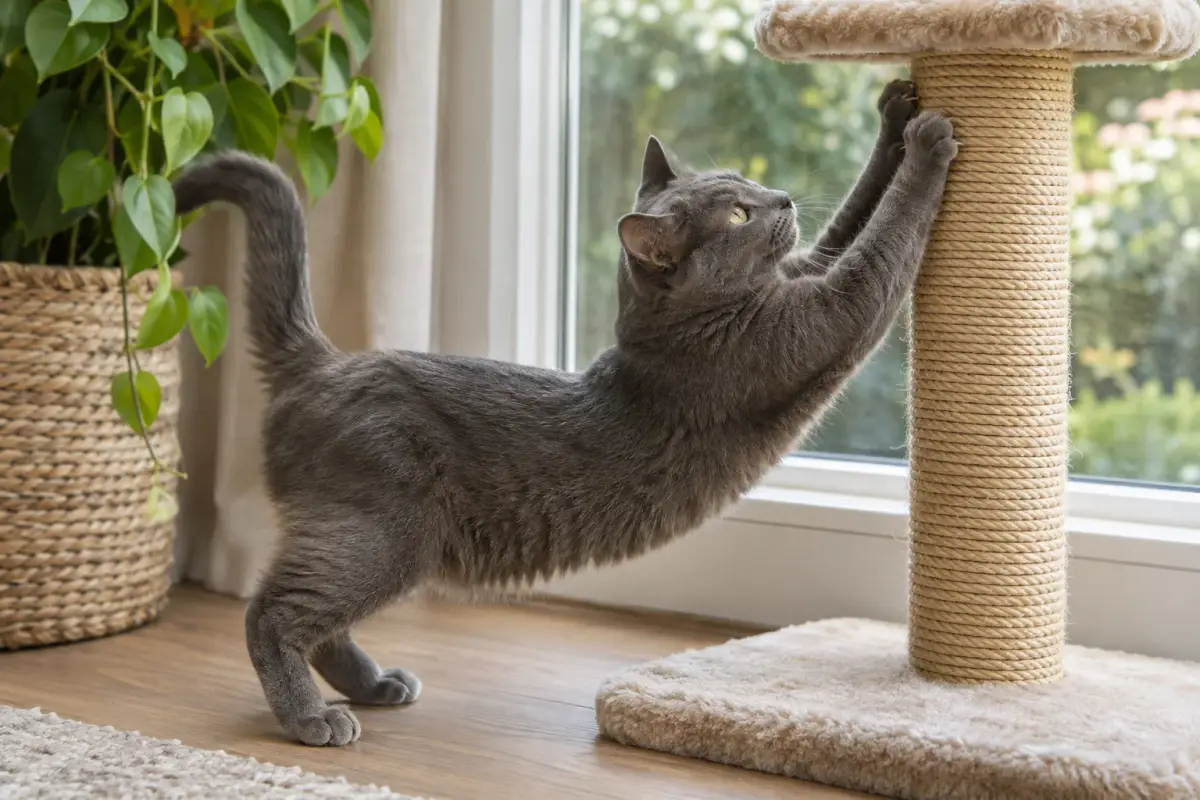
Height: Cornell says the post should be at least as tall as your cat standing on its hind legs with its front legs stretched out, which for most adults means about 30 inches or more. Stability: it should not move when your cat pulls on it. A heavy, wide base or a wall-mounted board works.
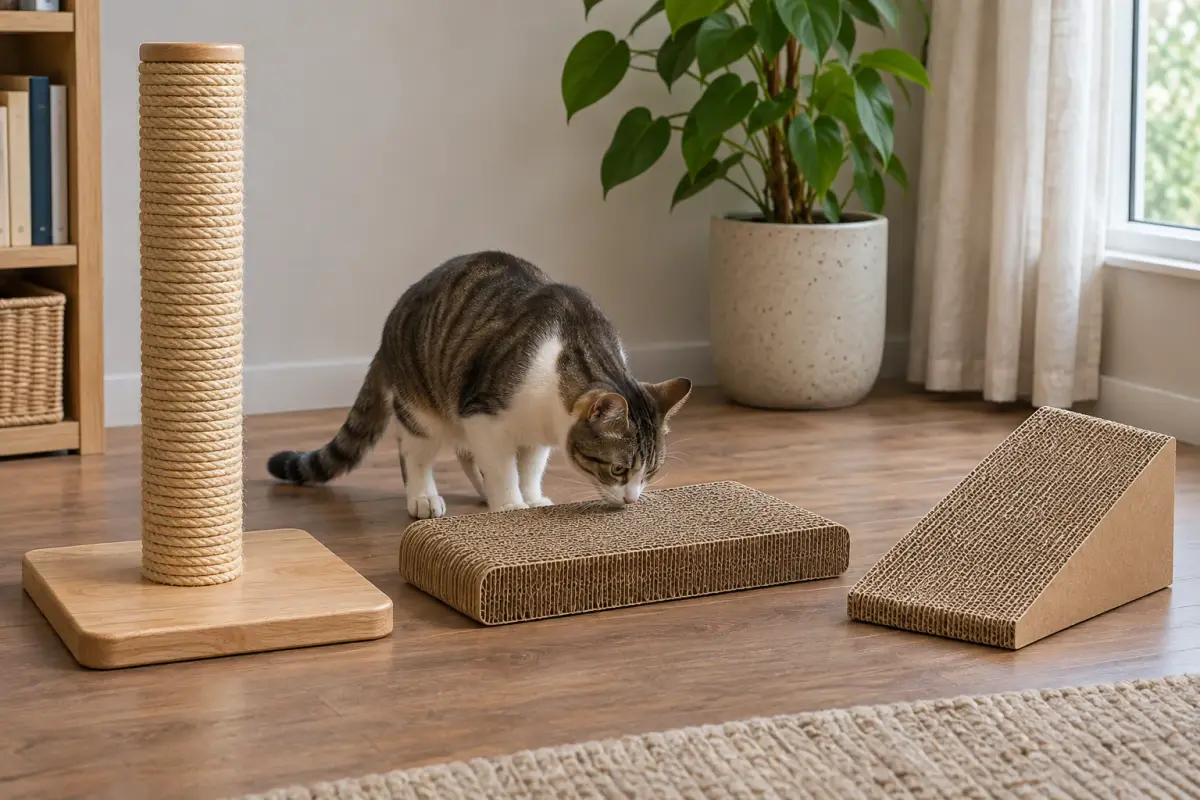
Material and angle: the ASPCA suggests trying cardboard, carpet, wood, sisal and upholstery, then buying more of whatever your cat prefers. VCA notes many cats like loosely woven sisal they can hook into. Some cats scratch vertically, some horizontally on the floor, and some on slopes, so offer both a tall scratching post and a flat sisal scratching mat at first.
Step 2: Put it where your cat already scratches
Place the post right next to the furniture your cat has been scratching, and another near where it sleeps, since many cats scratch first thing after waking. VCA suggests posts in several parts of the home, and near doorways or main living areas where cats like to mark.
Cornell recommends moving a post only gradually once your cat uses it, a little each day. Keep old, shredded posts; the ASPCA notes cats prefer worn, familiar-smelling posts, and replacing a well-used one with a fresh one can set training back.
Step 3: Make it rewarding
Rub catnip into the post or sprinkle a little at the base, dangle a wand toy so your cat's claws hit the post as it grabs, and hang a toy from the top. VCA mentions products that combine pheromones and catnip for this purpose. Give a treat or praise the moment your cat scratches the post.
Do not pick your cat up and drag its claws down the post; the ASPCA warns this can frighten it off the post. For kittens, start early. VCA suggests about eight weeks is ideal, and a short post or flat scratcher is easier for small bodies at first.
If your cat still will not use it
Try a different material or angle, a taller or heavier scratching post, or a new location right in front of the target furniture. Our scratching post buying guide covers what to look for. Cover the furniture temporarily with a throw or double-sided tape, as the ASPCA suggests, so the post is the obvious choice. Keep nails trimmed in the meantime.
If scratching becomes intense, starts suddenly, or comes with hiding, appetite change or other signs of stress, talk to your vet. VCA notes anxiety can drive extra scratching and may need medical as well as environmental help.
This page is general information, not veterinary advice, and it cannot replace an examination by the vet who knows your pet.
Common questions
How tall should a cat scratching post be?
At least as tall as your cat at full stretch on its hind legs, usually about 30 inches or more for an adult cat. Height matters less than stability; it must not wobble when your cat pulls on it.
What material do cats like to scratch most?
Many cats prefer sisal rope or sisal fabric, which their claws can hook and shred. Others like corrugated cardboard, carpet or bare wood. Offer two or three and watch which your cat chooses.
How many scratching posts does a cat need?
At least two: one near where your cat sleeps and one beside its favorite furniture target. Larger homes and multi-cat households benefit from a post in each main room.
Should I put catnip on a scratching post?
Yes, for cats that respond to it. A light rub of dried catnip on the post can draw your cat to it. About half of cats do not react to catnip, so use a wand toy as well.
Sources we checked
This guide is general information, not veterinary advice. If your pet is unwell or injured, contact your veterinarian.


