






Training & behavior
How to Stop a Cat Scratching Furniture
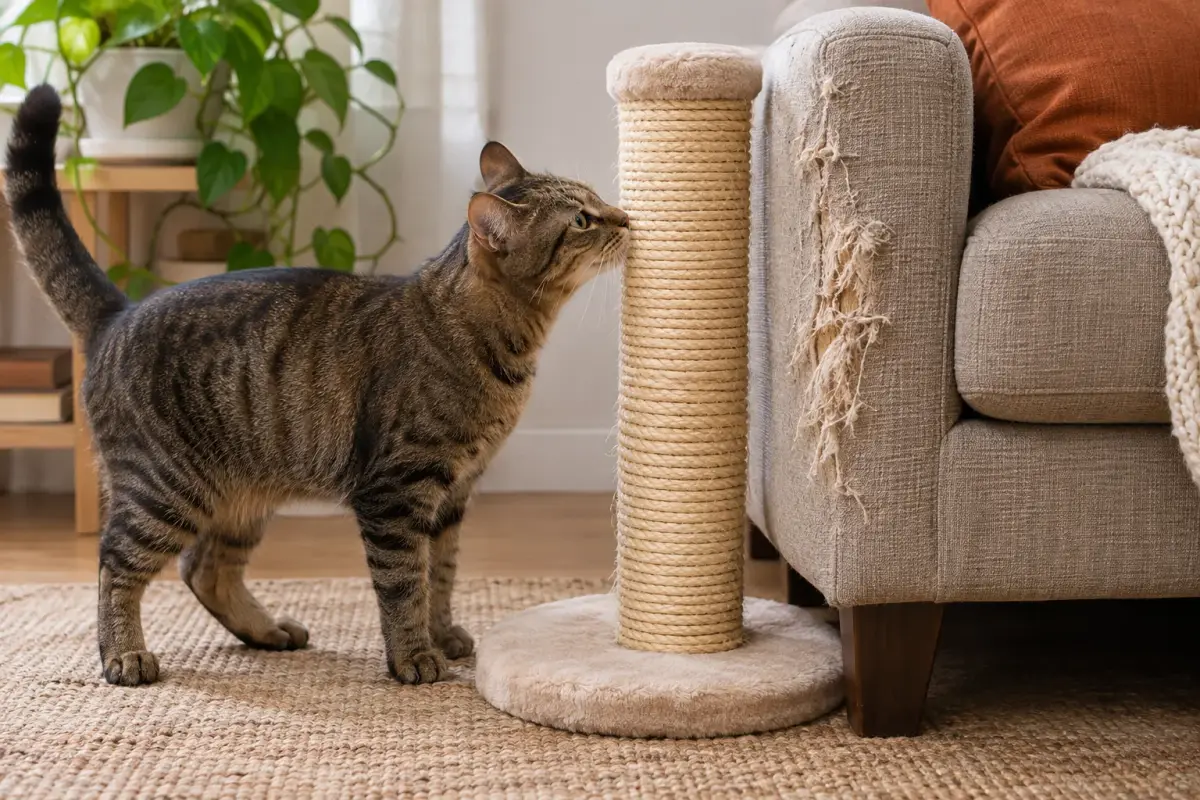
You cannot stop a cat from scratching, and you should not try: it is a normal, healthy behavior. The ASPCA's advice is to teach your cat where to scratch instead. That means offering sturdy posts your cat prefers, right next to the furniture they target, making the furniture less appealing for a while, keeping claws trimmed, and rewarding every use of the post.
By Matt GarnettUpdated November 14, 20264 min read3 sources
Why cats scratch furniture
Scratching does several jobs. The ASPCA lists play, stretching, marking territory and removing the worn outer layer of the claws to reveal sharper ones underneath. Cornell adds that scratching leaves scent from glands in the paws as well as visible marks, which is why cats scratch prominent spots such as the arm of a sofa near the door or the side of a bed.
Furniture is often simply the best scratching surface available: tall, heavy, stable and covered in satisfying fabric. A wobbly, short or carpet-covered scratching post that tips over will lose to a sofa every time. Fix the alternative, and the furniture usually stops being interesting.
Step 1: Choose posts your cat will actually use
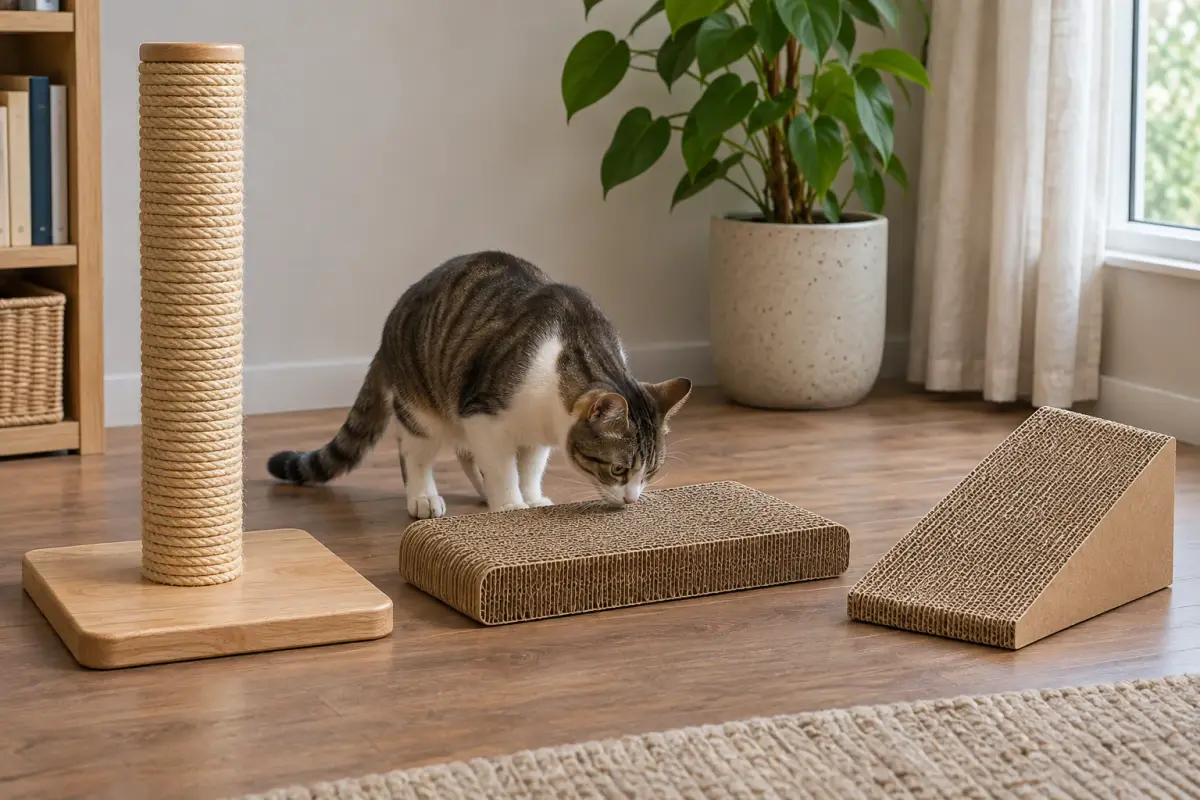
Watch what your cat scratches now. Is it vertical, like a sofa arm or door frame, or horizontal, like a rug or doormat? Is the material rough woven fabric, carpet or wood? The ASPCA suggests offering posts in several materials, such as sisal, cardboard, carpet and wood, and in vertical, horizontal and slanted shapes, then adding more of the type your cat prefers.
Stability and height matter most. Cornell recommends a post at least as tall as your cat stretched out on its hind legs with front legs extended, with a heavy base that will not wobble. Sisal rope or sisal fabric suits many cats, and VCA notes many cats like loosely woven material they can hook their claws into. Cardboard scratchers are cheap, popular for horizontal scratching, and easy to replace. For a cat that stretches up the sofa arm, a tall scratching post is the closest match, and our scratching post buying guide compares materials and shapes.
Step 2: Put the post where the scratching happens
Place a post, such as a large cat scratching post, directly in front of or beside the piece of furniture your cat targets. Cornell suggests putting a post next to the current scratching spot and moving it gradually to a better location over time, and providing one near each area your cat likes to scratch. Where a freestanding post will not fit, a vertical scratching board can go flat against a wall. Cats often scratch right after waking up, so a post near sleeping spots is useful.
Make the post attractive. The ASPCA suggests rubbing catnip on it, hanging toys from it, or drawing a wand toy across it so your cat sinks its claws in during play. Reward your cat with praise or a treat the moment it scratches the post. Keep old, shredded posts; cats prefer a familiar, well-used one.
Step 3: Make the furniture less appealing
While your cat learns, cover the targeted spots. The ASPCA suggests double-sided sticky tape, plastic sheeting, sandpaper or an upside-down vinyl carpet runner with the knobby side up. Throws and fitted covers also work. Cornell notes that blocking access is the only guaranteed protection, so close doors to precious rooms for now.
Clean scratched areas with an odor neutralizer to reduce the scent marks that invite more scratching. Keep the deterrents in place for several weeks after your cat has switched to the post, then remove them gradually. If the scratching returns, put them back for longer.
Step 4: Trim claws and consider nail caps
Regular nail trims reduce damage. Cornell advises trimming only the sharp, clear tip and avoiding the pink quick, which bleeds and hurts if cut. Get your cat used to having its paws handled with treats first, and trim one or two nails at a time if that is all your cat will accept. Your vet team can show you how.
Soft plastic nail caps glued over the claws are another option for cats that tolerate paw handling. The ASPCA says they last around four to six weeks. They do not stop scratching, but they prevent damage while your cat learns to use a post.
What not to do
Do not punish, shout at or spray your cat. The ASPCA warns that startling a cat should be a last resort because it can teach your cat to fear you, and Cornell notes cats may learn to avoid you rather than the furniture. Never force your cat's paws onto a post, which can make it avoid the post entirely.
The ASPCA opposes declawing, which is the amputation of the end bone of each toe, and notes it has not been shown to solve behavior problems. VCA notes that scratching can increase with anxiety or changes in the household. If a cat is scratching far more than usual, scratching obsessively, or has started marking with urine as well, ask your vet whether stress or a medical problem is involved.
This page is general information, not veterinary advice, and it cannot replace an examination by the vet who knows your pet.
Common questions
Why does my cat scratch the furniture when it has a scratching post?
The post may be too short, too wobbly, the wrong material or in the wrong place. Put a tall, heavy post right next to the furniture your cat prefers, in a similar material, and reward your cat every time it uses it.
Do deterrent sprays stop cats scratching?
Some cats are put off by citrus-scented deterrents, but sprays alone rarely work because they do not meet the need to scratch. Combine any deterrent with a better scratching option right beside the furniture.
How long does it take to train a cat to use a scratching post?
Many cats switch within a few weeks if the post is right and the furniture is covered. Older cats with a long habit may take longer. Keep the deterrents up until the new habit is solid, then remove them slowly.
Is declawing a cat a good way to stop scratching?
No. Declawing is the surgical removal of the end bone of each toe, and the ASPCA opposes it. It has not been shown to fix behavior problems. Scratching posts, nail trims and nail caps protect furniture without surgery.
How do I keep my cat from scratching a leather couch?
Cover the scratched areas with a fitted throw or a clear furniture guard rather than tape, which can mark leather, and test any cover on a hidden spot first. Put a tall, sturdy post right beside the couch and reward your cat every time it uses the post.
Will my kitten grow out of scratching furniture?
No, scratching is lifelong. Kittens are the easiest to redirect, though, so set up posts early. VCA suggests about eight weeks of age is an ideal time to start scratching post training.
Sources we checked
This guide is general information, not veterinary advice. If your pet is unwell or injured, contact your veterinarian.


