






Buying guides
Best Cat Scratching Post: How to Choose One That Works
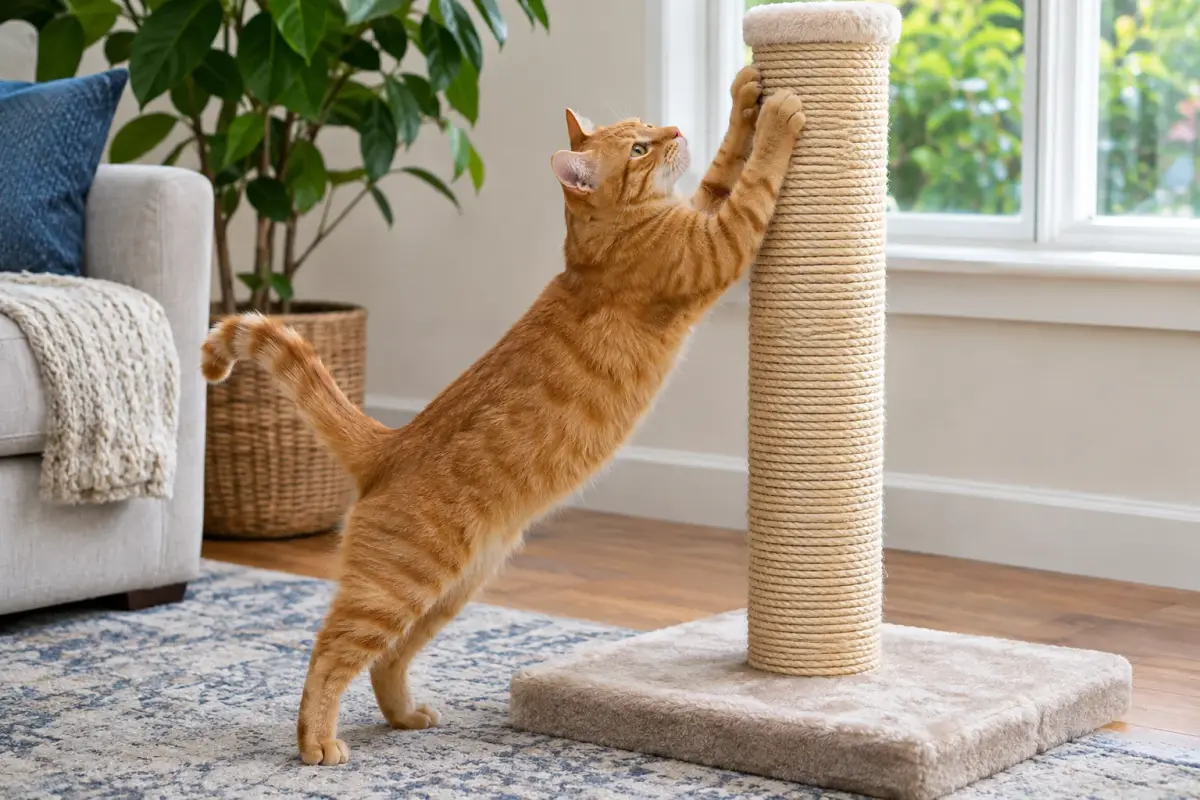
A scratching post works when it is tall enough for a full stretch, heavy enough not to wobble, and covered in a texture your cat likes. Cornell Feline Health Center says the post should be at least as tall as your cat standing on its hind legs with its front legs outstretched, which for most adults means about 30 inches or more. Then match vertical or horizontal to how your cat already scratches.
By Matt GarnettUpdated November 14, 20264 min read2 sources
What matters most: height and stability
Cats scratch to stretch, mark territory and shed the outer layer of their claws, and a full stretch needs height. Measure your cat standing on its hind legs reaching up, and buy a post taller than that. For an average adult cat, that is about 30 to 36 inches; for a large cat, more.
Stability matters just as much. Cornell advises a post sturdy enough not to tip over while in use, and a cat that feels a post wobble often abandons it. Look for a base of at least 16 by 16 inches on a tall post, or a heavy weighted base, and press on the top of the post before you trust it.
Materials compared
Sisal rope and sisal fabric are the most durable coverings and suit most cats for vertical scratching; Cornell suggests rope-like materials for cats that target couches and other nubby surfaces. Corrugated cardboard is cheap, satisfying to shred and loved by many cats, especially for horizontal scratching, but it wears out in weeks and makes a mess.
Carpet-covered posts appeal to cats that already scratch rugs, though loops can snag claws. Natural wood logs and bark suit outdoorsy cats that scratch trees. If you do not know your cat's preference, buy one sisal post and one flat cardboard scratcher and see which gets used.
Vertical, horizontal and angled scratchers
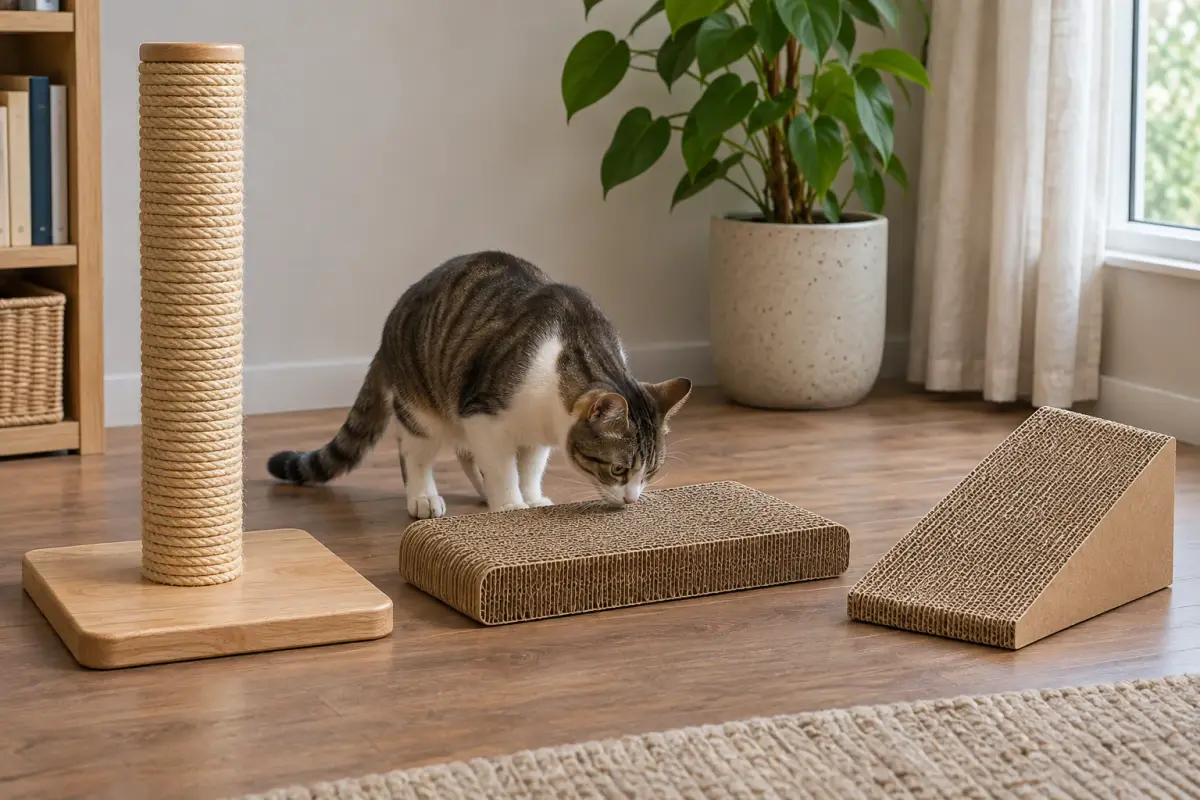
Cats that scratch the sides of furniture, door frames or curtains usually prefer vertical posts. Cats that scratch rugs and carpets prefer horizontal pads; Cornell suggests a flattened cardboard box or a log laid on its side. Angled or ramp scratchers suit both and often appeal to cats that like to stretch forward.
Wall-mounted and door-hanging scratchers give height without floor space and are hard for a cat to knock over, which suits apartments. Corner scratchers wrap a vulnerable sofa corner and give a cat a legal target in the exact spot it already uses.
Best type for each cat
For large cats, choose a post of at least 36 inches with a thick, 4 inch or wider post and a heavy base, or a floor-to-ceiling tree post. See also our guide to cat trees for large cats. For kittens, a shorter, inexpensive sisal post or cardboard pad works, but plan to upgrade as they grow. For seniors with stiff joints, a horizontal or low angled scratcher is easier than a tall vertical post.
For multi-cat homes, put a scratcher in each area where cats spend time, as scratching marks territory and cats do not always share. For a cat that scratches one particular sofa, place a post right next to it first (our guide to stopping furniture scratching has more), then move it gradually once the habit has switched.
What to avoid
Avoid short, lightweight posts with narrow bases; they topple when the cat leans in and teach the cat that posts are unreliable. Avoid posts so short that the cat cannot stretch, and avoid tightly woven fabrics that give the claws nothing to grip.
Avoid punishment when your cat scratches furniture. Cornell notes that punishment can teach a cat to fear you rather than stop scratching. Instead, make the furniture less appealing with double-sided tape or a cover, and make the post more appealing with treats, praise or a little catnip, as in our guide to getting a cat to use a scratching post.
Placement, care and lifespan
Put posts where cats spend time and where they wake up, as many cats scratch right after a nap. Near sleeping spots, doorways and the sofa are good places. Hidden in a spare room, even a great post gets ignored.
A shredded post is a post that is working, so do not rush to replace it. Rewrap sisal posts (how to fix a scratching post) when the rope is bare, and replace cardboard inserts when they flatten. Trimming claws every few weeks reduces damage everywhere. A cat that suddenly stops scratching, or limps, should be checked by your vet.
This page is general information, not veterinary advice, and it cannot replace an examination by the vet who knows your pet.
Scratching surface materials and wear points
| Surface | Physical construction | What to inspect |
|---|---|---|
| Sisal rope or fabric | A rope-like or woven covering | Fraying and attachment |
| Corrugated cardboard | Layered paper-board surface | Wear and loose pieces |
| Carpet | Looped or fabric covering | Loose loops and edges |
| Wood or bark | A natural hard surface | Splinters and the exact surface condition |
Common questions
What is the best scratching post for large cats?
A post at least 36 inches tall, 4 inches or more across, covered in sisal and fixed to a heavy, wide base. Large cats put a lot of force into a stretch, so stability matters more than anything else.
Are cardboard scratchers good for cats?
Yes. Many cats love them, especially for horizontal scratching, and they are inexpensive. They wear out quickly and shed bits of cardboard, so plan to replace inserts often or pair one with a longer-lasting sisal post.
What is the best scratching post for kittens?
A short, stable sisal post or a cardboard pad works well. Introduce it early and reward use with play and treats, then add a taller post as the kitten grows into an adult.
Why won't my cat use its scratching post?
Usually it is too short, too wobbly, the wrong texture or in the wrong place. Try a taller, heavier post covered in sisal, place it beside the furniture your cat already scratches, and reward every use.
Sources we checked
This guide is general information, not veterinary advice. If your pet is unwell or injured, contact your veterinarian.


