






Buying guides
Best Cat Trees for Large Cats: What Actually Matters
For a large cat, the best cat tree has a wide, heavy base that does not rock when the cat launches off the top, platforms and beds big enough for a long body, and thick posts wrapped in sisal rope. Look for solid wood or thick board rather than thin tubes, and anchor any tall tree to the wall. Stability beats height.
By Matt GarnettUpdated November 14, 20263 min read3 sources
What matters most: stability
A big cat landing on a top perch puts a sudden sideways load on the whole tree. VCA Animal Hospitals stresses that a scratching post must be sturdy enough not to tip; for a tree carrying a heavy cat, that means a broad, weighted base and thick main posts. A tree that wobbles once is a tree many cats will never climb again.
Practical checks: the base should be wide relative to the height, posts at least about 4 inches thick on tall models, and joints bolted rather than pressed together. A wall strap or anchor kit is worth using on any tree over about 5 feet, especially in a home with more than one large cat. You can browse cat trees for large cats and check each listing's stated dimensions and weight rating against your own cat.
Platform, bed and post sizes
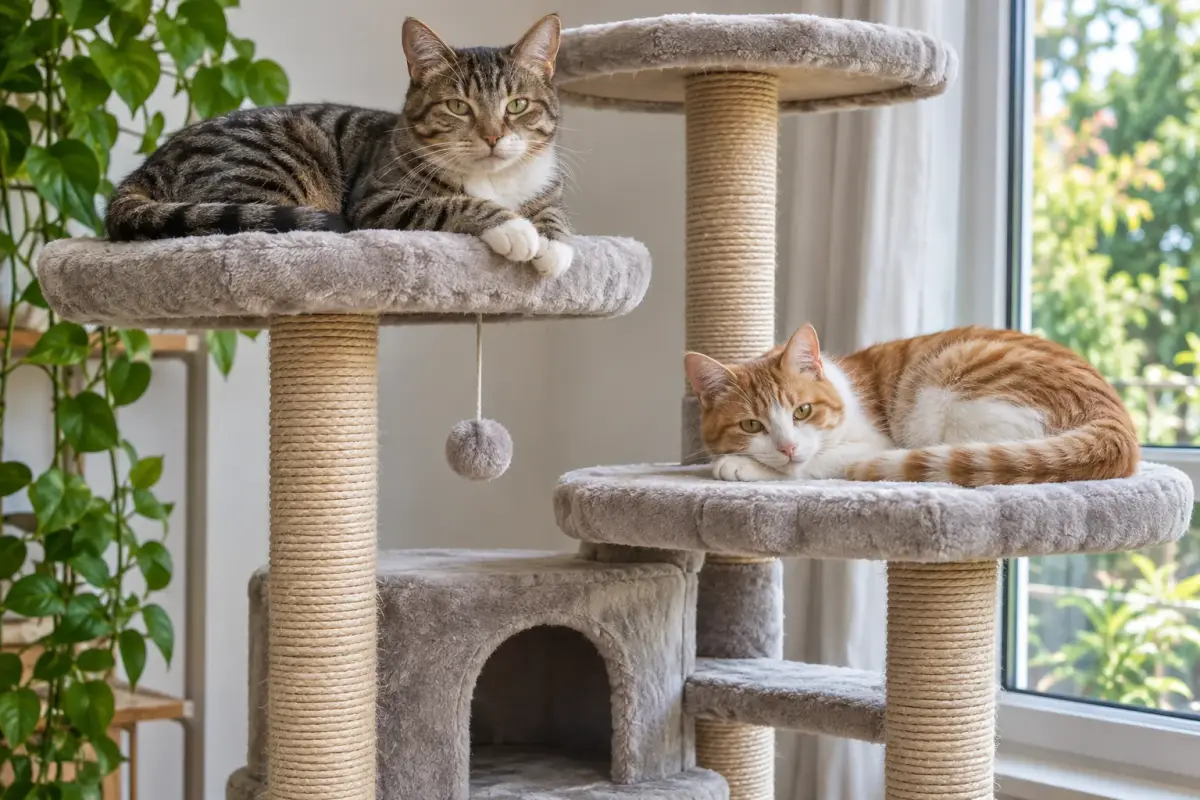
Many standard trees are sized for an average cat, and a large cat hangs off the edges. Look for perches and beds wide enough for your cat to lie on its side, and condos with openings big enough to enter without squeezing. Hammocks need a weight rating above your cat's weight.
VCA notes a scratching post should be tall enough for a cat to stretch fully with forelegs extended. For a long cat, that means a post with a good length of uninterrupted sisal, not short stubs between platforms. Many cats prefer a loose, rough weave their claws can catch, and VCA lists sisal among good coverings.
Tree types compared for big cats
Floor-to-ceiling tension trees brace against the ceiling and are very stable for their height, though they need the right ceiling height and a firm ceiling surface. Freestanding wooden trees with thick boards and solid posts suit large cats well and often hold up longer than carpeted particleboard.
Wall-mounted shelves and steps create climbing routes without a floor footprint, but each piece must be screwed into studs and rated for the cat's weight. Compact or budget trees with thin posts and small perches are usually the wrong choice for a cat over about 15 pounds.
Best set-up for each situation
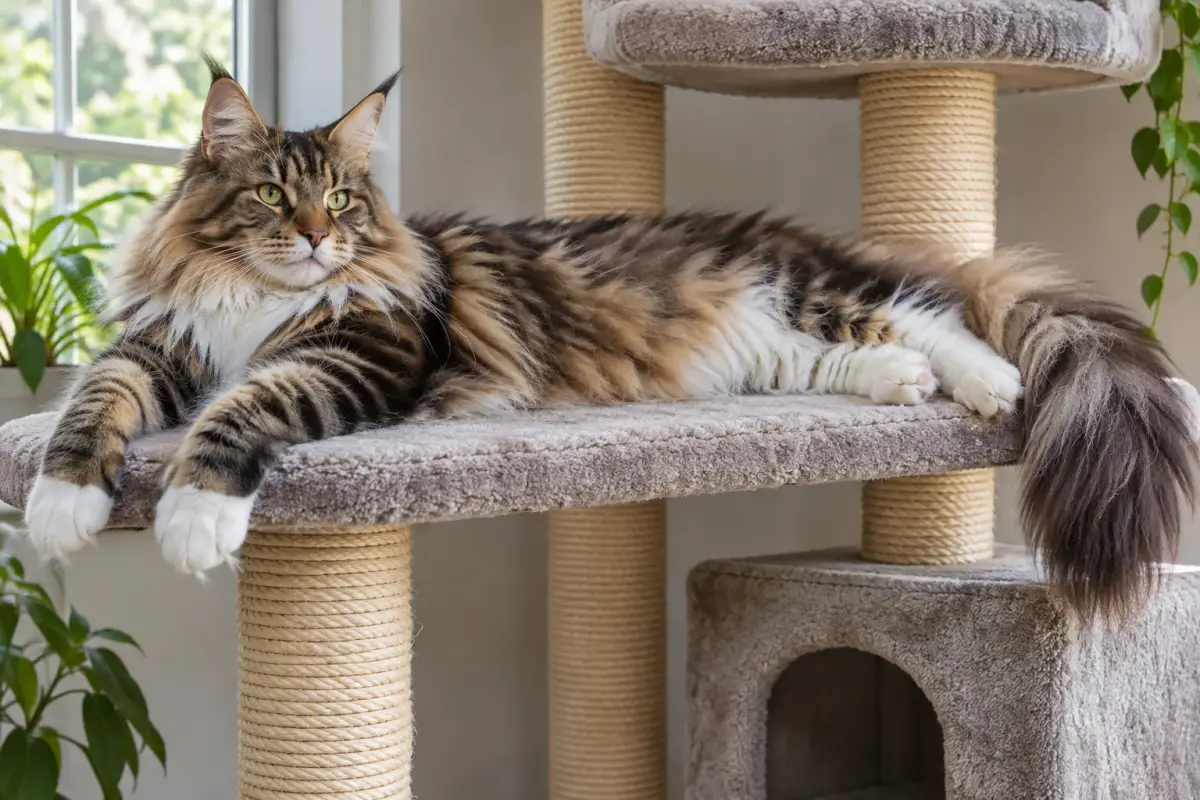
For a Maine Coon or other large breed, choose a heavy freestanding tree or a ceiling-braced tree with wide perches and at least one long sisal post. For several large cats, choose a tree with multiple perches at different heights so cats do not compete for one spot, or use two trees. One heavy-duty large cat tree, a multi-level tower made for large adult cats and a tree with scratching posts and a bed show the style; read each listing's stated weight capacity.
For senior or heavy cats, lower perches with ramps or steps between levels are easier than big jumps. VCA suggests placing the tree where the family spends time and slightly away from the wall so the cat can approach from different angles; next to a window adds a view.
What to avoid and care
Avoid thin cardboard tubes, small perches, hammocks without a weight rating, and dangling toys on long strings that a cat could chew and swallow; the Cornell Feline Health Center warns against string and small parts. Avoid trees that rely on a narrow base for tall height.
Check bolts every few weeks and tighten any that loosen. Replace sisal when it is shredded to the core, and vacuum carpeted areas regularly. If your large cat avoids jumping or stops using upper levels, that can be a sign of joint pain worth raising with your vet. When it is time to replace one, start with cat trees for large cats; window perches are a lighter add-on near the same spot.
Climbing structures and mounting arrangements
| Format | Support arrangement | What to verify |
|---|---|---|
| Floor-to-ceiling tension | Braces between floor and ceiling | Height range and ceiling compatibility |
| Freestanding wooden tree | A floor base supports posts and platforms | Base,post connections and usable perches |
| Wall shelves and steps | Individual pieces mount to a wall | Wall construction and each piece’s rating |
| Compact freestanding tree | Smaller base and perches | Actual platform dimensions and post thickness |
Common questions
What is the best cat tree for large cats?
One with a wide, heavy base, thick posts, large perches and beds, and sturdy bolted joints. Anchor tall trees to the wall. Stability matters more than height.
What size cat tree does a Maine Coon need?
Perches and beds wide enough to lie on its side, a long sisal post for a full stretch, and a base wide enough that the tree does not rock when the cat jumps.
Are floor-to-ceiling cat trees good for big cats?
Yes, if your ceiling suits them. Tension against the ceiling makes them very stable for their height. Check the weight rating of each perch. Measure the ceiling height first.
How do I stop a cat tree from wobbling?
Choose a wide, heavy base, tighten bolts regularly and use a wall strap. Place it on a flat floor rather than thick carpet, which lets it rock.
Sources we checked
This guide is general information, not veterinary advice. If your pet is unwell or injured, contact your veterinarian.


