






Buying guides
Best Floor-to-Ceiling Cat Tree: How to Choose a Stable One
The best floor-to-ceiling cat tree fits your ceiling height with room to adjust, stays rock-steady when a cat launches off it, and gives you wide platforms plus a real scratching surface. Measure your ceiling in inches first, because the adjustable range decides whether a tree works at all. Browse our floor-to-ceiling cat trees once you have that number.
By Matt GarnettUpdated November 13, 20265 min read2 sources
Why choose a floor-to-ceiling tree
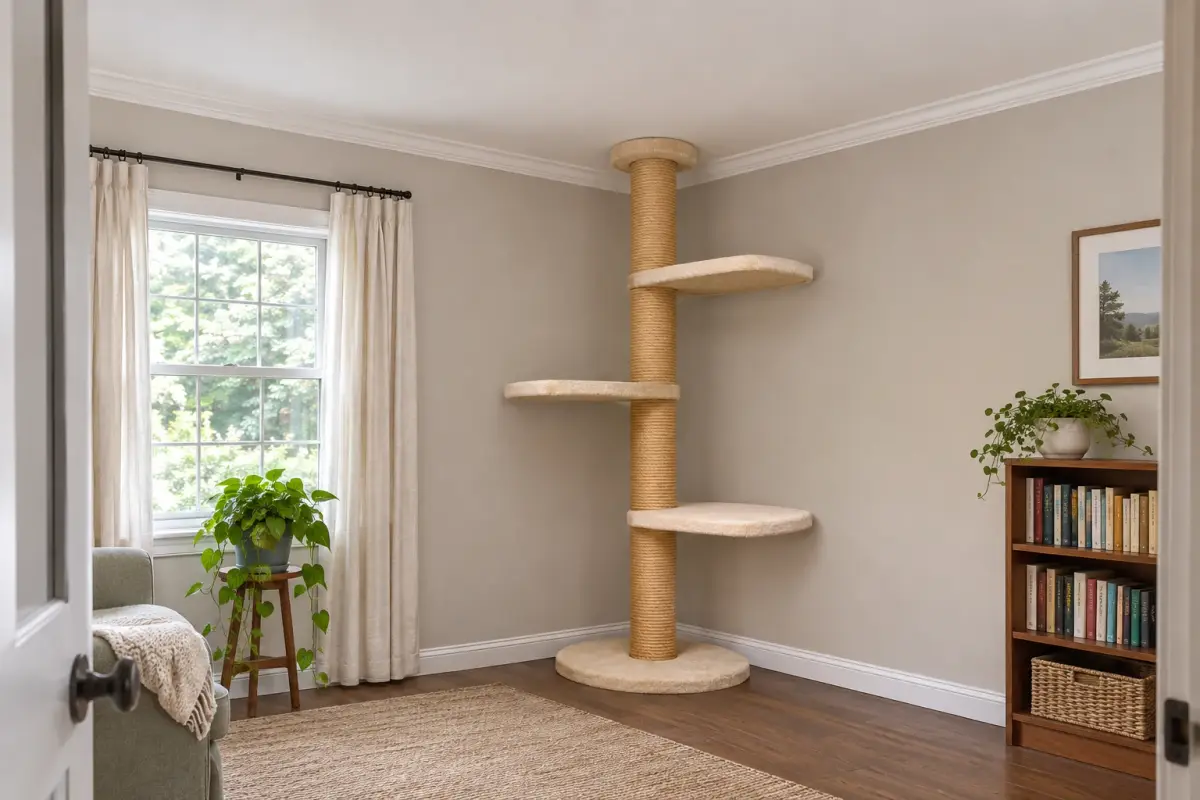
A floor-to-ceiling tree is a tall tower held in place by a spring-loaded pole that presses against the ceiling. Because it goes up, not out, it gives a cat a lot of climbing room on a small patch of floor, which suits apartments and crowded rooms. The Drake Center notes that providing access to elevated places makes cats happy and increases the overall space available to them, and a tall tree is one of the simplest ways to add that space.
The trade-off is that the tree relies on your ceiling and on pressure, so it needs more care than a freestanding tower. If you are comparing styles, our floor-to-ceiling cat trees range sits beside cat trees for small spaces and cat trees for large cats, which work better when you cannot or would rather not press anything against a ceiling.
What matters most: height range, stability and platforms
Start with the ceiling. Measure from floor to ceiling in inches at the spot where the tree will stand, and check that the number falls inside the adjustable range on the listing. Adjustable models are sold by range, for example a 4-tier adjustable tree that spans 87 to 103 inches or an 8.4 foot adjustable tree in white. A standard 8-foot ceiling is 96 inches, so it sits within the first range, but a vaulted or low ceiling may not.
Stability comes next. Look for a wide, heavy base plate, a thick central pole, and platforms bolted rather than clipped. A tree that wobbles will teach a cat not to trust it. Check each platform is wide enough for your cat to turn around and lie down, and that the listed weight limit covers your heaviest cat with some margin. Finally, check the ceiling: a solid drywall ceiling is usually fine, while a drop (tiled) ceiling or crumbly textured surface is not, so follow the maker's instructions.
Scratching surfaces and cat comfort
Cornell Feline Health Center notes that scratching is normal marking behavior and that a vertical post tall enough for a long stretch suits cats that like to stretch up. The Drake Center adds that posts should be sturdy and covered in materials cats prefer, such as wood, sisal rope, rough fabric or cardboard. On a floor-to-ceiling tree, look for sisal-wrapped sections on the pole itself, since that is where a cat will stretch full length.
Carpet and plush covers are fine for platforms and condos, and the Drake Center suggests a carpeted tree or condo ideally with hiding spots, perches and shelves. A single perch that fits only one cat gives a nervous cat a place to escape other pets. If your cat ignores a surface, move the tree or try another material, and rub a little catnip on the post to encourage use.
The best type for each cat and home
For a confident climber in a small home, a tall, narrow tree with several platforms and a sisal pole makes the most of the floor space. A 9 foot adjustable vertical tree in gray and white suits a tall room. For a multi-cat household, choose a tree with several perches at different heights, so cats can separate when they want to. For a shy cat, choose a design with an enclosed cubby near the top.
For a large cat, prioritize base weight, thick poles and wide platforms over height, and consider a freestanding tower instead. For a kitten, the first jump needs to be easy, so pick a tree with close-set platforms. For a senior cat or any cat with stiff joints, a very tall tree with big jumps between levels is a poor fit, and your vet can tell you how much climbing is sensible. A basic floor-to-ceiling cat tree with evenly spaced platforms is easier to use than a dramatic one.
What to avoid and how to set it up
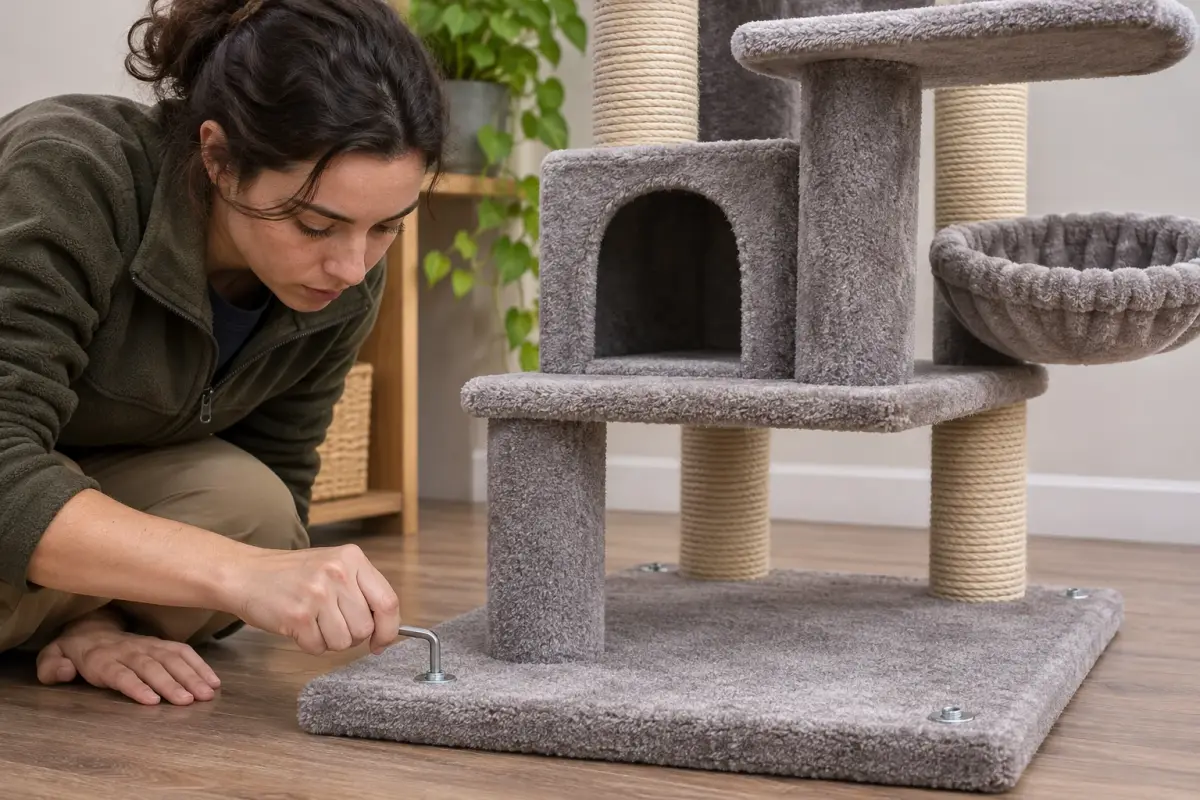
Avoid trees with narrow poles, small wobbly top perches, thin plywood platforms, and a ceiling plate that is smaller than your hand. Do not put the tree where a cat can launch onto a shelf, TV or breakable item, and keep it away from fans, ceiling lights and window cords. Check that the pole is truly vertical and the spring tension is tight before any cat climbs it.
Put the tree near a window or in a room where the family spends time, since the Drake Center suggests placing posts near a window, a sleeping area or a favorite spot. Tempt a cautious cat up with treats or a small part of a meal, which the same source says can help sedentary cats get used to climbing. Move it only if the cat refuses to use it, and tighten the pole every few weeks.
Care and how long a tree lasts
Vacuum carpeted platforms weekly, spot-clean accidents promptly, and wash removable cushions as the label directs. Check bolts and the ceiling pole monthly, because vibration from jumping loosens them over time. Replace the tree when the sisal is shredded to the core, platforms sag, or the pole no longer holds firm.
A good tree stays in use for years if the base remains solid and the sisal is replaced or covered when worn. When you are ready to compare sizes and layouts, browse floor-to-ceiling cat trees and pair the tree with a separate cat scratcher so the pole is not your cat's only scratching option.
Common questions
How tall should a floor-to-ceiling cat tree be?
It should match your ceiling height. Measure floor to ceiling in inches and choose a tree whose adjustable range includes that number, such as an 87 to 103 inch model for a standard 96 inch ceiling.
Are floor-to-ceiling cat trees stable?
They can be, if the base is wide and heavy, the pole is thick, and the spring tension is firm against a solid ceiling. Check bolts and tension every few weeks, since a loose pole makes the tree wobble.
Will a floor-to-ceiling cat tree damage my ceiling?
It can mark soft or textured ceilings, and it is not suited to drop ceilings. Use the rubber pad or a flat board under the top plate, and follow the maker's instructions about ceiling types.
Is a floor-to-ceiling cat tree good for large cats?
Only if the base, pole and platforms are heavy-duty and the listed weight limit clearly covers your cat. Many large cats do better on a wide freestanding tower, so compare both before buying.
Where should I put a floor-to-ceiling cat tree?
Near a window or in a room where your family spends time. The Drake Center suggests placing scratching posts near a window or a sleeping area, and elevated perches near a view keep cats interested.
Sources we checked
This guide is general information, not veterinary advice. If your pet is unwell or injured, contact your veterinarian.


