Buying guides
Best Cat Scratch Deterrent: How to Choose One
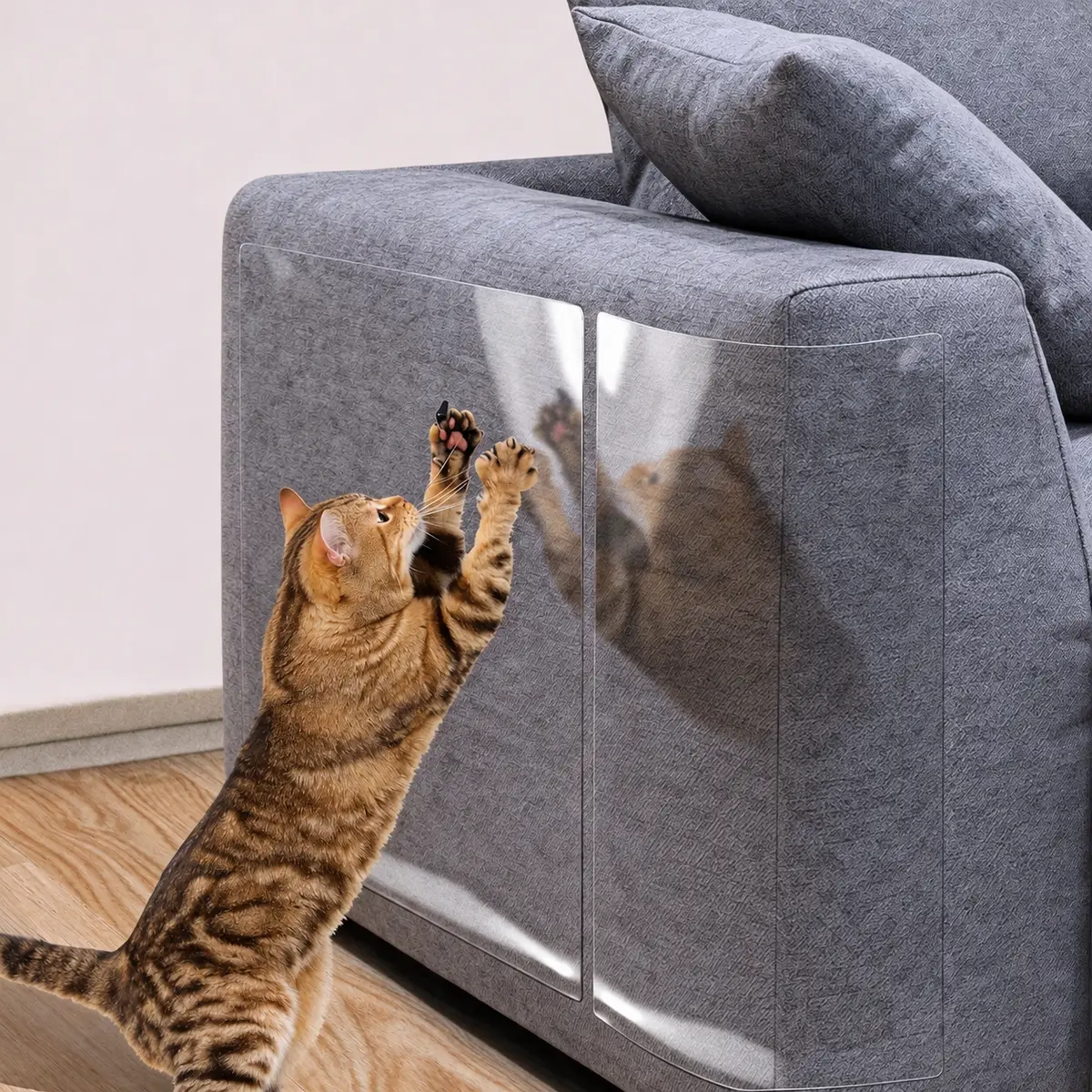
A scratch deterrent only works when it is paired with a better place to scratch. The most reliable deterrents physically change the surface, such as double-sided tape, clear furniture guards or covers, while sprays help some cats and not others. Cornell Feline Health Center notes restricting access is the only guaranteed way to stop scratching an object, and recommends a suitable post nearby and no punishment.
By Matt GarnettUpdated November 14, 20263 min read2 sources
Why cats scratch, and why that matters
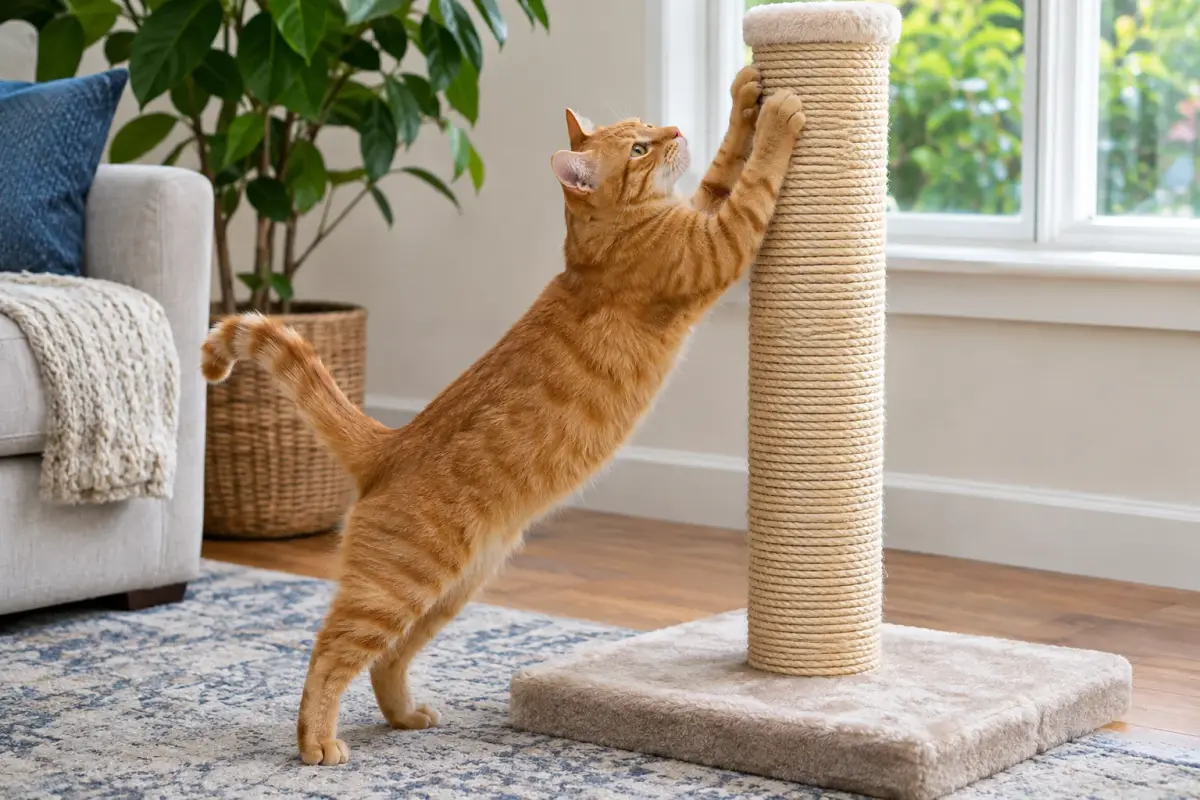
Scratching is normal marking behavior, as Cornell puts it. Cats scratch to stretch, maintain claws and leave scent and visual marks. A deterrent that blocks one spot without offering another simply moves the scratching elsewhere.
So every deterrent plan has two halves: make the furniture unappealing (our guide on how to keep cats off furniture goes further), and make an approved post or pad right next to it appealing. Cornell suggests putting the post near the area the cat already likes, then moving it gradually once the habit has switched.
Deterrent types compared
Double-sided tape and sticky panels make a surface unpleasant to touch; Cornell lists them among deterrents that may work. Clear plastic furniture guards and corner protectors physically block claws and are nearly invisible. Throws, blankets and plastic sheeting do the same job temporarily, and the same logic applies to cat-proofing a Christmas tree.
Deterrent sprays use scents cats dislike, such as citrus; results vary by cat and they need frequent reapplication. Cornell also mentions harmless booby traps, such as a stack of plastic cups that topples when bumped, and an odor neutralizer to break the cycle of re-scratching scent-marked spots.
Nail trims and nail caps
Regular nail trimming every couple of weeks blunts claws and reduces damage everywhere. Soft plastic nail caps glued over the claws are another option; Cornell notes they need replacing every six to 12 weeks.
Both are humane alternatives to declawing, which is a surgery that amputates the end of each toe. Many veterinary organizations oppose declawing for routine furniture protection; talk to your vet about safe options if scratching is a serious problem.
Best approach for each situation
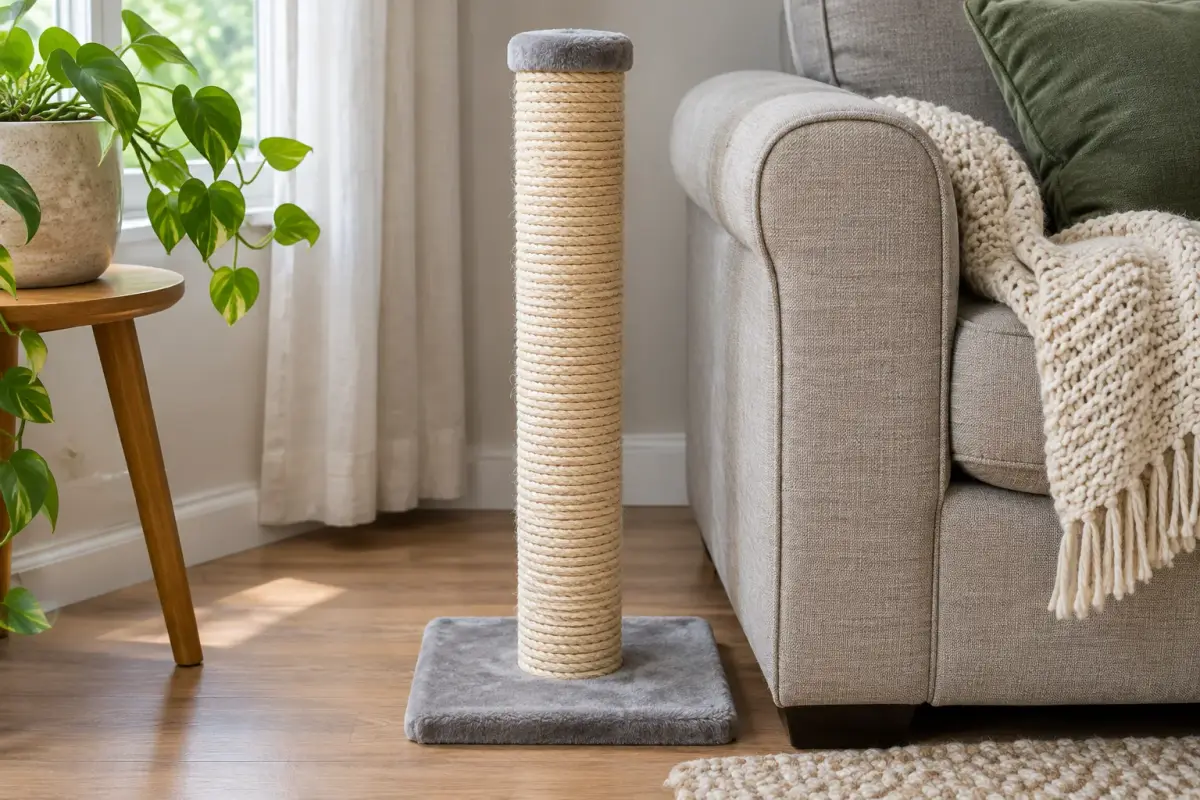
For a sofa corner, a clear guard on the corner plus a tall, sturdy sisal post right beside it. For carpet scratchers, a runner or mat over the spot plus a horizontal cardboard scratcher. For doors and walls, a door-hanging or wall-mounted scratcher at the same height.
For a new kitten, start with posts in every room before habits form. For a multi-cat home, several scratchers in shared spaces, since scratching marks territory and cats may compete.
What to avoid
Avoid punishment, shouting, water sprays at the cat, and anything painful. Cornell warns punishment can teach your cat to fear you rather than stop scratching. Avoid sprays with essential oils applied heavily near where your cat sleeps or eats, since cats are sensitive to many of them.
Avoid removing the deterrent too soon. Leave it in place for several weeks after your cat has switched to the post. A cat that suddenly starts scratching in new places, or over-grooms, may be stressed; your vet can help rule out medical causes.
Keeping it working
Reward every use of the post with praise, a treat or play, and rub a little catnip on it if your cat responds. Keep worn posts; a shredded post shows the cat likes it.
Replace tape when it stops being sticky and spray as often as the label suggests. Once the habit is broken, many owners can remove guards from all but the most tempting corners.
This page is general information, not veterinary advice, and it cannot replace an examination by the vet who knows your pet.
Physical furniture-protection formats
| Format | Physical arrangement | Verify before applying |
|---|---|---|
| Adhesive tape or sheet | An adhesive layer on the furniture surface | Adhesive type and upholstery compatibility |
| Clear guard | A separate panel covers an area | Panel size,edges and attachment |
| Corner protector | A shaped guard around an edge | Corner fit and fixing method |
| Throw or blanket | A loose layer over upholstery | Coverage,slippage and washing instructions |
Common questions
What is the best cat scratch deterrent?
Physical deterrents, such as double-sided tape and clear furniture guards, are the most reliable, paired with a sturdy post right beside the furniture. Cornell notes restricting access is the only guaranteed method.
Do cat scratch deterrent sprays work?
For some cats. Scent-based sprays vary in effect and need frequent reapplication. They work best combined with physical deterrents and an appealing scratching post nearby.
Are nail caps safe for cats?
Soft nail caps are generally considered a humane option when applied correctly and replaced every six to 12 weeks, as Cornell notes. Your vet or a groomer can show you how to apply them.
How do I stop my cat scratching the couch?
Cover or guard the spots being scratched, put a tall, stable sisal post right beside them, reward your cat for using it, and trim claws regularly. Never punish scratching.
Sources we checked
This guide is general information, not veterinary advice. If your pet is unwell or injured, contact your veterinarian.