






Training & behavior
How to Keep Cats Off Furniture
To keep a cat off furniture, give it somewhere better to be and make the forbidden spot less rewarding. Cats jump on couches, counters and tables for height, warmth, a view or food, so offer a cat tree or window perch nearby, remove the reward from the counter, cover off-limits surfaces temporarily, and praise your cat when it chooses its own space. Punishment usually makes it worse.
By Matt GarnettUpdated November 13, 20264 min read3 sources
Why cats get on furniture
Height means safety and a view to a cat. VCA notes that elevated resting spots, such as a refrigerator top or bookcase, help cats feel secure, which is why the back of the couch or the kitchen counter is so popular. Furniture is also warm, soft and smells of you, and counters are where food appears.
So the question to ask is what your cat is getting from that spot. Once you know whether it is height, warmth, company or crumbs, you can offer the same thing somewhere that suits you better.
Step 1: Provide better high places
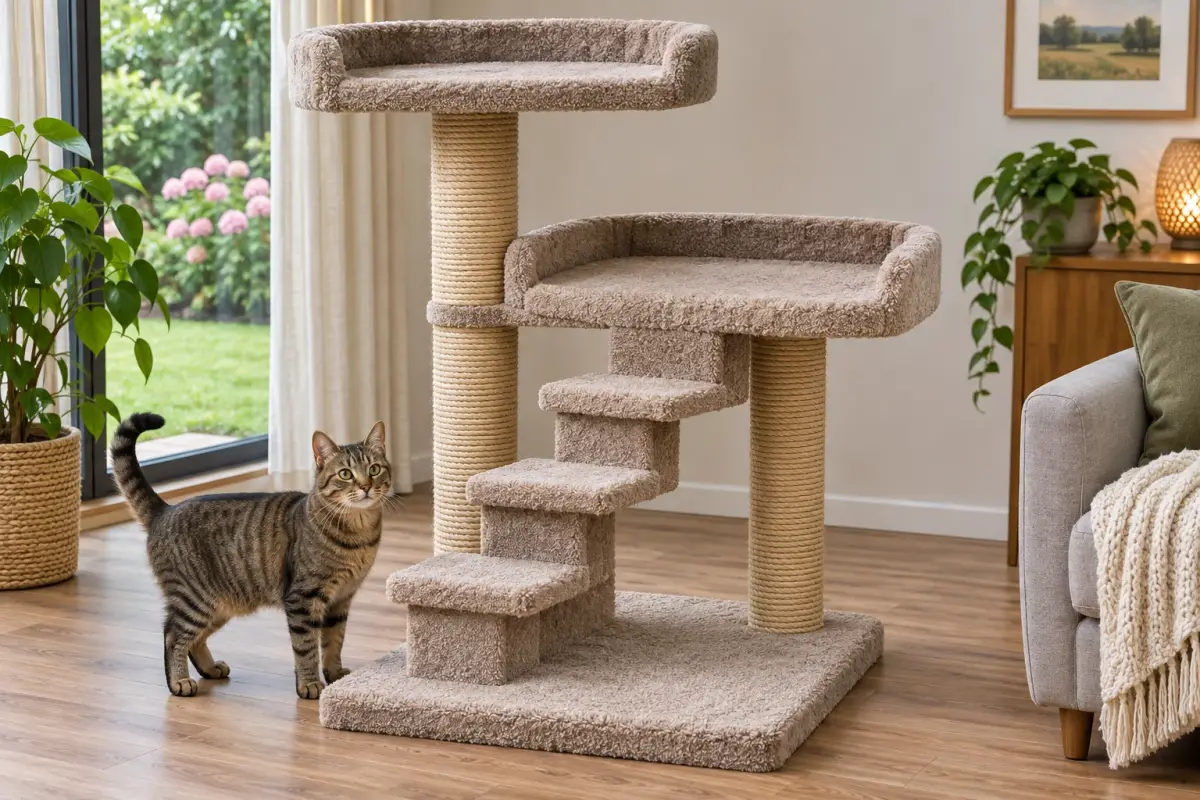
Put a sturdy cat tree, window perch or wall shelf near the furniture or counter your cat likes, ideally with an equal or better view of the room or the kitchen. VCA suggests placing cat trees where the family spends time, not tucked away in a back room, and away from the wall so a cat can jump on from several directions.
Make the new spot comfortable with a soft, non-skid bed or a fleece blanket, and a warm spot by a sunny window. Many cats will choose a dedicated perch over a couch once it is in the right place.
Compare a sisal cat tree with a window-sill cat hammock as different perch layouts, checking the installation and your cat's access before use.
Step 2: Remove the reward
For counters, the reward is usually food. Never leave food, dirty plates or crumbs out, wipe surfaces after cooking, and put a lid on the trash. Feed your cat its own meal before you prepare yours, so it is less interested in your plate.
For couches and beds, decide whether you want your cat off them entirely or only off one item. Consistency matters: a cat allowed on the couch on Sunday and pushed off on Monday will keep trying. Everyone in the home needs to follow the same rule.
Step 3: Make the spot less inviting
While your cat learns, cover forbidden surfaces with something it dislikes standing on. The ASPCA and Cornell Feline Health Center suggest double-sided sticky tape, plastic sheeting, aluminum foil or an upside-down vinyl carpet runner, nub side up. Baking sheets placed along a counter edge also work for some cats.
Use these for a few weeks, then remove them once your cat is reliably choosing its own spots. For a couch, a slippery throw or a box set on the cushion during the day can help. Closing doors to rooms with off-limits furniture is the simplest option of all; Cornell notes that restricting access is the only guaranteed method.
Step 4: Reward the right choice
Every time your cat uses its perch or tree, offer a treat, a little praise or a short play session there. Cats learn quickly where good things happen. Toss treats onto the cat tree rather than handing them over on the sofa.
If your cat jumps on a counter, calmly lift it down or call it to its perch and reward it there, without fuss. VCA's training guidance stresses positive reinforcement and warns that punishing kittens can lead to fear and biting.
Our cat tree guide helps compare the footprint and layout of cat trees for a spot near the furniture your cat already likes.
What to avoid, and when to ask your vet
Avoid water sprays, shouting and booby traps that frighten your cat. The ASPCA notes cats may learn to fear you rather than the furniture, and Cornell warns punished cats often just do the behavior when you are not there. Never use strong scents or essential oils on furniture, which can be harmful to cats.
Ask your vet if a normally relaxed cat suddenly spends all its time up high, hides or becomes clingy, as this can reflect stress, pain or illness.
This page is general information, not veterinary advice, and it cannot replace an examination by the vet who knows your pet.
Common questions
How do I keep my cat off the kitchen counter?
Never leave food out, feed your cat before you cook, place a cat tree or stool with a view of the kitchen nearby, and line the counter edge with double-sided tape or baking sheets for a few weeks.
How do I keep cats off leather furniture?
Cover leather with a fitted throw while you train, since tape can mark it. Put a comfortable cat bed or perch beside the couch and reward your cat for using it instead.
What smell keeps cats off furniture?
Many cats dislike citrus, and some owners place fresh orange peel near furniture. Never use concentrated essential oils, which can be harmful to cats. Physical deterrents and a better perch work more reliably.
Is it OK to let my cat on the furniture?
Yes, if you are happy with it. Many owners allow cats on some furniture and not others. Choose a rule, keep it consistent and provide high spots of your cat's own.
Sources we checked
This guide is general information, not veterinary advice. If your pet is unwell or injured, contact your veterinarian.


