Buying guides
Best Automatic Cat Toys: What Actually Matters
The best automatic cat toy moves like prey, runs in short bursts, has no loose string or small parts, and is quiet enough that your cat is not frightened of it. Automatic toys fill the gaps when you are busy or out, but they supplement play with you rather than replace it. Match the motion to your cat's age and habits, and rotate toys so the novelty lasts.
By Matt GarnettUpdated November 13, 20265 min read3 sources
What an automatic toy can and cannot do
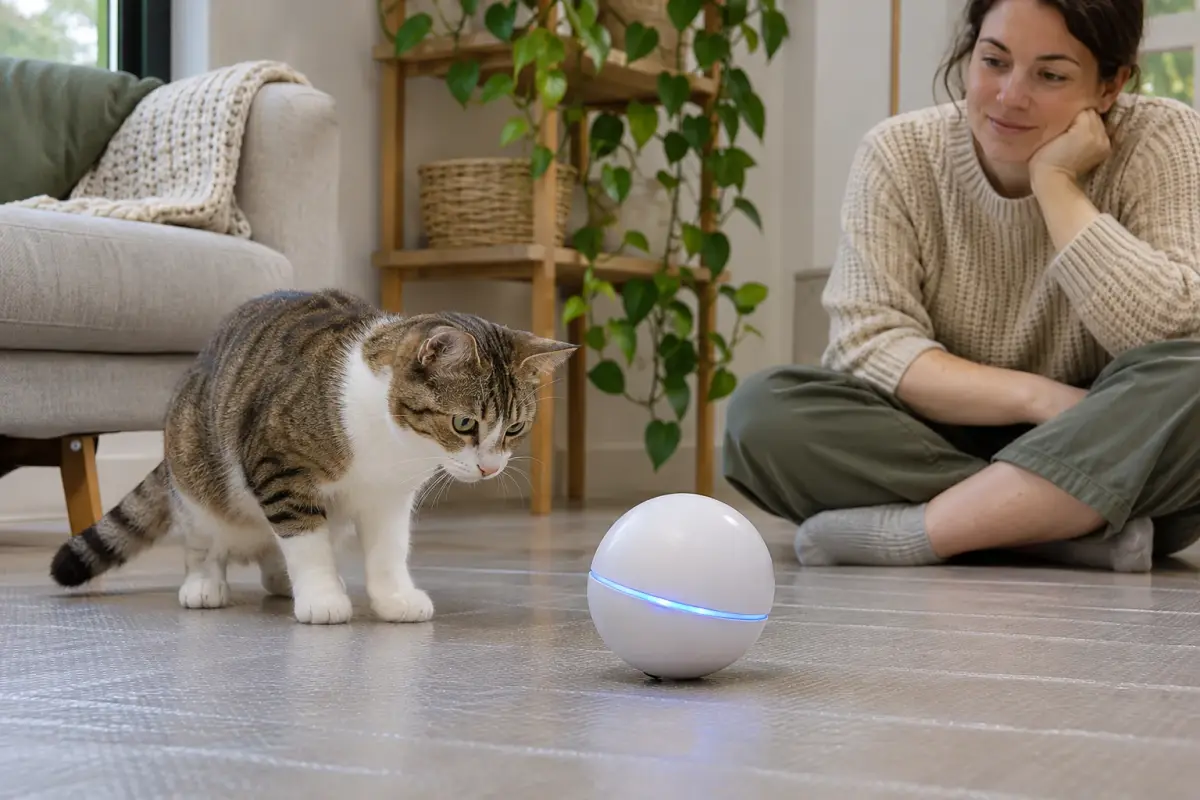
Before you browse automatic cat toys, it helps to know what they are for. VCA Hospitals explains that indoor cats need an outlet for the urge to seek, stalk and catch prey, and that this urge is not driven by hunger, so even a well-fed cat will hunt. Toys that move unpredictably give a cat something to stalk when you are not available. That is the real job of an automatic toy: it offers a hunting game on a schedule your own day does not always allow.
What it cannot do is replace you. The Drake Center for Veterinary Care says interactive play with people can be the single most effective way to enrich an indoor cat's environment. Treat a motorized toy as a helper for the hours you are away or busy, and keep a few sessions of wand play with you each day. A cat left for long hours with no play at all can turn to biting hands and feet, which the ASPCA lists as a contributor to play aggression.
Motion and size: what makes a toy worth chasing
VCA suggests choosing toys that mimic real prey in terms of size, texture and color, such as a bug, mouse or bird. In an automatic toy that translates to movement that stops and starts, changes direction and hides, rather than a steady loop the cat figures out in two minutes. An electric wriggling bug toy is an example of the bug-style motion that suits a stalking cat, and you can judge a toy by whether its movement is varied or predictable.
Size matters too. VCA warns against toys so small they could be swallowed and cause an intestinal blockage, so check for detachable eyes, feathers, tails and tiny parts, and inspect the toy regularly for wear. Look for a model with a timer or auto shut-off, so it runs for a few minutes and rests, which keeps a cat interested and stops a motor running hot on an unattended counter.
Types compared: which suits which cat
Ground-roaming and wriggling toys suit an active young cat that loves to pounce. Ball-in-a-track toys, such as an electric soccer stadium toy, suit a cat that prefers batting and chasing in a contained space and are useful in small apartments. Door-mounted teasers use a wand arm; a door-mounted automatic teaser wand keeps the moving part off the floor and uses a fixed anchor point.
Vibrating or twitching toys give a slower, lower-energy game that can suit a senior cat or a shy one. An electric vibration cat toy is the gentle end of the range. Kittens usually want the most motion, seniors the least, and a cat that startles easily needs the quietest model and a gradual introduction. If you are choosing from several types, begin with the one that best matches how your cat already plays.
Safety: string, ribbons and unattended play
VCA is blunt about it: do not leave wand toys unattended, because it is very dangerous for cats to ingest ropes or strings. The Drake Center also advises taking away toys with string when you are not supervising, specifically flagging hair ties and string. An automatic toy with a dangling tail, ribbon or cord deserves the same caution, so favor designs with short, sturdy attachments and no loose threads.
Check the battery compartment closes securely, use the cable or charger the maker specifies, and keep cords out of reach. Stop using a toy that cracks, sheds fragments or has frayed parts. If your cat swallows string, ribbon or part of a toy, or you see string hanging from its mouth, do not pull on it. Call your vet or an emergency clinic right away, because the injury can be serious and time matters.
Getting your cat to use it, and keeping it interesting
Introduce the toy with a person present. Switch it on for a minute, let your cat watch and chase, then turn it off and put it away. The Drake Center recommends keeping only a small set of toys out and rotating them, because cats get bored with a toy after a while, and VCA also advises rotating toys often to keep them novel. An automatic toy that lives on the floor all week will stop working.
Try a few short sessions at the times your cat is most active, often around dawn, dusk and before meals, and end while your cat is still keen. If your cat ignores the toy, change the surface, move it to a different room or try a different movement style before giving up. Pair it with scratching posts and perches, and browse our automatic cat toys or the wider cat toys range for other types.
What to avoid, and when to call the vet
Avoid toys that are loud enough to frighten your cat, that run continuously, that have small detachable parts or long trailing strings, or that you cannot clean or inspect. Avoid using an automatic toy as the only form of play. For a broader look at toy types, see our guide to the best cat toys, and when you are ready to choose, see our range of automatic cat toys.
A sudden change in play or energy deserves attention. If your cat stops playing, seems sluggish, gains weight quickly, or becomes aggressive, see your vet to rule out a medical cause before blaming the toy. A vet can also advise on how much activity suits an older or overweight cat.
This page is general information, not veterinary advice, and it cannot replace an examination by the vet who knows your pet.
Automatic toy motion layouts
| Layout | Where movement occurs | Inspect before use |
|---|---|---|
| Ground-roaming | A body moves across the floor | Floor compatibility and moving parts |
| Ball-in-track | A ball follows a constrained path | Track openings and ball retention |
| Door-mounted teaser | A lure moves from a fixed mounting point | Mounting instructions and accessible line |
| Vibrating or twitching | A body moves around its resting position | Controls,power source and loose parts |
Common questions
Are automatic cat toys safe to leave on while I am out?
Only if they have no loose string, ribbon or small parts and an auto shut-off. VCA warns that ingesting ropes or strings is very dangerous for cats, so choose toys with short, sturdy attachments.
Do automatic toys replace playing with my cat?
No. The Drake Center says interactive play with people can be the most effective enrichment for indoor cats, so use an automatic toy to add to your own play sessions, not to stand in for them.
How do I stop my cat getting bored of an automatic toy?
Rotate toys instead of leaving one out all the time. VCA and the Drake Center both advise keeping a small set available and swapping them, so each one feels new when it comes back.
What should I do if my cat swallows part of a toy?
Call your vet or an emergency clinic right away. If string is hanging from the mouth, do not pull on it, because it can cause serious internal injury.
Sources we checked
This guide is general information, not veterinary advice. If your pet is unwell or injured, contact your veterinarian.