






Buying guides
Best Interactive Cat Toys for Indoor and Bored Cats
The best interactive toys for an indoor cat let it stalk, chase, pounce and catch, the full hunting sequence. A wand toy moved like prey, played with in short daily sessions, beats almost anything automatic. Automatic toys and puzzle feeders fill the hours you are away, and the toy type your own cat prefers matters more than features.
By Matt GarnettUpdated November 13, 20264 min read2 sources
What makes a cat toy actually engaging
Cat play mirrors hunting. The Ohio State Indoor Pet Initiative describes play as closely tied to the predatory sequence of stalking, chasing, pouncing and biting, and suggests watching which kind of prey your cat responds to. Some cats chase things that fly like birds, some stalk things that scurry like mice, and some go for small, erratic insect-like movement.
That is the main buying criterion: match the toy to your cat's prey preference. Then add variety. Cats lose interest in a toy they see every day, so rotating a few toys, and putting some away for a week, keeps them novel. A bored indoor cat often plays far more with a cheap toy that moves right than an expensive one that does not. You can browse interactive toys for indoor cats by type.
The main types compared
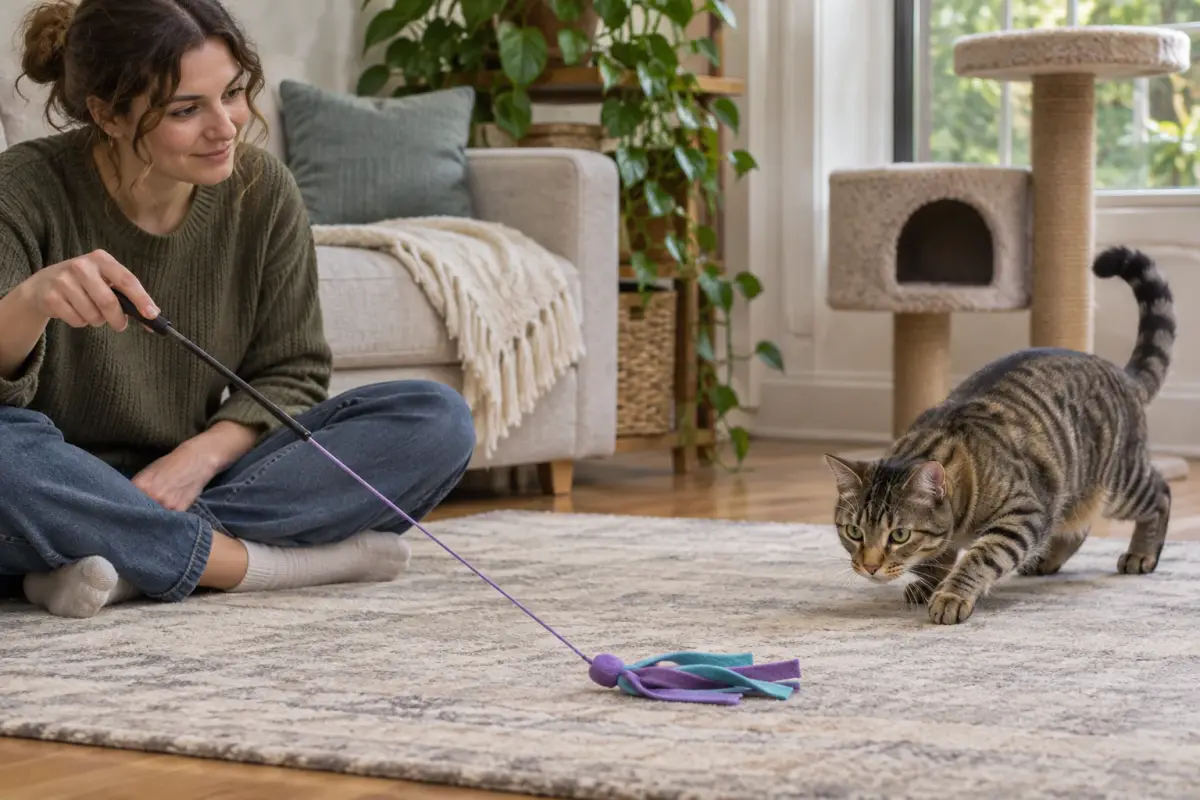
Wand toys, a rod with feathers, fabric or a small toy on a line, are the most effective interactive toy because you control the movement. Electronic and automatic toys, such as rolling balls, flapping fish and rotating feathers (for example this turntable feather toy), move unpredictably on their own and suit cats left alone for long stretches. Laser pointers trigger intense chasing but leave nothing to catch.
Puzzle feeders and treat balls make a cat work for kibble, which adds mental effort and slows eating. Kicker toys, long stuffed toys a cat can grab and rabbit-kick, satisfy the bite-and-hold part of the sequence. Ohio State suggests a laser session should end with a treat or a real toy to catch, so the hunt has a payoff.
The best type for each situation
For a bored indoor cat with an owner at home, two or three short wand-toy sessions a day, ending in a catch and a small treat, is the most effective option. For a cat home alone during work hours, a timed automatic toy plus a puzzle feeder breaks up the day. For an active, high-energy cat such as a young Bengal, add climbing and chasing space, not just more toys.
For an older or less active cat, slow wand play close to the floor and food puzzles keep it moving gently. For multi-cat homes, use one wand per cat or take turns, since a shy cat will hold back. For kittens, small soft toys and wands work well, with string toys put away after play. A collapsible cat tunnel such as this 3-way tunnel gives hide-and-pounce play to a cat that likes to ambush.
Safety: what to avoid
Strings, ribbons, elastic and wand lines are dangerous if swallowed, and Ohio State advises supervising play so a cat cannot chew off and swallow pieces. Store wand toys out of reach after each session. Check automatic toys for loose small parts, accessible batteries and bits a cat could detach.
Never use hands or feet as toys, which teaches a kitten to bite and scratch people. Avoid toys with glued-on eyes, bells or feathers that come off easily. If your cat vomits repeatedly, strains, stops eating or seems painful after playing with a string or small toy, call your vet straight away.
Getting the most from toys, and lifespan
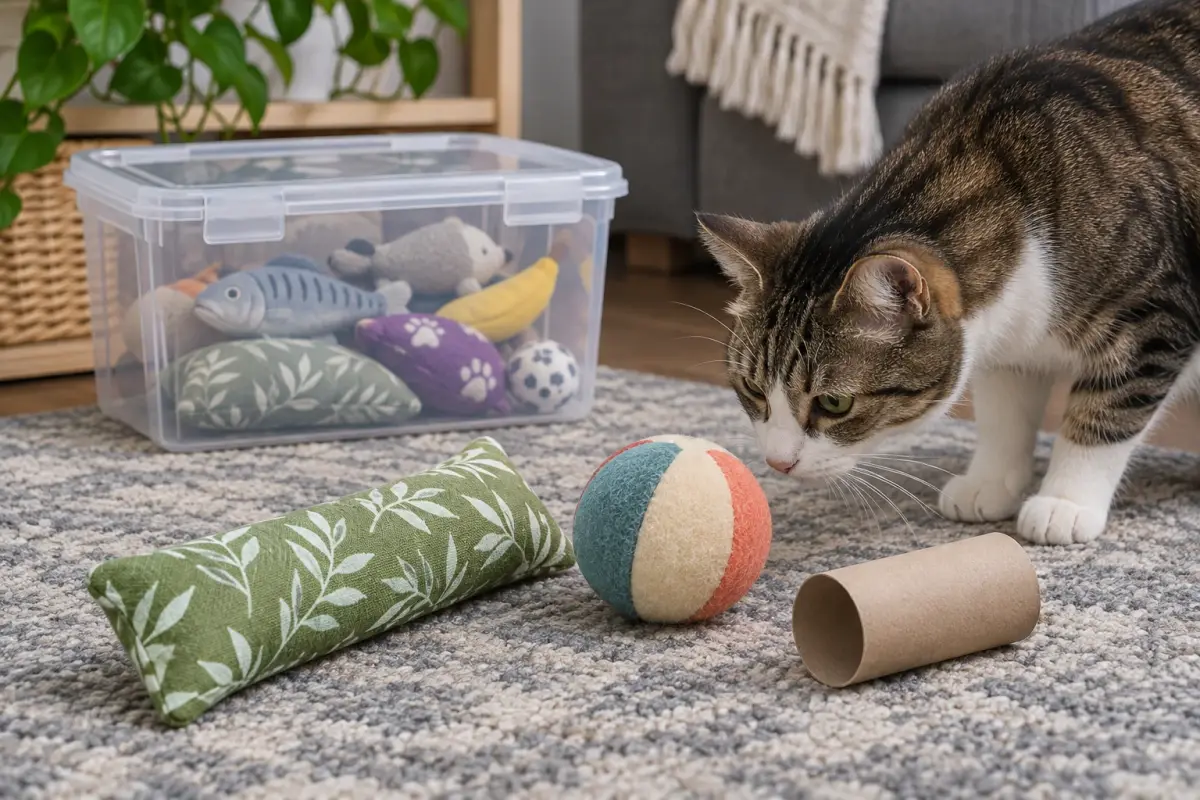
Short, frequent sessions work best: five to ten minutes of active play, once or twice a day, ending with a catch and a meal or treat, matches a cat's natural hunt, catch, eat, groom, sleep rhythm. Move the wand away from the cat, as prey would, rather than dangling it in its face.
Replace worn toys before they shed parts. Rotate automatic toys so they stay surprising, and recharge or replace batteries before they fail mid-play. If a once-playful cat stops playing altogether, it can be a sign of pain or illness, so mention it to your vet.
Interactive play formats and catchable objects
| Format | How play happens | What to check |
|---|---|---|
| Wand | A handler moves a lure | Line and attachment condition |
| Electronic or automatic | A mechanism moves the toy | Power model and moving parts |
| Laser pointer | A moving light rather than a physical object | A separate real object or reward at the end of play |
| Puzzle feeder or treat ball | Food is hidden or dispensed | Access and cleaning |
| Kicker | A stuffed body is held and kicked | Seams and filling |
Common questions
What toys keep indoor cats busy?
A mix of wand toys for interactive play, automatic toys for time alone, puzzle feeders for mental work and kicker toys. Rotating them weekly keeps them interesting.
Are laser pointers bad for cats?
Laser pointers are fine used carefully: never shine them in the eyes, and end each session with a real toy or treat to catch, so the cat completes the hunt rather than being left frustrated.
What are the best toys for cats left home alone?
Automatic toys on a timer and treat-dispensing puzzle toys work well for solo play. Avoid leaving string, ribbon or wand toys out unsupervised, because they can be swallowed.
How do I keep a bored cat entertained?
Play with a wand toy daily, rotate toys, offer food puzzles, and add climbing space and window perches. A bored cat often needs more interaction, not just more toys.
Sources we checked
This guide is general information, not veterinary advice. If your pet is unwell or injured, contact your veterinarian.


