Buying guides
Best Cat Kicker Toys: What Actually Matters
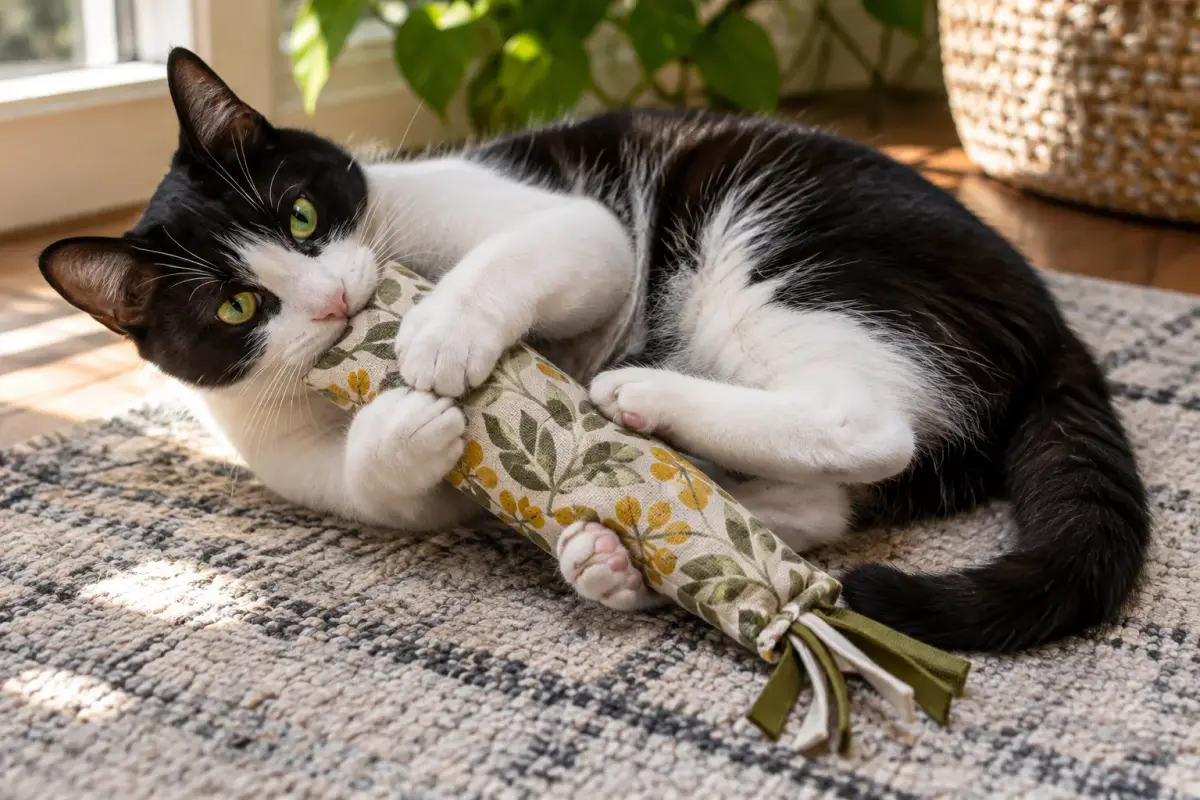
A kicker toy is a long, soft toy that a cat can grab with the front paws and kick with the back legs. The features that decide a good one are sturdy seams, a filling that cannot spill out, and a length that suits your cat's size. Browse our cat kicker toys once you know whether your cat prefers fish, mice or something with a bit of movement.
By Matt GarnettUpdated November 14, 20265 min read3 sources
What a kicker toy is for
Play is closely tied to the predatory sequence of stalking, chasing, pouncing and biting, according to the NIH review of environmental enrichment for indoor cats, and the same review notes that cats like items they can pick up, toss and pounce on. A kicker is built for the last part of that sequence, when a cat wraps its front legs around the prey and rakes it with its back legs. It gives that instinct somewhere to go that is not your arm.
That last point matters. The Ohio State University Indoor Pet Initiative advises using toys that keep a distance between the cat and your body, because hand and foot play can teach a cat to pounce and bite people. A kicker that is long enough to wrestle is a way to do that, so the cat has a target and your hands stay out of it. It does not replace play with you, but it gives the cat something to do when you are busy.
Size and shape
Choose a length your cat can fully wrap itself around. A kicker that is shorter than your cat's body gets carried and dropped rather than wrestled, while one that is far too large may simply be ignored. Large or heavy cats usually do better with a longer, thicker body, and kittens and small cats with a shorter one they can lift.
Shape is largely a matter of taste. Fish shapes are common, as are tubes and mice. Ohio State's guidance on prey preference suggests testing bird-like, mouse-like and bug-like toys to find what your cat chases, which takes only a few minutes for most cats. If your cat chases fur on the floor, a mouse-style or fish-style kicker with a furry or plush surface is a good bet, and a plush fish cat toy is one type to try.
Seams, filling and what to check for safety
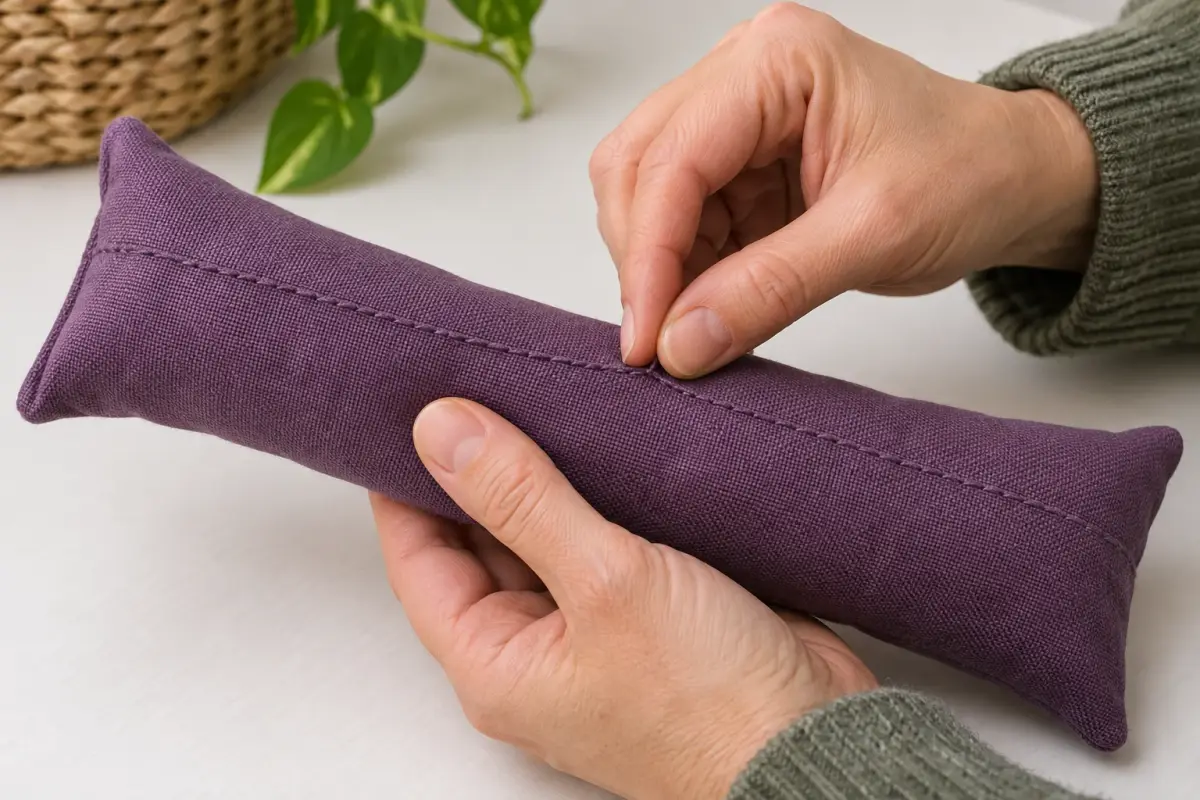
Kickers get bitten, clawed and kicked, so construction is the first thing to inspect. Look for tight, even stitching, a closed seam that has no gaps, and a filling that is secured inside. A toy that is already fraying on day one will not last. Ohio State's page on toys says for wand toys to make sure a cat cannot bite or chew off a piece it could choke on, and the same principle applies to any toy with loose trim, buttons, tassels or sewn-on parts.
Check every toy before each play session and throw it away as soon as the seams open, the filling shows or any part comes loose. If your cat swallows stuffing, string or a piece of fabric, call your vet straight away and do not try to pull anything out yourself.
Catnip, fabric and other features
Catnip is a common filling. Ohio State lists catnip-filled toys as a play option, and the NIH review lists them among suggested toys, though neither gives a rule for how much to use. Treat it as an extra rather than a necessity: watch how your cat reacts and put the toy away if it gets overexcited. A giant catnip kicker toy shaped like a cotton swab and a linen fish pillow kicker are examples of the catnip-and-fabric type.
Some toys also move or make noise. Ohio State notes that cats like toys that do something, such as squeak, chirp, jitter, swing or vibrate. A battery-powered electric fish cat toy is that type. If you buy one, check that the battery compartment closes securely and stays closed, and take the batteries out if the toy is not in use.
Matching a kicker to your cat
A cat that wrestles with cushions, sofa arms and your sleeve is the most obvious candidate. A cat that mostly watches and chases is usually better served by a wand or a ball, and our cat scratchers and cat trees give climbers a place to burn off energy. Kittens often love kickers, but supervise them, since a young cat may chew a toy more than kick it.
Rotation helps. The NIH review says toys should be rotated every few days to maintain novelty and interest, and Ohio State advises rotating a few at a time and changing the order so old toys seem new. Keep two or three kickers and swap them out rather than leaving them all on the floor. Our cat scratching post guide covers the other half of an indoor cat's play setup.
When to replace one, and when to see a vet
A kicker has a short life with an enthusiastic cat. Replace it when stitching opens, the fabric thins, or the filling starts to leak, and wash it when it is dirty if the care label allows. Never leave a damaged toy in reach.
See your vet if your cat vomits after play, stops eating, strains, or seems unwell after chewing a toy, because swallowed fabric and stuffing can block the gut. A sudden change in how your cat plays, such as losing interest in all toys or biting harder than usual, is also worth mentioning at your next visit. This page is general information, not veterinary advice, and it cannot replace an examination by the vet who knows your pet.
Common questions
What is a cat kicker toy?
It is a long, soft toy a cat can hug with its front paws and kick with its back legs. It gives the predatory urge to grab and wrestle a target, so your hands and arms are not used as toys.
What size kicker toy should I buy?
Choose one your cat can wrap around fully. Shorter than your cat's body and it gets carried and dropped; far too big and it may be ignored. Kittens and small cats usually prefer a shorter one.
Are catnip kicker toys safe?
Catnip toys are a common play option, but watch your cat the first few times. Put the toy away if your cat gets overexcited, and check the seams so no stuffing can be swallowed.
How often should I replace a cat kicker toy?
Replace it as soon as seams open, filling shows or parts come loose. Check it before each session, because a cat can swallow stuffing or fabric, which is a reason to call your vet.
Do kicker toys stop cats biting hands?
They can help because the cat has a proper target, and Ohio State advises keeping toys between the cat and your body. They do not replace daily play, so keep using wands as well.
Sources we checked
This guide is general information, not veterinary advice. If your pet is unwell or injured, contact your veterinarian.