






Buying guides
Best Cat Toys for Older Cats: What Actually Matters
The best toys for older cats keep them moving without high-impact running or jumping: low, slow and easy to reach. Play still matters at any age, but sessions may need to be shorter and gentler. Browse our cat toys for older cats, then use this guide to match toy types to your cat's comfort and energy.
By Matt GarnettUpdated November 14, 20265 min read2 sources
Why older cats still need play
It is easy to assume a slower cat wants less to do, but play does real work. VCA Animal Hospitals says play and physical exercise are important for brain health, that excess weight harms both brain and body, and that owners should keep doing activities they enjoy together, especially play. Enrichment, in their words, helps maintain brain health.
The aim changes rather than disappears. Vetster, in an article verified by a veterinarian, says daily activity is still important for most cats with osteoarthritis, and that play should encourage movement without high-impact running or jumping. So you are choosing toys that invite gentle effort, rather than toys that demand sprints, leaps and twists.
Low and slow beats fast and high
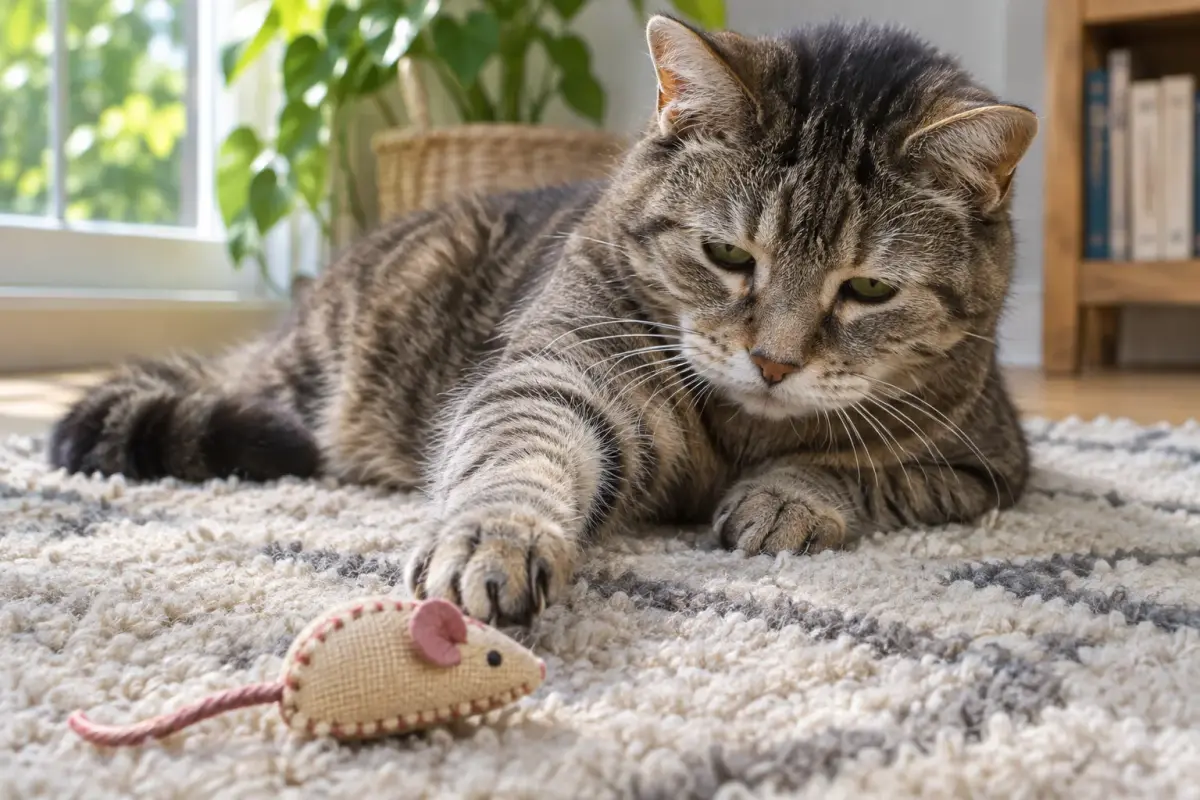
Look for toys that work at floor level and at your cat's pace. A toy that moves slowly across the floor invites a pounce without a leap, and a toy that stays low means your cat does not have to jump or twist. Avoid toys that are dangled high or flung across the room, which push a stiff cat into movements it may no longer enjoy.
Keep sessions short and gentle, since Vetster notes play may need to be shorter and gentler than before. Several brief sessions beat one long one, and stopping while your cat is still interested keeps play pleasant. Never force it. If your cat walks away, sits down or loses interest quickly, that is useful information, not stubbornness.
Toy types that suit older cats
A ball-on-a-track toy lets a cat bat and chase at ground level without leaping, and many cats will happily swat at it while lying down. A cat track toy with a ball works on its own when you are busy. A tumbler cat toy with a bell rocks back when batted, giving a satisfying response for little effort, which suits a cat that tires quickly.
Soft feather and string toys give an older cat something to stalk and bat. A string, wool ball and feather toy can be trailed slowly along the floor, and the cat chooses how much to chase. Put string toys away after play and supervise throughout. Wand toys, which you control, are the easiest way to keep the pace gentle, and our cat wand toys range is a good place to compare.
Brain games and scent play
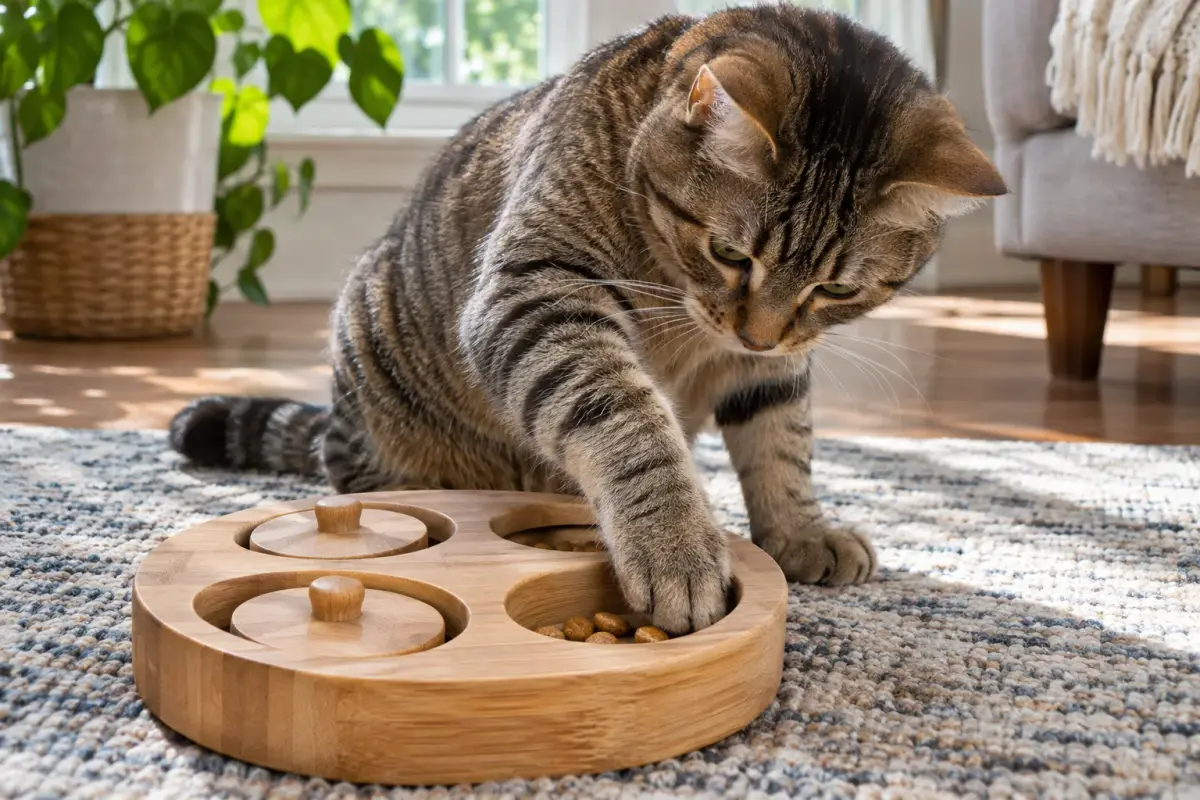
Not all play has to be physical. VCA says puzzle toys can help pets think, and suggests scavenger hunts where the pet uses its nose to find snacks or new toys. For a cat with sore joints, a treat hunt around the room or a puzzle feeder asks for thought rather than sprinting, and the cat sets its own speed.
Rotate toys rather than adding more. A few toys put away and brought out in turn feel new, which keeps interest up without extra clutter. Watch the response, as VCA advises, and make sure your cat appears to be enjoying the enrichment you provide. If a toy causes frustration or stress, put it away.
Comfort and the rest of the home
Toys work best in a home set up for an older cat. Vetster notes that ramps or steps can help cats reach favorite elevated spots, that flat or slanted scratching mats may be easier than vertical posts, and that soft, warm resting areas and low-sided litter boxes help too. Our cat steps make a favorite perch reachable, and a senior low-entry litter box helps with the other end of the day.
A corner toy that lets a cat rub and tickle itself can also be a gentle, no-effort activity. A corner tickle toy with a scrubber gives a stiff cat something to lean against. Place toys where your cat already rests, so play can start without a climb, and keep a warm bed nearby for afterward.
When a change in play is a reason to call the vet
A change in play can be the first sign of something wrong. VCA says cats may become less playful and may pace as cognitive changes develop, and Vetster lists reduced activity, reluctance to jump, climb, run or play, litter box accidents, less grooming, irritability and hiding more than usual as reasons to see a vet.
Do not wait for limping. Vetster notes that cats with arthritis often do not limp, so a cat that seems fine may still be sore. Contact your vet any time you notice changes in your cat's physical health or normal behavior, and ask them to help design a play and exercise plan that is safe and suitable for your cat.
Checklist before you buy
Choose toys that work at floor level, can be used lying down or standing, and need no jumping. Add a wand or slow-moving toy you control, a puzzle or treat hunt for the brain, and keep sessions short. Skip anything that is noisy enough to frighten a cat that startles easily.
Then browse our cat toys for older cats and match each piece to what your cat still enjoys. If play drops off suddenly, call your vet before buying more. This page is general information, not veterinary advice, and it cannot replace an examination by the vet who knows your pet.
Ground-level toy movement and handler control
| Format | How it moves | Who controls the pace |
|---|---|---|
| Ball track | Ball stays within a track | The cat’s batting |
| Tumbler | Body rocks after contact | The cat’s contact with the body |
| Wand | Handler moves an attached lure | The handler |
| String or feather lure | A lure trails near the floor | The handler during attended play |
Common questions
Do older cats still need toys?
Yes. VCA says play and exercise are important for brain health, and Vetster says daily activity still matters for most cats with arthritis. Choose gentler, lower-impact toys and keep sessions short.
What toys are best for a cat with arthritis?
Toys that encourage movement without high-impact running or jumping, such as slow wand toys and ground-level toys. Check with your vet about what suits your cat, and stop if your cat seems uncomfortable.
How long should I play with my senior cat?
Keep sessions shorter and gentler than you would for a young cat, and stop while your cat is still interested. Several brief sessions are easier than one long one. Ask your vet for a plan.
Why has my older cat stopped playing?
It could be tiredness, sore joints or other health changes. VCA notes cats may become less playful, and Vetster lists reduced play and reluctance to jump as reasons to see a vet.
Are puzzle toys good for senior cats?
They can be. VCA says puzzle toys help pets think and suggests scavenger hunts using the nose. They let a cat with sore joints exercise its brain at its own pace, without any jumping.
Sources we checked
This guide is general information, not veterinary advice. If your pet is unwell or injured, contact your veterinarian.


