







Dogs
Dog gates for stairs
Little things. Happy tails.
23 items picked for everyday life with your pet, with shipping estimates on every item.
 A happy life, one little thing at a time.
All dogs homes, cages & gates →Dog playpens →Freestanding dog gates →Dog stairs for bed →Dog ramps for bed →Outdoor dog kennels →Dog stairs →Dog gates with door →Dog ramps →Dog gates →Puppy playpens →Tall dog gates →Extra wide dog gates →
↗Tracked US shippingEstimates on every item↶Returns & refundsHow it works♡Here to helpTalk to Giddy Pets
All dog gates for stairs
Little essentials. Lots of love.


Extra wide dog gates
Extra-Wide Pressure-Fit Pet Gate with Walk-Through and Small Pet Door
- Options
- 2 to choose from
From $110.99





A little guidance
Help choosing dog gates for stairs
Buying guides and care advice written for this range: what to measure, what matters and what to skip.
From our guides
- Best Dog Gate for Stairs and Large Dogs: How to Choose a Safe One →
- Best Dog Gate With Door: How to Choose a Walk-Through Gate →
- Best Dog Gates: Height, Mounting and Wide Openings →
- Best Dog Stairs for Large Dogs: What Actually Matters →
- Best Dog Stairs: How to Choose Steps for a Bed or Couch →
- Best Outdoor Dog Gate for a Deck: How to Choose One →
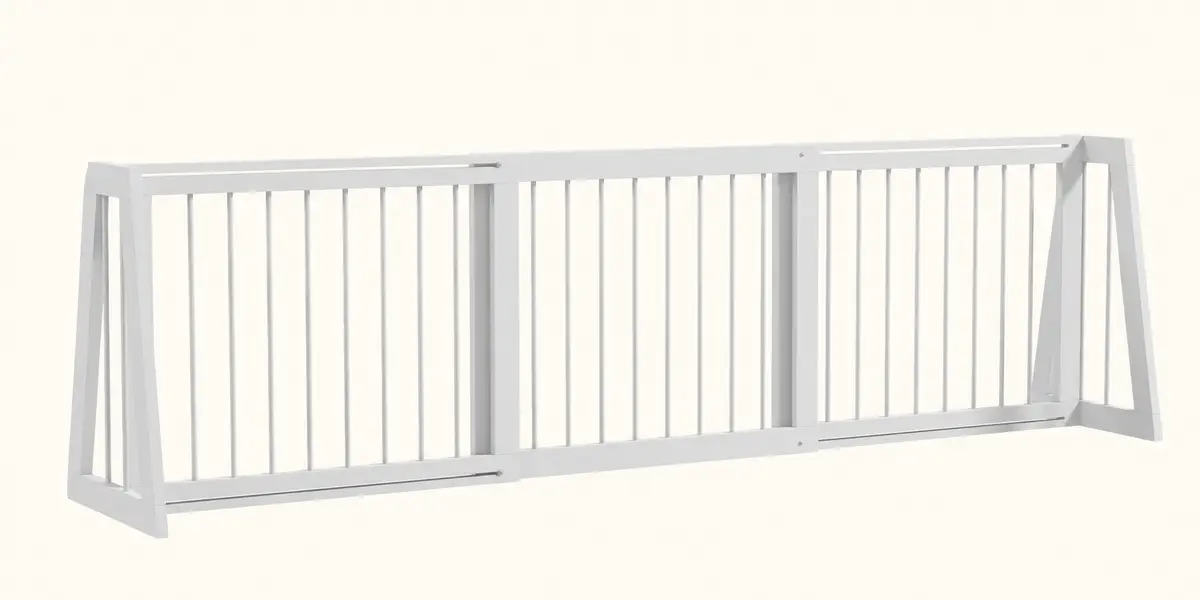
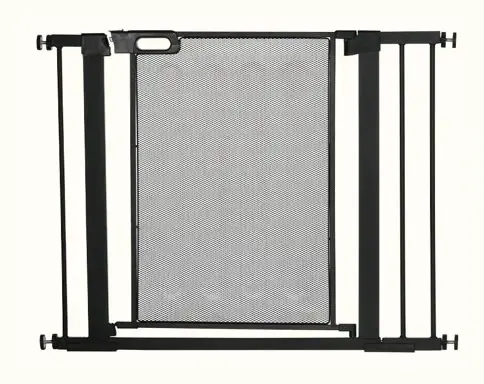
This page narrows our Dog Gates range to gates used at stairs: auto-close pressure-fit gates with cat doors, extra-wide gates from about 30 to 52 inches, easy-open indoor gates around 41 inches, pressure-fit gates with a walk-through door, and freestanding wooden gates for the bottom of open staircases. They are for puppies, senior dogs, small dogs and any dog who should not use the stairs unsupervised. The guide below explains the difference between top and bottom of stairs.
Why gate the stairs
Stairs are a risk for puppies, who misjudge steps and tumble, and for senior dogs with stiff joints or poor eyesight. Small breeds can fall through open banisters, and long-backed breeds such as Dachshunds are prone to back problems that stairs can aggravate. A gate lets you decide when your dog uses the stairs.
The AKC suggests that for dogs with back pain, stairs are problematic and access should be restricted where possible. A gate is the simplest way to do that, and it also keeps dogs out of upstairs bedrooms or away from a cat's safe space.
Top of the stairs
The top of the stairs is where a fall does most harm. A gate there should be fixed firmly, ideally hardware-mounted into the wall or banister with screws. Pressure-fit gates can loosen when a dog leans or jumps against them, and many have a bottom bar that someone could trip over at the top step.
If you must use a pressure gate at the top, check the fit daily and choose one without a bottom bar. Never use a freestanding or folding gate at the top of stairs, because a dog pushing on it could knock it over and fall with it.
Bottom of the stairs
At the bottom of the stairs, a pressure-fit gate is usually fine. Auto-close and walk-through gates mean you can pass without stepping over, which matters when carrying laundry. Gates with a small cat door let cats reach upstairs while the dog stays below.
For wide or open staircases without a wall on both sides, a freestanding wooden gate or a gate with extensions can cover the gap. Measure the opening wall to wall at the bottom step and compare it to the gate's width range.
Fitting and checking a stair gate
Measure the opening at the height where the gate will be fitted, which may differ at the banister. Banister adapter kits let some gates fit to round or uneven posts. Fit the gate so it opens away from the stairs, never over them.
Check every week that the pressure spindles are tight and the latch closes fully. Dogs learn to test gates, especially at the top of the stairs, so a double-locking latch and a gate tall enough that your dog cannot hop over are both worth having.
Can I use a pressure-mounted dog gate at the top of the stairs?
It is safer to use a hardware-mounted gate at the top of the stairs. Pressure gates can loosen, and many have a bottom bar that can trip someone. Use pressure gates at the bottom.
How do I fit a dog gate to a banister?
Use a banister adapter kit or a gate designed to attach to round posts, and measure at the height where the gate will be fitted. Make sure the gate opens away from the stairs.
Should my senior dog use the stairs?
It depends on mobility. Dogs with back pain, arthritis or poor balance may be safer kept off stairs. Ask your vet, and use a gate to restrict access when you cannot supervise.
What size gate do I need for stairs?
Measure the opening wall to wall or wall to banister at the bottom or top step, then choose a gate whose width range covers that measurement. Extensions help with wide openings.
How tall should a stair gate be for a dog?
Around 30 inches suits most small and medium dogs. Large dogs or those who jump need a taller gate. Choose a height your dog cannot clear, especially at the top of the stairs where a fall would be dangerous.