







Dogs
Dog stairs
Little things. Happy tails.
31 items picked for everyday life with your pet, with shipping estimates on every item.
 A happy life, one little thing at a time.
All dogs homes, cages & gates →Dog playpens →Freestanding dog gates →Dog stairs for bed →Dog ramps for bed →Outdoor dog kennels →Dog gates with door →Dog ramps →Dog gates →Puppy playpens →Tall dog gates →Extra wide dog gates →Outdoor dog playpens →
↗Tracked US shippingEstimates on every item↶Returns & refundsHow it works♡Here to helpTalk to Giddy Pets
All dog stairs
Little essentials. Lots of love.




A little guidance
Help choosing dog stairs
Buying guides and care advice written for this range: what to measure, what matters and what to skip.
From our guides
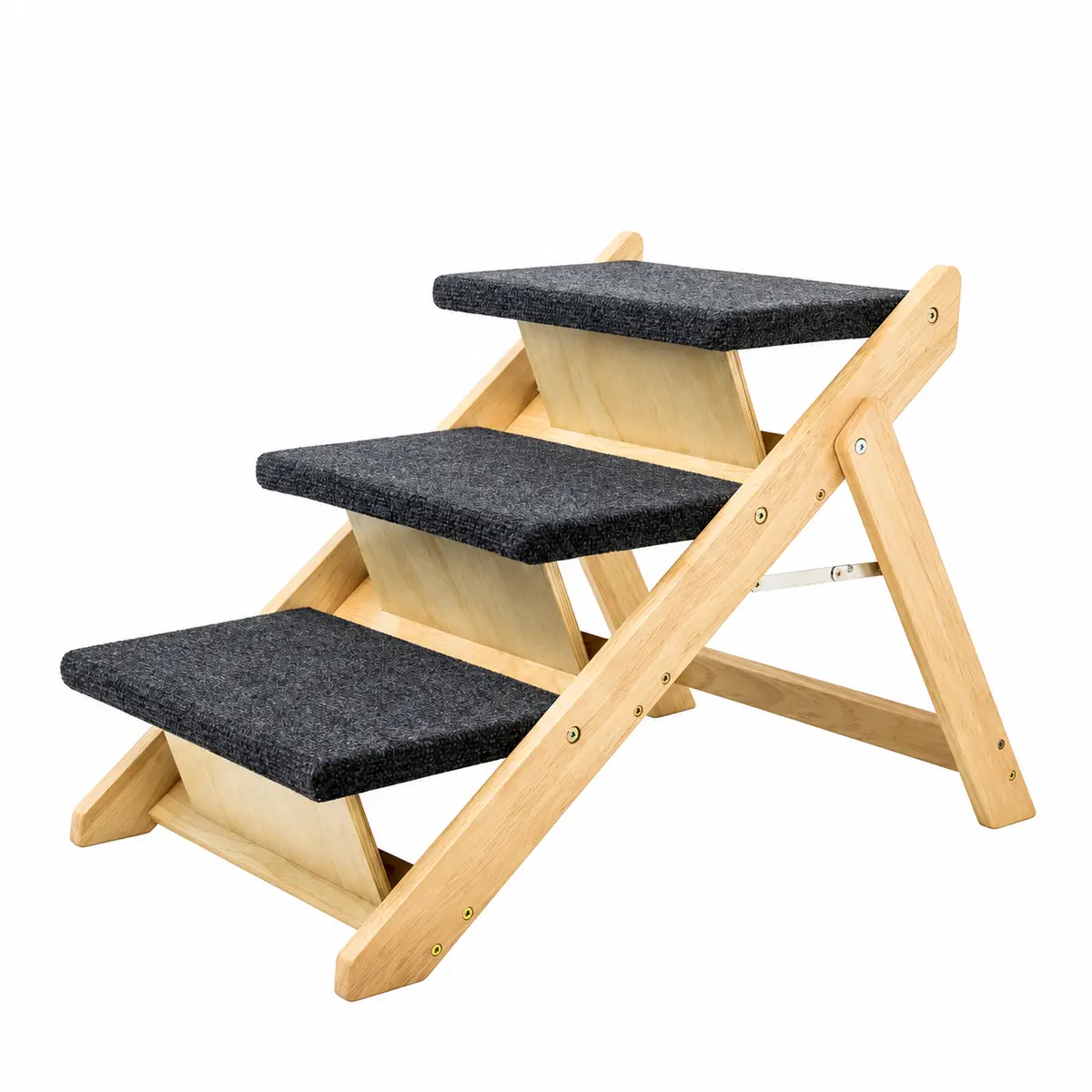
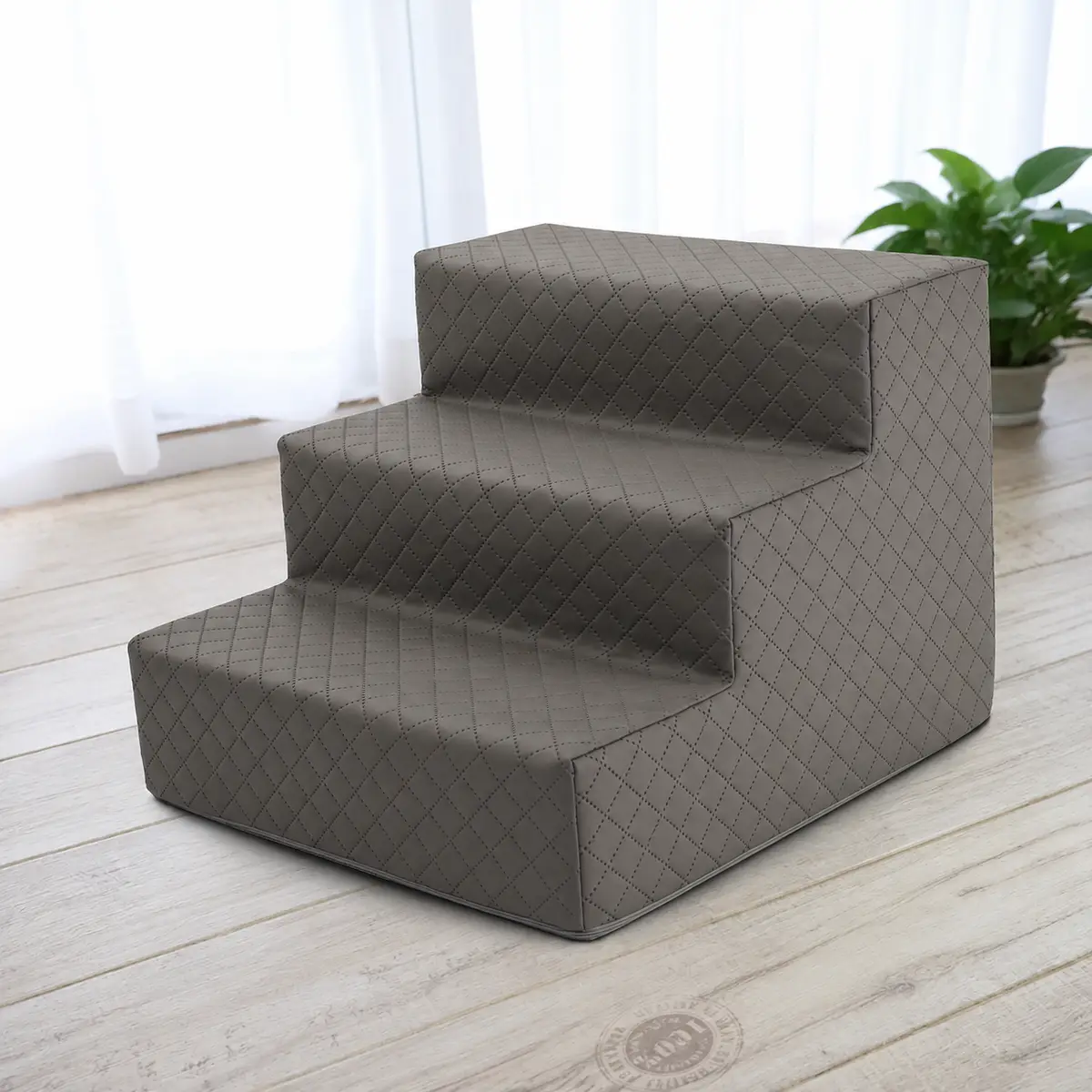
This page holds dog stairs and steps for getting on and off beds, couches and other high furniture: plush foam stairs, carpeted and solid pine wooden steps in 3, 4 and 6 levels, foldable portable stairs, extra-wide steps for large dogs, stairs with a hidden den, and adjustable stair-ramp combinations. It is for small breeds, long-backed dogs, seniors and any dog who struggles with the jump.
Why dog stairs help
A bed is a long jump for a small dog. The AKC notes that repeated jumping strains the joints of small breeds, and that long-backed breeds such as Dachshunds, Corgis and Basset Hounds are prone to spinal disc problems, so a low-impact way up and down helps. Seniors, dogs with arthritis, puppies and dogs recovering from injury or surgery benefit too.
Jumping down is often harder on the body than jumping up, because the front legs and shoulders take the landing. Stairs give a dog a controlled step instead.
Foam, wood and foldable stairs
Plush foam stairs are light, soft on joints and quiet, with removable washable covers. They are easy to move between rooms, but they compress over time under heavy dogs. Wooden stairs, carpeted or with non-slip treads, are firmer and last longer, and some have a hidden den underneath or a scratching post for a cat.
Foldable stairs in wood or light frames collapse flat for storage or travel. Adjustable models switch between stairs and a ramp, which helps if your dog's needs change as they age.
Choosing the right height
Measure from the floor to the top of the mattress or couch cushion. The top step should be level with or slightly below that surface, so your dog steps across rather than up. High beds usually need four to six levels; most couches need two to four.
More, shorter steps are easier than a few tall ones. A small dog or senior should not need to hop between steps; each step should be a comfortable rise for your dog's leg length.
Width, depth and grip
The AKC advises checking width, a non-slip surface and a weight rating that fits your dog. Each step should be deep enough for your dog to stand on with all four feet, and wide enough that they cannot step off the side. Large dogs need extra-wide stairs with a high weight rating.
Carpet, fabric or textured rubber on each tread gives grip. Put the stairs on a non-slip rug or pad on hard floors, and push them tight against the furniture so they cannot slide away.
Teaching your dog to use them
Let your dog sniff the stairs first, then lure them up one step at a time with treats, rewarding each step. The AKC recommends placing stairs with a barrier on at least one side, such as against a wall, and keeping early sessions short. Never pull, push or punish.
Practice going down as well as up, since many dogs jump off from the top at first. Once your dog uses the stairs reliably, reward them every time they choose the stairs over jumping.
When to check with your vet
Dogs often hide pain. If your dog has started hesitating before jumping, struggles to get up from lying down, or has stopped coming onto the bed, those can be early signs of joint or back pain, and a vet check is worthwhile. Sudden weakness in the back legs, crying when picked up, or wobbling is a reason to call your vet the same day.
For some dogs with back problems, a gentle ramp is easier than stairs; your vet can advise which suits your dog.
This page is general information, not veterinary advice, and it cannot replace an examination by the vet who knows your pet.
What height dog stairs do I need for my bed?
Measure from the floor to the top of the mattress and choose stairs whose top step sits level with or just below it. High beds usually need four to six levels.
Are foam or wooden dog stairs better?
Foam stairs are light, soft and easy to move, and suit small dogs. Wooden stairs are sturdier and better for heavier dogs and daily use.
Are dog stairs or a ramp better for a senior dog?
Stairs suit dogs with good balance; ramps suit dogs that find steps difficult or have back problems. Ask your vet which is easier on your dog's joints.
How do I get my dog to use dog stairs?
Lure your dog up one step at a time with treats, keep sessions short, and place the stairs against a wall. Never force or pull your dog.
What dog stairs work for large dogs?
Choose extra-wide stairs with deep treads, a high weight rating and a non-slip surface, and make sure they will not slide on the floor.