







Dogs
Dog ramps for bed
Cozy spots for long naps.
30 items picked for everyday life with your pet, with shipping estimates on every item.
 Their favorite place in the house.
All dogs homes, cages & gates →Dog playpens →Freestanding dog gates →Dog stairs for bed →Outdoor dog kennels →Dog stairs →Dog gates with door →Dog ramps →Dog gates →Puppy playpens →Tall dog gates →Extra wide dog gates →Outdoor dog playpens →
↗Tracked US shippingEstimates on every item↶Returns & refundsHow it works♡Here to helpTalk to Giddy Pets
All dog ramps for bed
Little essentials. Lots of love.


A little guidance
Help choosing dog ramps for bed
Buying guides and care advice written for this range: what to measure, what matters and what to skip.
From our guides
- Best Dog Ramp for Bed: How to Choose Slope, Grip and Size →
- Best Dog Ramps for Cars, SUVs and Beds: How to Choose →
- Best Bedding for Guinea Pigs: What Is Safe and Easy to Clean →
- Best Bolster Dog Beds: What Actually Matters →
- Best Calming Dog Bed: What Helps an Anxious Dog Settle →
- Best Dachshund Ramps: What Actually Matters →
This page focuses on ramps that help dogs get onto and off beds and couches: carpeted ramps with non-slip surfaces, folding ramps with several height settings, long ramps with a top platform for high beds, ramp-and-step combinations with removable covers, and small dog stairs for cats and toy breeds. They suit seniors, small and short-legged breeds, and dogs who should not jump. For car access, see our Dog Car Ramps page.
Why a ramp instead of jumping
Jumping onto a high bed and especially jumping down puts repeated impact through the front legs, shoulders and spine. For a young, fit dog it may not matter, but for a senior dog with stiff joints, a long-backed breed such as a Dachshund or Corgi, or a dog recovering from an injury, a ramp makes the same trip gentler.
The AKC suggests a ramp for dogs who can no longer manage stairs, and notes that a ramp can start at a low angle and become steeper as a dog gains confidence. A ramp also lets small dogs share the bed or couch without needing to be lifted every time.
Ramp or stairs?
Pet stairs suit dogs who still have good balance and agility but struggle with the height, and the AKC recommends deep, anti-skid treads rated for your dog's weight. Ramps suit dogs who find steps difficult, including those with arthritis, back problems or weakness in the hind legs.
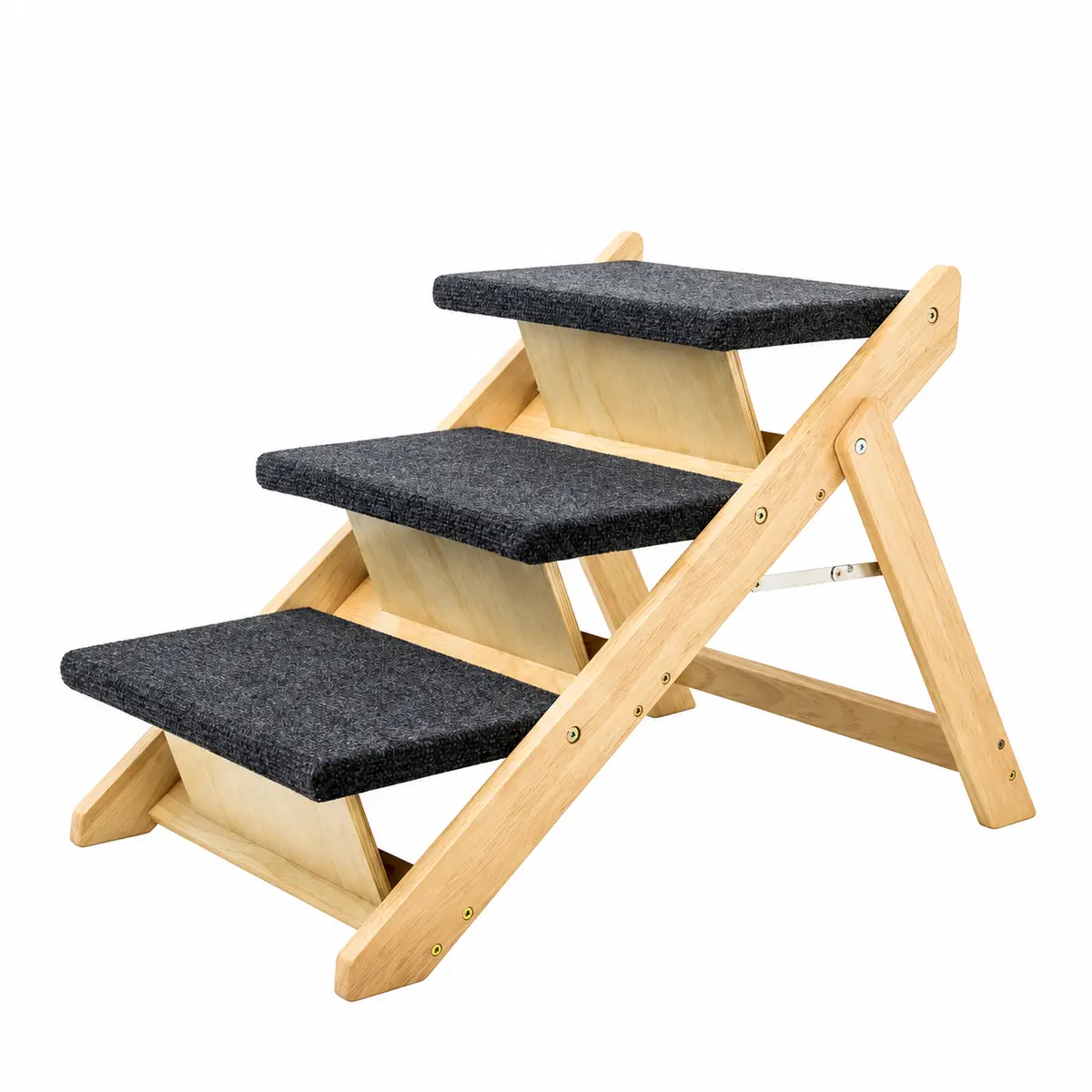
Some products on this page combine both, with steps on one side and a slope on the other, which lets you see what your dog prefers. If your dog has been diagnosed with a back problem, ask your vet which option is safer before buying.
Height, length and slope
Measure the height of your bed or couch from the floor to the top of the mattress or cushion. The ramp's top should meet that height, or sit just below it. Height-adjustable folding ramps cover a range of furniture and let you lower the angle while your dog learns.
Length decides the slope. For the same height, a longer ramp is gentler. A ramp around 49 inches suits most couches, while high beds often need a longer ramp of 70 inches or more, or a ramp with a top platform, so the incline stays comfortable for a senior or small dog.
Surface, stability and weight
A non-slip carpeted surface gives paws grip, and side rails or raised edges stop a dog stepping off the side. Rubber feet keep the base from sliding on hardwood. Place the ramp against the furniture with one side next to a wall if possible, so it feels secure.
Check the weight rating against your dog's weight with a margin to spare. A ramp that flexes or wobbles under load will put your dog off. Removable, washable covers keep the surface clean and help maintain grip.
Teaching your dog to use a ramp
Lay the ramp flat on the floor first and lure your dog along it with treats. Then raise it slightly and repeat, rewarding every step. Practice going down as well as up, since descending is where most dogs hesitate. Keep the first sessions short.
Signs that joint pain may be developing include hesitating before jumping, stiffness after rest, or slowing on walks. If your dog shows these, see your vet, because a ramp helps with access but does not treat the cause.
This page is general information, not veterinary advice, and it cannot replace an examination by the vet who knows your pet.
Are ramps or stairs better for older dogs?
Ramps are usually easier for dogs with arthritis, back problems or weak hind legs, while stairs suit older dogs who still have good balance. Ask your vet if your dog has a diagnosed spinal or joint condition.
How long should a dog ramp for a bed be?
Longer ramps give a gentler slope. Around 49 inches suits most couches, while high beds often need 70 inches or more. Measure the bed height and choose a length that keeps the incline shallow.
How do I get my dog to use a bed ramp?
Start with the ramp flat on the floor, lure your dog along it with treats, then raise it gradually. Practice both directions and keep sessions short and positive until your dog is confident.
Can cats use a dog ramp?
Yes. Many ramps and small pet stairs on this page work for cats, especially seniors with stiff joints. A carpeted surface also gives claws good grip.