







Dogs
Dog stairs for bed
Cozy spots for long naps.
39 items picked for everyday life with your pet, with shipping estimates on every item.
 Their favorite place in the house.
All dogs homes, cages & gates →Dog playpens →Freestanding dog gates →Dog ramps for bed →Outdoor dog kennels →Dog stairs →Dog gates with door →Dog ramps →Dog gates →Puppy playpens →Tall dog gates →Extra wide dog gates →Outdoor dog playpens →
↗Tracked US shippingEstimates on every item↶Returns & refundsHow it works♡Here to helpTalk to Giddy Pets
All dog stairs for bed
Little essentials. Lots of love.




A little guidance
Help choosing dog stairs for bed
Buying guides and care advice written for this range: what to measure, what matters and what to skip.
From our guides
- Best Dog Stairs: How to Choose Steps for a Bed or Couch →
- Best Bedding for Guinea Pigs: What Is Safe and Easy to Clean →
- Best Bolster Dog Beds: What Actually Matters →
- Best Calming Dog Bed: What Helps an Anxious Dog Settle →
- Best Dog Bed Covers: What to Look for Before You Buy →
- Best Dog Bed for Chewers: How to Choose a Chew-Resistant Bed →
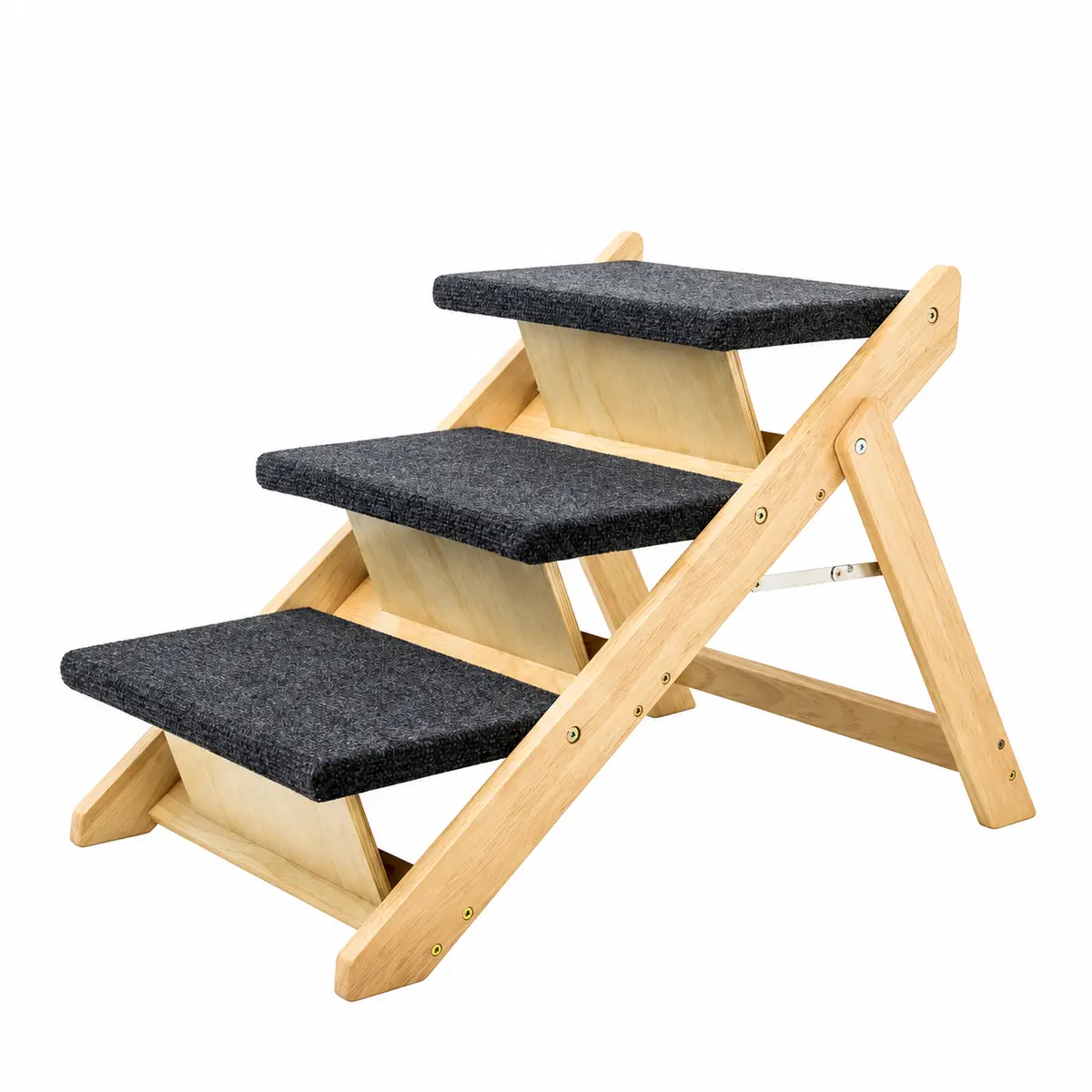
These are pet stairs for getting onto a bed or sofa: foldable wooden steps in three and four levels, cushioned foam stairs with removable covers, non-slip carpeted steps, stairs with a hidden den underneath, and a few that double as cat scratching steps. They suit small breeds, long-backed dogs, seniors and any dog that should not be leaping off a high mattress.
Which dogs benefit from bed stairs
The American Kennel Club lists several groups that benefit from stairs or ramps: dogs with arthritis, breeds prone to back problems such as Dachshunds, Corgis and Basset Hounds, small breeds whose joints take a jolt every time they leap onto furniture, puppies, and dogs recovering from injury. Jumping down is often harder on joints than jumping up.
Stairs are also simply convenient. A small dog that cannot reach the bed will scratch at the frame or cry to be lifted, and a set of steps lets it come and go on its own. Cats, especially older ones, use them too.
Measuring for the right height
Measure from the floor to the top of the mattress or sofa cushion, not the frame. The top step should sit at or a little below that height, so your dog steps across rather than up. Tall beds with thick mattresses usually need four steps; standard sofas often need three.
Then check the tread. Each step should be deep enough for your dog to stand on with all four feet and wide enough that it does not feel like a balance beam. The American Kennel Club advises a non-slip surface, a width that fits the dog comfortably, and checking the weight limit, especially for larger dogs.
Wood, foam or folding stairs
Wooden stairs are rigid and stable, take heavier dogs and often fold flat for storage or travel. Foam stairs are light, soft if a dog misjudges a step and quiet on hard floors, and their covers usually zip off for washing; they suit small and senior dogs best.
Folding portable stairs move easily from bedroom to living room. Stairs with a den or storage underneath make use of the space. Whatever the type, place the stairs against the furniture on a non-slip surface, ideally with a wall or the bed frame on one side as a guide.
Stairs or a ramp?
The American Kennel Club notes that stairs take up less floor space against a bed, while ramps are gentler on sore joints and can suit nervous dogs. It also cautions that stairs are a problem for many dogs with back pain. For a dog with a diagnosed spinal or joint condition, ask your vet which is better.
For most small, healthy dogs and many seniors, stairs work well and are easier to fit into a bedroom. A dog with severe arthritis, hind-limb weakness or a recent back injury may manage a gentle ramp better.
Teaching your dog to use the steps
Introduce the stairs in short sessions. Let your dog sniff them, then lure it up one step with a treat and reward, then two. The American Kennel Club advises never pushing, pulling or punishing a reluctant dog and building up gradually.
Practice going down as well as up, since that is where dogs are most tempted to jump. Once your dog uses the stairs reliably, keep them in place so it never has to choose between them and a leap. This page is general information, not veterinary advice, and it cannot replace an examination by the vet who knows your pet.
Are dog stairs good for dogs?
For small breeds, long-backed breeds, seniors and dogs with joint problems, stairs reduce the strain of jumping on and off furniture. For dogs with back pain, check with your vet whether a ramp is better.
How many steps do I need for a high bed?
Measure floor to mattress top. Most tall beds need four steps and most sofas three. The top step should sit level with or just below the sleeping surface.
Are foam or wooden dog stairs better?
Foam stairs are lighter, softer and quieter, ideal for small and older dogs. Wooden stairs are sturdier, take more weight and often fold flat for storage.
How do I get my dog to use stairs?
Lure one step at a time with treats in short sessions, reward every step, and practice coming down. Never force a reluctant dog, and keep the stairs in place once learned.
Can cats use dog stairs?
Yes. Many cats use pet stairs readily, and older cats with stiff joints benefit from them. Some stairs in this range also have sisal or carpet for scratching.