Buying guides
Best Dog Bed for Chewers: How to Choose a Chew-Resistant Bed
For a dog that shreds beds, the most durable choice is usually an elevated cot with an aluminum or steel frame and tough mesh, because there are no edges, seams or stuffing to grab. If your dog needs softness, choose a bed in ballistic nylon or heavy canvas with hidden zippers and no loose trim. No bed is truly chew-proof, so pair the bed with chew toys, exercise and supervision.
By Matt GarnettUpdated November 14, 20263 min read2 sources
Why dogs chew beds
Puppies chew because they are teething and exploring; the AKC compares them to toddlers who do not know what is off-limits. Adult dogs often chew beds from boredom, excess energy, or stress when left alone, and some simply enjoy dissecting soft things.
The cause shapes the fix. A teething puppy needs puppy teething toys and supervision. A bored adult needs more exercise and enrichment. A dog that chews only when left alone may have separation distress, which a bed, even one from the chew-proof dog beds range, cannot solve and a vet or qualified trainer can help with.
What matters most: no edges to grab
Chewers start at corners, seams, zippers and piping. A bed with tucked or hidden zippers, rounded corners, no loose trim and tightly stitched seams gives the teeth nothing to start on.
Fabric matters next. Ballistic nylon and heavy canvas resist teeth far better than fleece, plush or faux fur. For elevated cots, a powder-coated aluminum or steel frame with chew guards that cover the fabric edge is the toughest design.
Bed types compared
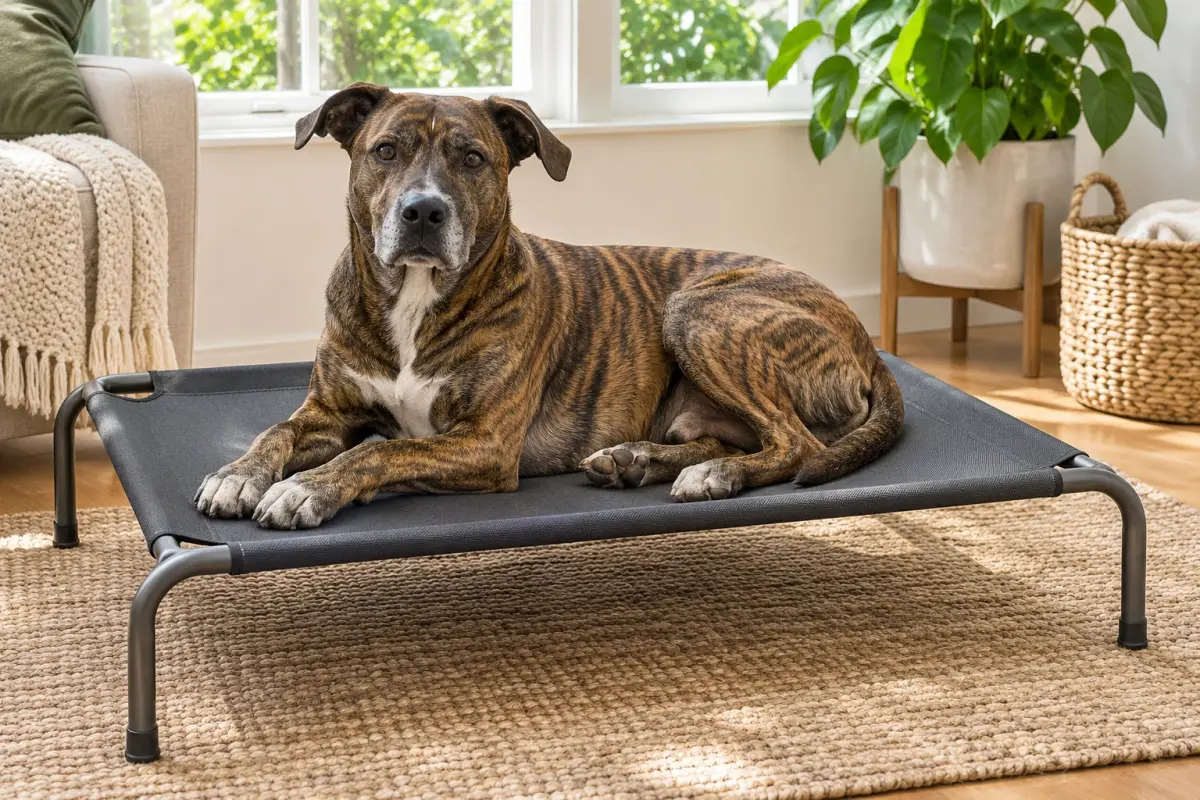
Elevated cots lift the dog off the floor on taut mesh; they have no stuffing, wash easily and are the most chew-resistant choice, and also suit outdoor use and hot weather. Tough-fabric bolster or pillow beds offer softness but eventually yield to a determined chewer.
Chew-resistant crate pads are thin, firm pads in ballistic fabric, useful in crates where a dog spends unsupervised time. Orthopedic foam beds in heavy-duty covers suit older chewers that need joint support, but foam is a hazard if exposed. A tear-resistant, waterproof washable dog bed and a bite-resistant sleeping bag are examples of tougher-fabric styles, though neither should be treated as chew-proof.
Best type for each dog
For a teething puppy, the AKC's advice is simple: if the puppy destroys its bed, remove it, and use a simple rug or nothing at all for a while. Offer teething toys instead. For an adult power chewer, an aluminum cot with chew guards.
For a crate, a chew-resistant pad, or the bare crate tray if the dog eats every pad. For a senior chewer that needs cushioning, a firm foam bed in a ballistic cover, used only when you are home until you trust it.
What to avoid
Avoid plush, fleece and faux-fur beds for chewers; they are easy to shred and the stuffing can be swallowed. Avoid exposed zippers and decorative trim. Avoid indestructible claims without a warranty that covers chewing.
Swallowed stuffing, foam or fabric can block the intestines. If your dog vomits repeatedly, strains, stops eating or has a painful belly after chewing a bed, call your vet the same day.
Avoid leaving a known bed-chewer alone with a new bed of any kind until you have watched how it treats it for a week or two.
Reducing chewing, and lifespan
Give a chewer legal outlets: tough rubber chew toys, food puzzles and lick mats. The AKC recommends exercise and play several times a day for puppies to reduce boredom-driven destruction, and a crate or pen when you cannot supervise.
Check the bed weekly for small tears and repair or retire it before the stuffing comes out. An aluminum cot often lasts years; replace mesh when it wears.
This page is general information, not veterinary advice, and it cannot replace an examination by the vet who knows your pet.
Bed construction and inspectable edges
| Format | Physical construction | Inspect regularly |
|---|---|---|
| Cot | Taut fabric over a frame | Fabric edges and fasteners |
| Pillow or bolster | Filling enclosed by a fabric shell | Seams,zips and exposed filling |
| Crate pad | A low-profile covered core | Bound edges and crate fit |
| Foam bed with heavy cover | Foam within an outer shell | Cover damage and exposed foam |
Common questions
Are there truly indestructible dog beds?
No bed is completely indestructible. Elevated aluminum cots with chew guards come closest, because there are no seams or stuffing to grab. Look for a warranty that specifically covers chewing.
What is the best chew-proof crate pad?
A thin, firm pad in ballistic nylon with hidden zippers and no loose corners. If your dog destroys every pad, use the bare crate tray for a while and give a safe chew toy instead.
Why does my dog chew its bed?
Common reasons are teething, boredom, excess energy and stress when alone. More exercise, chew toys and supervision help. If chewing happens only when you leave, ask your vet or a trainer about separation distress.
Is it dangerous if my dog eats bed stuffing?
It can be. Stuffing, foam and fabric can cause an intestinal blockage. Call your vet if your dog has swallowed a lot, or vomits, strains, stops eating or seems painful afterward.
Sources we checked
This guide is general information, not veterinary advice. If your pet is unwell or injured, contact your veterinarian.