






Buying guides
Best Dog Bed Covers: What to Look for Before You Buy
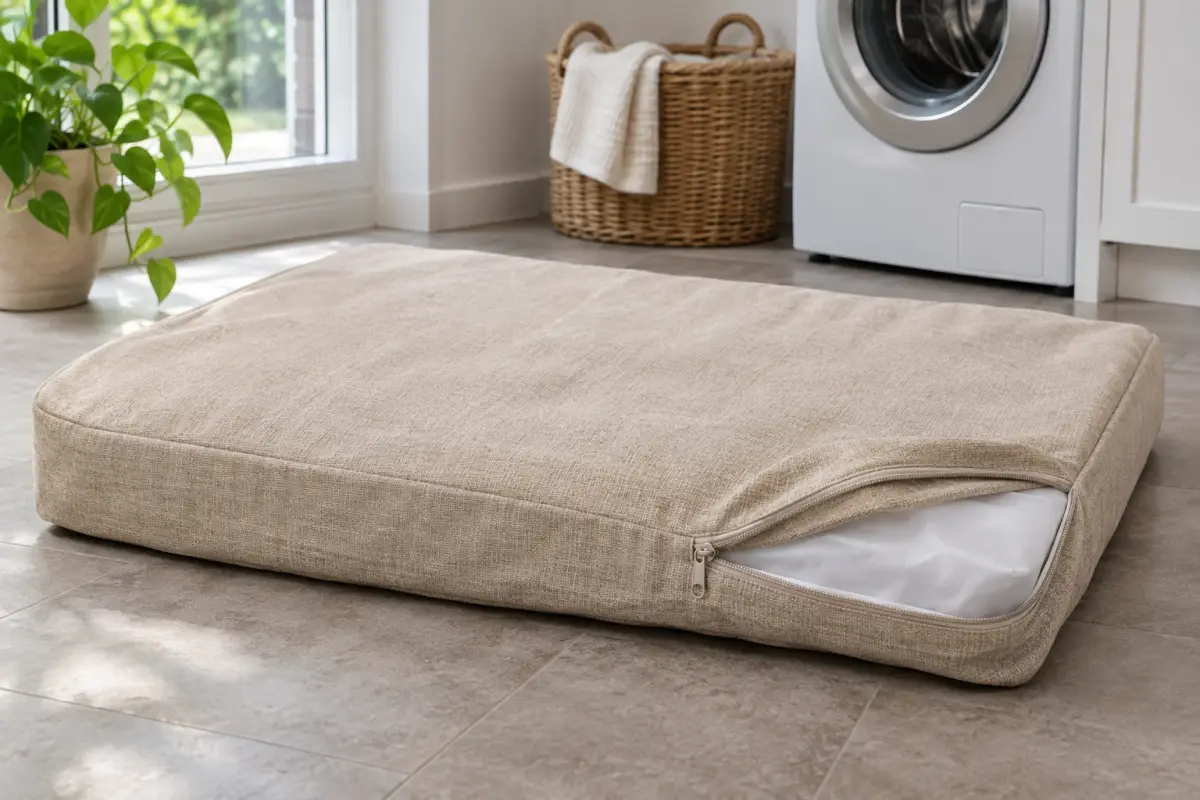
The best dog bed cover is removable, machine washable and cut to fit the bed it goes on, ideally with a waterproof layer for dogs that drool, shed or have accidents. A cover lets you wash the part your dog actually touches often without washing the whole cushion. Browse our dog bed covers, and measure your bed before you choose one.
By Matt GarnettUpdated November 13, 20264 min read2 sources
What matters most: removable, washable and the right size
The American Kennel Club describes removable covers as a practical option because you can pop them in the washing machine and often dry them in the dryer. Washing a cover takes far less time than washing a thick, fiber-filled cushion, so the main bed itself can be washed less often. That single point decides most purchases: if the cover does not come off easily, it is not doing its job.
Fit is the second criterion. Measure your bed's length, width and depth, and compare them to the cover's stated dimensions, because a loose cover bunches under a dog and a tight one strains the zipper. Check that the zipper or closure is protected so it will not scratch your dog or the floor. Our dog bed covers listings state the bed size each one is made for.
Fabric and washing: what to check on the label
Look for the care label before anything else. The AKC suggests a fragrance-free, pet-friendly detergent for machine washing, notes that high-temperature programs can kill germs and parasites, and says air drying is usually best for thick fillings. Covers themselves often tolerate the dryer, but check the label, because heat shrinks some fabrics and damages waterproof backing.
Buying a spare cover is a smart move, so one is always clean while the other is in the wash. Dense, tightly woven fabrics resist hair and odors better than fluffy ones. Plastic beds are the easiest to clean because they do not hold hair, odors or parasites the way fluffy fabric beds do. If the bed has a thick filling, let it dry completely before your dog returns to it, since damp filling can cause mold and mildew.
Waterproof covers and liners: when they earn their place
The AKC singles out waterproof covers as especially useful, and they matter most for puppies, seniors with leaks, dogs that drool, and dogs that come in wet. A waterproof layer protects the cushion underneath, so spills wipe off the surface instead of soaking the filling. Check that the waterproof layer is inside the cover and not a stiff plastic sheet that crackles when your dog turns around.
A waterproof backing can also run warmer than plain fabric, so think about your dog's coat and your climate. For a dog that runs hot, pair a thin cover with a cooling dog bed rather than adding more layers. If your dog chews bedding, a cover is only as strong as its seams, and a chew-proof dog bed may be a better base than any fabric cover.
How often to wash a dog bed cover
There is no single rule. The AKC says the CDC and a study in the Canadian Medical Association Journal recommend washing dog bedding weekly to reduce the risk of parasites or zoonoses, while the EPA advises deep cleaning dog beds every two to three weeks to help control fleas. Shedding, coat type, outdoor activity and family allergies can all push the schedule one way or the other.
A sensible routine is to wash the cover weekly if your dog sheds heavily, has an oily coat, goes outdoors a lot or has skin trouble, and every two to three weeks for a clean indoor dog. Heavy shedders can also use a washable layer on top; the AKC notes dog blankets can cover the bed and be washed weekly. See our dog blankets for a layer that goes on top of the cover.
Fleas, allergies and when to call your vet
VCA Animal Hospitals advises washing your pet's bedding in hot water or replacing it to remove eggs and dead fleas, along with regular, thorough vacuuming of carpets, floors and soft furnishings. It also says to keep giving flea control to all pets in the home for three to six months after an infestation, because remaining life stages need time to mature. The AKC adds that heavily infested bedding should be discarded.
A bed cover helps with hygiene, but it does not treat fleas on the dog, so talk to your vet about prevention if you find fleas or flea dirt. If your dog scratches constantly, has red or irritated skin, or sneezes around bedding, ask your vet before changing detergents or fabrics. Wash new covers before first use as well.
Which cover suits which dog
Heavy shedders do best with a smooth, tightly woven cover that releases hair in the wash, plus a weekly layer on top. Puppies and dogs with leaks need a waterproof cover and a spare. Droolers and swimmers also suit waterproof covers, while chewers need strong seams and zippers placed out of reach.
Before buying a cover, confirm your bed's shape, because round, bolster and rectangular beds all need different cuts. If your bed is worn out, a new cover will not fix it; our guide to choosing a dog bed covers sizing and support. Otherwise browse our dog bed covers and match the cover to the bed you already own. This page is general information, not veterinary advice, and it cannot replace an examination by the vet who knows your pet.
Common questions
How often should I wash a dog bed cover?
Weekly is a common recommendation, especially for heavy shedders, outdoor dogs and dogs with skin trouble. A clean indoor dog may be fine every two to three weeks. Follow the care label.
Do waterproof dog bed covers help?
Yes, especially for puppies, seniors with leaks and dogs that drool or come in wet. The waterproof layer keeps the filling underneath dry, though you still need to wash the cover regularly.
Will washing a dog bed cover kill fleas?
Washing in hot water helps remove eggs and dead fleas, according to VCA, but it does not treat the dog. Use flea control on every pet and ask your vet what is suitable.
How do I measure for a dog bed cover?
Measure the bed's length, width and depth with the filling in place, then compare these to the cover's listed dimensions. Check the closure type and whether the cover is made for that bed shape.
Sources we checked
This guide is general information, not veterinary advice. If your pet is unwell or injured, contact your veterinarian.


