






Buying guides
Best Dog Cooling Mats and Cooling Beds: How to Choose
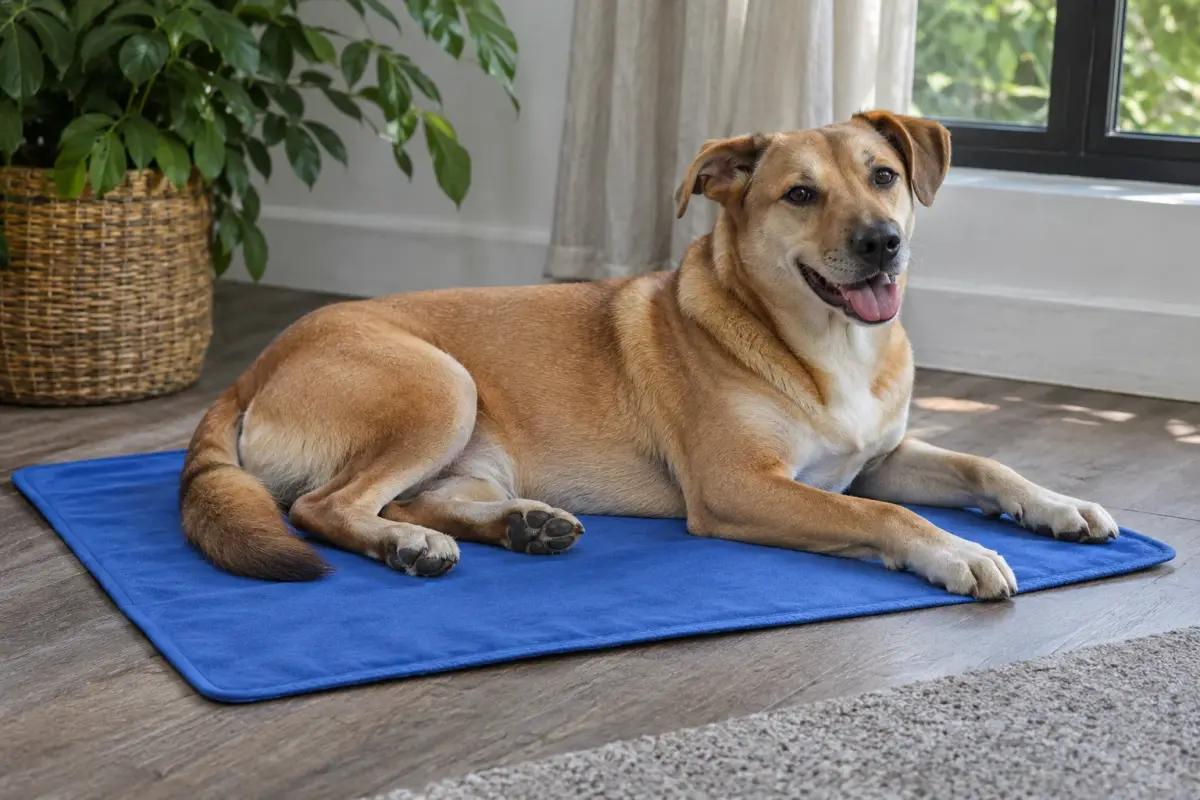
A good cooling mat is one your dog cannot chew open, big enough to lie on fully stretched out, and suited to where you will use it. Pressure-activated gel mats work indoors without power; raised mesh cot beds cool through airflow and suit outdoors and chewers. Neither replaces shade, water and air conditioning when the weather is truly hot.
By Matt GarnettUpdated November 9, 20265 min read2 sources
How dog cooling mats actually work
Dogs shed heat mainly by panting and through contact with cool surfaces, which is why they stretch out on tile and concrete in summer. A cooling mat gives them a surface that pulls heat away from the belly and inner legs. Pressure-activated gel and water cooling mats absorb body heat into a gel layer and then need time off the dog to release it; they cool well for an hour or so of lying, then feel neutral.
Water-filled mats use the same principle with a larger reservoir and stay cool a little longer, but are heavier and more fragile. Raised cot beds do not chill at all; they lift the dog off hot ground on a breathable mesh so air can circulate underneath. Cooling beds combine a foam base with a gel or cooling-fabric top. Each works, but within modest limits, which is why the setting matters as much as the product.
What matters most when choosing
Chew safety comes first, because some gel fillings are not meant to be eaten and a punctured mat is a mess and a hazard. If your dog chews bedding, choose a raised mesh cot or a mat with a tough nylon cover and no exposed seams, and supervise the first uses. Size comes next: the mat should be at least as long as your dog lying fully stretched, because a dog only cools on the part it touches.
Then match the type to the place. Indoors on a cool floor, a gel or water mat works well. Outdoors, in a crate in a car or on a deck, a raised mesh cot is better, because gel mats warm quickly in direct sun. Look for a non-slip base, a surface you can wipe clean and, for crates, a mat cut to the crate floor rather than folded.
The best type for each dog and home
For flat-faced breeds such as bulldogs, pugs and boxers, and for heavy-coated dogs, a cooling surface is most useful, because these dogs struggle more in heat; the ASPCA notes flat-faced pets cannot pant as efficiently. A large gel mat in an air-conditioned room is a sensible set-up. For senior dogs, a cooling bed with foam underneath gives both cooling and joint support, which a thin gel pad does not.
For large dogs that spend time outside, a raised cot under shade is the most durable choice and keeps them off hot decking. For puppies and chewers, skip gel altogether and use a cot or a damp, cool towel on tile under supervision. For travel and crates, a thin mat sized to the crate floor works well in an air-conditioned car, but never as a reason to leave a dog in a parked one.
What a cooling mat cannot do
A cooling mat helps a dog rest comfortably on a warm day. It does not protect a dog from dangerous heat. The ASPCA warns never to leave a pet in a parked car, which can overheat even with a window cracked, and to limit exercise on hot days. The AKC lists heavy panting, excessive drooling, bright red gums and weakness as early signs of heatstroke.
If you see those signs, move your dog somewhere cool, wet it with cool, not ice-cold, water and call your vet or the nearest emergency vet right away, even if it seems to recover. Avoid using frozen ice packs directly against the skin as a substitute for a mat. The real basics of summer safety remain fresh water, shade, air conditioning and walks in the early morning or late evening.
Sizing, care and lifespan
Measure your dog lying stretched on its side from nose to base of tail and choose a mat at least that long. A dog that curls up can use a smaller mat, but most dogs stretch out in heat, so err on the larger side. Large and giant breeds may need two mats side by side or a raised cot sized for their weight.
Wipe gel and water mats with a damp cloth and mild soap rather than washing them, and keep them out of direct sun, which breaks down the plastic. Check seams regularly and throw away any mat that bulges, leaks or has been bitten through. Raised cot beds last several seasons if the mesh is replaced when it sags or tears, and the frame should be checked for loose joints each spring.
Before you buy
Consider where your dog already chooses to lie on hot days, because that tells you what kind of surface it finds comfortable and where the mat should go. A dog that seeks out tile will usually take to a gel mat placed on that same floor, while one that prefers the deck may do better with a cot in the shade.
Introduce the mat gradually with treats if your dog is wary of the crinkly feel of gel. Remember that heat tolerance varies with age, weight, coat and breed, so ask your vet how much activity is safe for your dog in summer if it is old, overweight or flat-faced.
This page is general information, not veterinary advice, and it cannot replace an examination by the vet who knows your pet.
Common questions
Do cooling mats really work for dogs?
Yes, within limits. Gel and water mats draw heat away while the dog lies on them, and raised mesh beds help by improving airflow. They make rest more comfortable but do not protect against heatstroke on their own.
Is a cooling mat or a cooling bed better?
A thin mat is portable and good on floors and in crates. A cooling bed adds foam underneath, which suits older or heavier dogs that need cushioning as well as a cooler surface.
Are gel cooling mats safe if my dog chews them?
Gel mats are not designed to be chewed, and a punctured mat should be removed immediately. If you are worried your dog has swallowed gel, call your vet and keep the packaging to show them.
Do cooling mats need to be refrigerated?
Most pressure-activated gel mats do not need a fridge or power. They recharge by being left unused for a while. Some water mats can be chilled briefly, but check the instructions first.
Sources we checked
This guide is general information, not veterinary advice. If your pet is unwell or injured, contact your veterinarian.


