Buying guides
Best Dog Beds: How to Choose One Your Dog Will Actually Use
The best dog bed matches how your dog sleeps, is thick enough that hips and elbows never touch the floor, and has a removable, machine-washable cover. Dogs that sprawl need a flat mattress; dogs that curl up or lean against things sleep better with raised bolsters. Get those three things right and the rest is preference.
By Matt GarnettUpdated November 9, 20265 min read2 sources
Start with how your dog sleeps
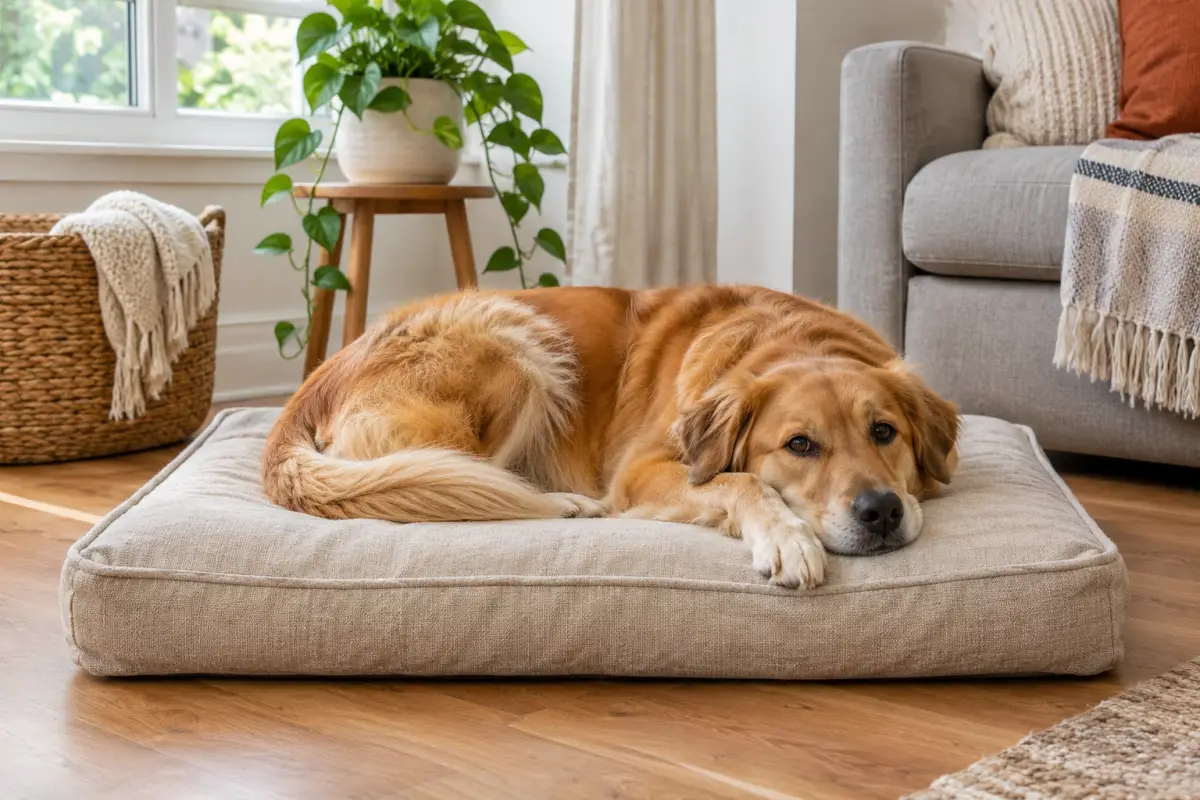
Watch your dog for a few nights before buying a dog bed. A dog that stretches out flat on its side needs a rectangular mattress long enough for its full length. A dog that curls into a ball, tucks its nose under its tail or presses against the back of the couch usually prefers a round or oval bed with a raised rim, often called a bolster or donut bed.
Some dogs do both, depending on the temperature: curled up in winter, sprawled on the cool floor in summer. For them, a rectangular bed with bolsters on three sides is a good compromise, because it offers a headrest without forcing a curled position. If your dog already sleeps on a particular rug or corner, put the new bed there and use the old bedding on top for the first few nights.
Support, foam and thickness
The filling decides how long a bed stays comfortable. Loose polyester fiberfill is soft and cheap but flattens and clumps within months. Solid foam holds its shape, and the AKC notes that memory foam molds to the body and spreads weight, which is why it can be thinner than standard foam while giving similar support. Egg-crate foam sits between the two, adding airflow but compressing faster.
A simple test tells you if the support is enough: when your dog lies down, you should not be able to feel the floor through the bed under its heaviest point, usually the hip or shoulder. As a rough guide, small dogs are fine on 2 to 3 inches of foam, while dogs over 50 lb need 4 inches or more. Your vet can tell you whether a firmer orthopedic bed would help a stiff or older dog.
The main bed types compared
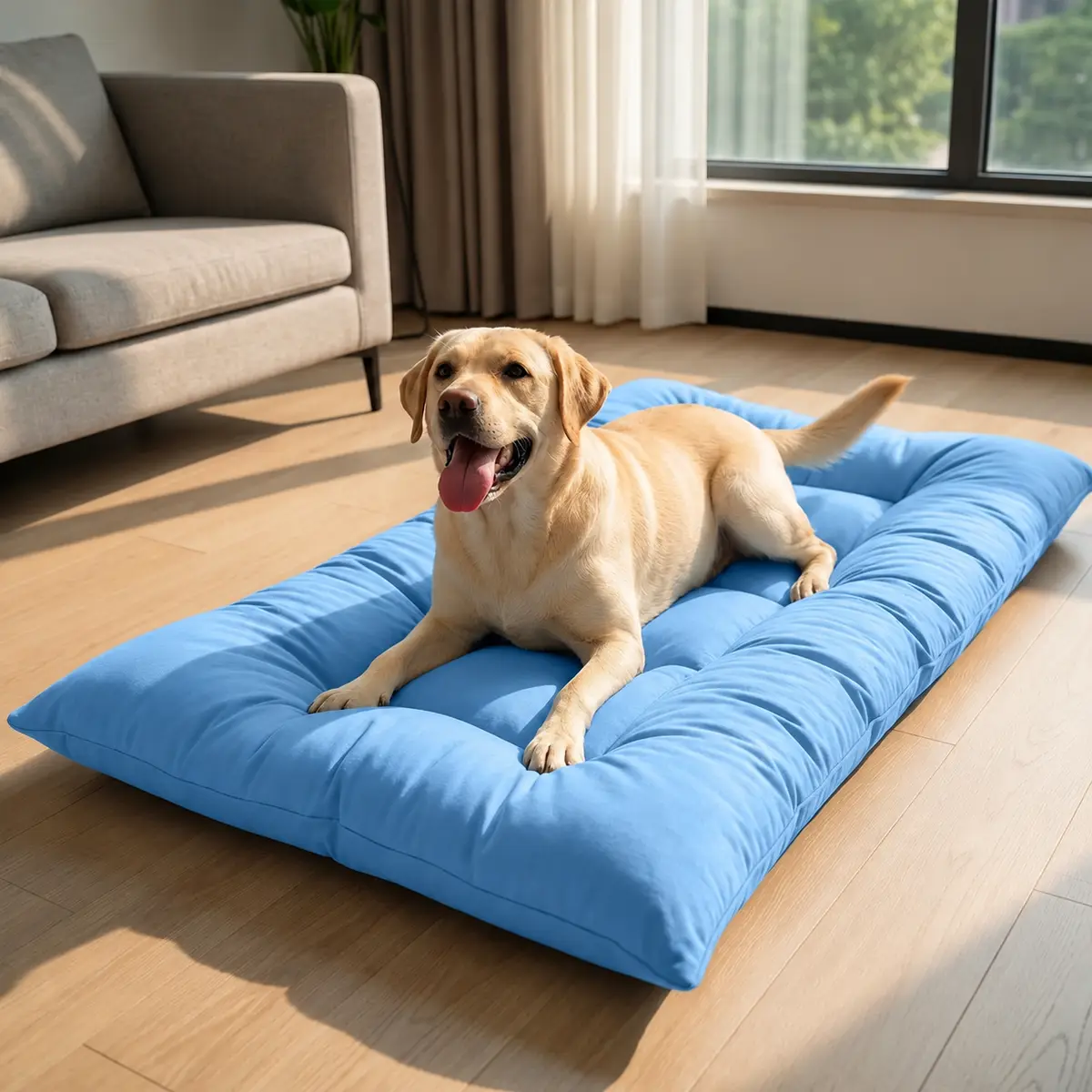
Flat mattress and pillow beds suit sprawlers and large dogs, fit inside crates and are easy to wash. Bolster and donut beds suit curlers and anxious nappers who like something at their back. Raised cot beds lift the dog off the floor on a taut mesh frame, which keeps them cool in summer, dry outdoors and is tough for chewers because there is little soft material to grab.
Cave or hooded beds suit small dogs and terriers that burrow under blankets. Orthopedic beds use thick solid or memory foam for seniors and heavy breeds. Heated and cooling beds address temperature, and are worth considering only if your dog clearly struggles with cold floors or hot weather. Each type has a clear job, so choose the one that matches your dog rather than the most elaborate option.
The best bed for each dog
For a puppy, choose an inexpensive, washable bed or crate pad with no stuffing to rip out, and expect to replace it as it grows and chews. For a senior or a dog with stiff joints, choose thick solid foam with a low entry edge so it can step on rather than climb in. For large and giant breeds, choose a mattress at least 4 inches thick and a size that fits the full stretched-out length.
For a heavy chewer, a raised cot bed with an aluminum frame, or a tough canvas cover with hidden zippers, lasts far longer than plush. For a small dog that feels the cold, a bolster or cave bed traps body heat. For a dog that has accidents, look for a waterproof liner between the foam and the cover, which the AKC also recommends for puppies and senior dogs.
How to measure for a dog bed
Measure your dog lying fully stretched out on its side, from the tip of the nose to the base of the tail, then add 6 to 12 inches. Measure the width from the shoulder to the front paws at their furthest reach. For a curling dog choosing a round bed, measure its diameter when curled and add about 6 inches so it can turn around before settling.
If your dog is between sizes, size up; a bed that is slightly too big is used, while one that is too small leaves legs and heads hanging over the edge onto the floor. For a crate pad, measure the inside floor of the crate rather than the dog, so the pad lies flat without bunching up at the edges or leaving gaps for paws.
Care, cleaning and lifespan
Choose a bed with a removable cover you can wash weekly, and ideally one where the whole bed or the foam's inner cover can be cleaned too. The AKC suggests washing the cover weekly in hot water, which keeps odor, dander and any flea eggs down. Vacuum the bed between washes and let foam air-dry fully before reassembling, because damp foam grows mildew.
Replace a bed when the foam stays flattened, the dog's hips touch the floor, the cover is torn beyond repair or the smell no longer washes out. For most dogs that is every one to three years, sooner for puppies and chewers. A dog that suddenly avoids its bed, struggles to get out of it or starts sleeping on hard floors may be sore or too warm, so it is worth mentioning to your vet.
Bed shapes and usable sleeping space
| Bed shape | Layout to compare | Measurement that matters |
|---|---|---|
| Flat mattress | Open sleeping surface without a raised rim | Usable length and width when the dog stretches out |
| Bolster or donut | Raised sides around a smaller center | Inside sleeping area, not just the outside diameter |
| Three-sided bolster | Headrest with an open side | Entry edge and remaining flat area |
| Cave or hooded | Covered sleeping space | Entrance opening and clearance inside |
| Crate pad | Flat pad intended to sit in a crate | Inside crate floor so the pad lies flat |
Common questions
What type of dog bed is most comfortable?
The most comfortable bed is the one that matches your dog's sleeping position and keeps its joints off the floor. Sprawlers prefer flat foam mattresses, while dogs that curl up usually prefer beds with raised bolsters.
Are bolster dog beds good?
Bolster beds are good for dogs that curl up, rest their head on things or like something at their back. They are less useful for big dogs that sprawl, because the rim reduces the flat sleeping area.
How thick should a dog bed be?
Thick enough that your dog's hips and shoulders never touch the floor when it lies down. Small dogs do well on 2 to 3 inches of foam, while dogs over 50 lb usually need 4 inches or more.
How often should you replace a dog bed?
Most beds need replacing every one to three years, or sooner if the foam stays flat, the cover tears, or the bed still smells after washing. Puppies and chewers usually go through beds faster.
Sources we checked
This guide is general information, not veterinary advice. If your pet is unwell or injured, contact your veterinarian.