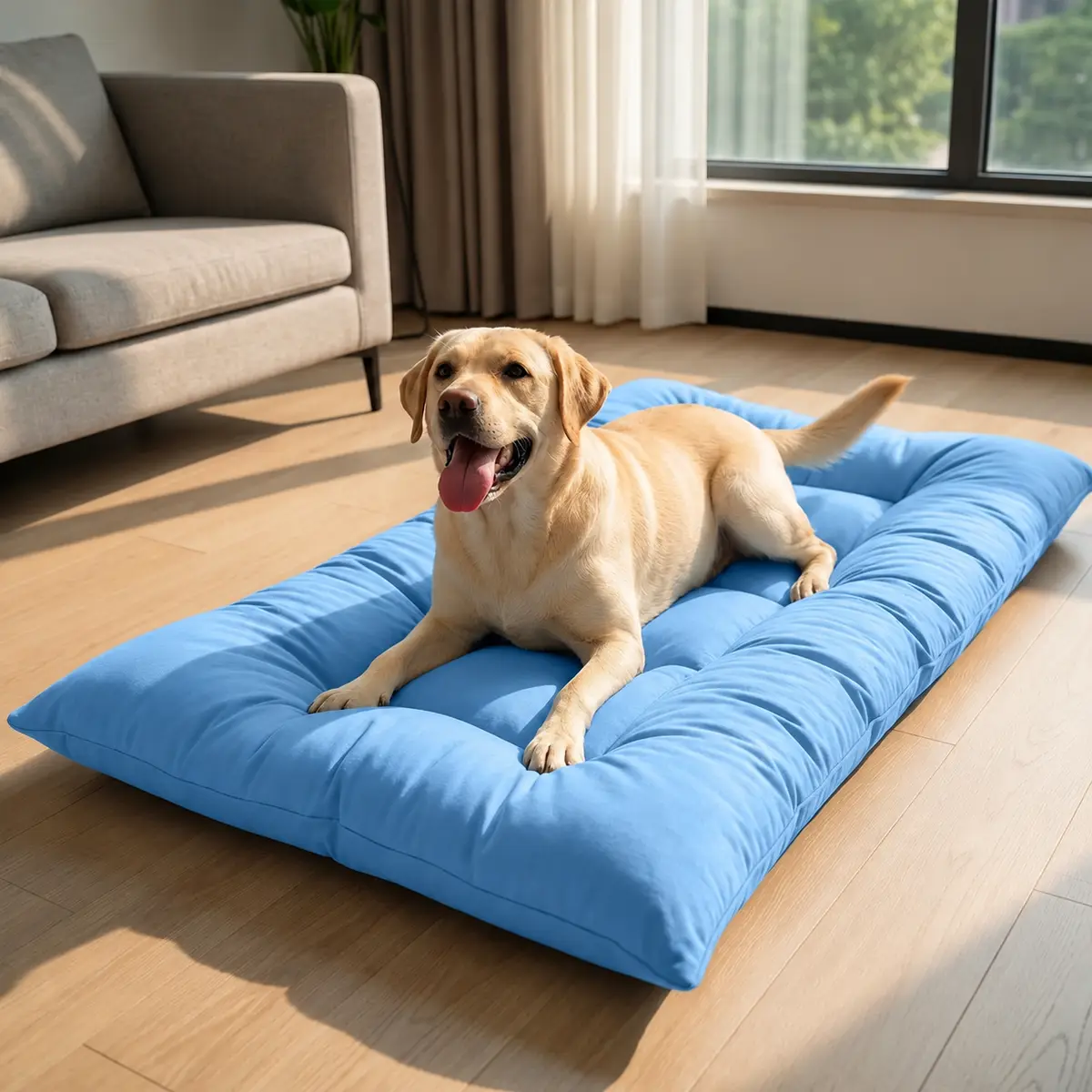
Buying guides
How Often Should You Replace a Dog Bed?
There is no fixed date, but most dog beds need replacing every one to three years, and cheap fiber-filled beds sooner. Replace a bed when it still smells after washing, has flattened so your dog feels the floor, is torn with filling exposed, or no longer supports an older dog's joints. A heavy flea infestation is another reason to start fresh.
By Matt GarnettUpdated November 9, 20263 min read2 sources
Sign 1: it still smells after a proper wash
A bed that has been vacuumed, washed on hot and dried completely should smell clean. The AKC notes that if a bed still smells and looks worn after washing, it is time for a new dog bed. Odor that survives a wash usually means oils, urine or bacteria have soaked deep into the filling where detergent cannot reach.
Before giving up, try a second wash with a cup of white vinegar in the rinse and a full day drying in the sun. If the smell comes back within a day or two of use, the filling has had its life.
Sign 2: it has gone flat
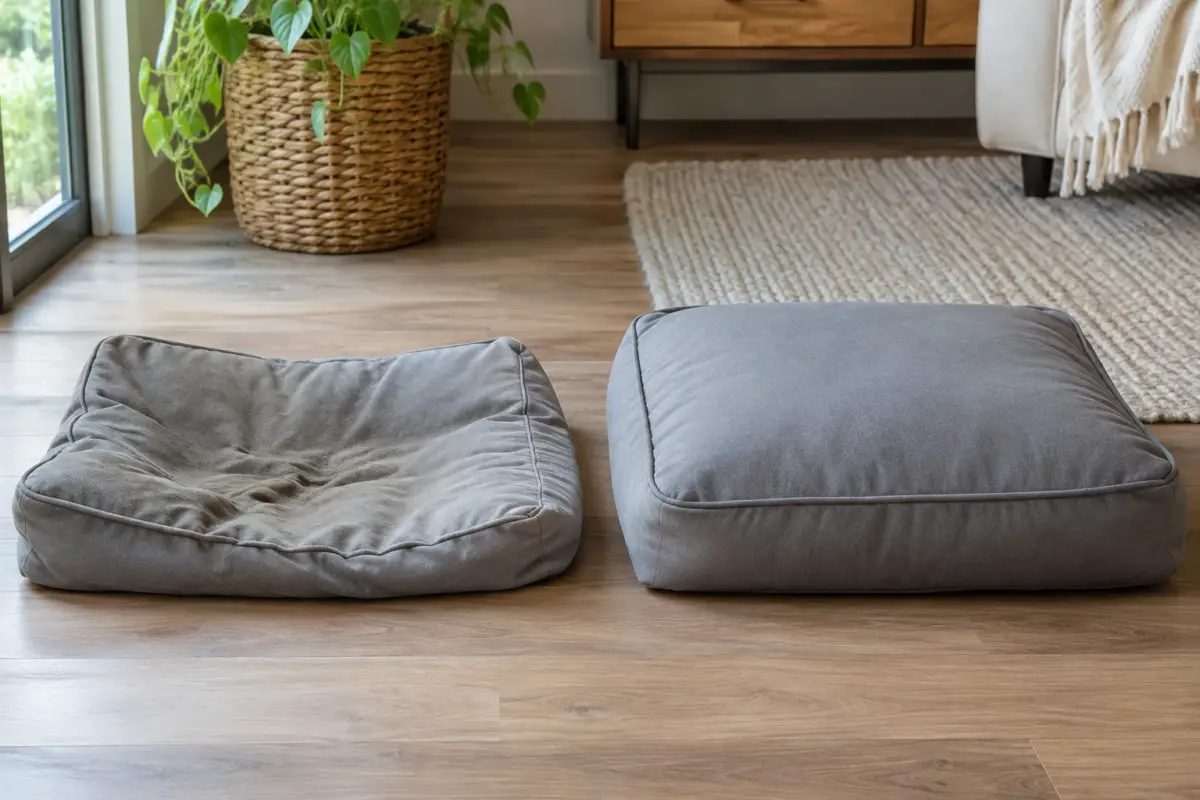
Press your hand into the middle of the bed where your dog lies. If you can feel the floor through it, or the filling has clumped into lumps with thin gaps between, the bed is no longer cushioning your dog. Fiber-filled pillow beds flatten fastest, often within a year for a large dog. Good memory foam and orthopedic foam sag far less and usually last longer.
A flat bed matters most for large breeds, seniors and dogs with arthritis, because their elbows and hips take the pressure. Calluses on the elbows or hips, or a dog that suddenly prefers the couch or your bed, can be hints that its own bed is no longer comfortable.
Sign 3: tears, holes and loose filling
Once a cover splits or a seam opens, filling starts to escape. Stuffing, foam crumbs and zippers can all be swallowed and can cause a dangerous intestinal blockage. If your dog has started chewing the bed, remove loose pieces and replace or repair it straight away rather than leaving it in use.
Replace covers when they wear thin, even if the insert is fine. Many beds sell replacement covers, which is cheaper than a whole new bed and keeps a good foam core in service longer.
Sign 4: your dog's needs have changed
A bed that suited a young dog may not suit it as a senior. Older dogs often benefit from a thicker orthopedic bed with a low entry, and dogs that get hot may prefer a raised cot style. A puppy that has grown into a large adult needs a bed it can stretch out on fully. The AKC suggests choosing a bed that matches your dog's size and sleeping style.
If your older dog struggles to get up, shifts position often or seems stiff after resting, mention it to your vet. A better bed helps comfort, but stiffness and pain can be signs of arthritis that your vet can help manage.
Sign 5 and 6: fleas or mold
Flea-control guidance recommends discarding bedding that is heavily infested with fleas, because eggs and larvae burrow deep into filling where washing may not reach them all. Treat every pet in the house as your vet advises, wash everything else on hot, and start the replacement dog bed after treatment has begun.
Mold or mildew, usually from a bed that was put back in use before it dried or that sits on a damp floor, is another reason to replace it. Black spots, a musty smell or a cold, damp feel inside mean the filling is compromised.
This page is general information, not veterinary advice, and it cannot replace an examination by the vet who knows your pet.
Common questions
How long does a memory foam dog bed last?
A good-quality memory foam bed often lasts several years with a washable cover. Replace it when the foam stays dented, feels thin under your dog's hips, or the cover can no longer be cleaned.
How often should I wash my dog's bed?
About once a week is a sensible routine, more often for heavy shedders, dogs with allergies or after accidents. Washing regularly also helps a bed last longer before it needs replacing.
Is it OK to reuse an old dog bed for a new dog?
If it is in good condition, washed on hot and fully dried, yes. Replace it if it smells after washing, is torn, or held fleas, and check its size suits the new dog.
Sources we checked
This guide is general information, not veterinary advice. If your pet is unwell or injured, contact your veterinarian.