Buying guides
Best Dog Beds for Large Dogs: What Actually Matters
The best bed for a large dog has a thick, dense foam base that does not flatten under its weight, is big enough for the way your dog sleeps, and has a removable, washable cover. For most big dogs that means an orthopedic or memory foam bed at least 4 inches deep. Bolsters suit dogs that curl or lean, elevated cots suit dogs that run hot, and sizing beats style every time.
By Matt GarnettUpdated November 13, 20265 min read2 sources
What matters most: support, size and a washable cover
A large dog presses a bed much harder than a small one, so the first question is whether the base will keep your dog's hips, elbows and shoulders off the floor. Press your fist into the center of a bed; if you can feel the floor, a 70-pound dog certainly will. The AKC notes that supportive orthopedic beds help dogs with arthritis, hip dysplasia and other joint problems, and that many dogs, not only seniors, benefit from them.
Size is the second factor. The AKC says large dogs need beds big enough to stretch out, and big breeds often sprawl rather than curl. The third factor is the cover. A removable, machine-washable cover, ideally with a waterproof liner, keeps a large bed clean, and the AKC recommends washing covers weekly to cut down hair, dander and germs.
Foam types and thickness explained
Solid orthopedic foam and memory foam are the two materials that hold up under large dogs. Memory foam molds to the body and relieves pressure points, which suits older dogs and breeds prone to joint problems. Dense support foam is firmer and springs back faster. Many good beds layer memory foam over a firmer base. Egg-crate foam is lighter and cheaper but compresses sooner.
For dogs over about 50 pounds, look for a base at least 4 inches thick, and 6 to 7 inches for giant breeds and heavy seniors. Avoid beds filled only with loose polyester fiber or shredded foam for big dogs, since the filling clumps and flattens within months, leaving the dog on the floor. Check the foam density figure if the maker gives one; higher density lasts longer.
Bed styles compared for big dogs
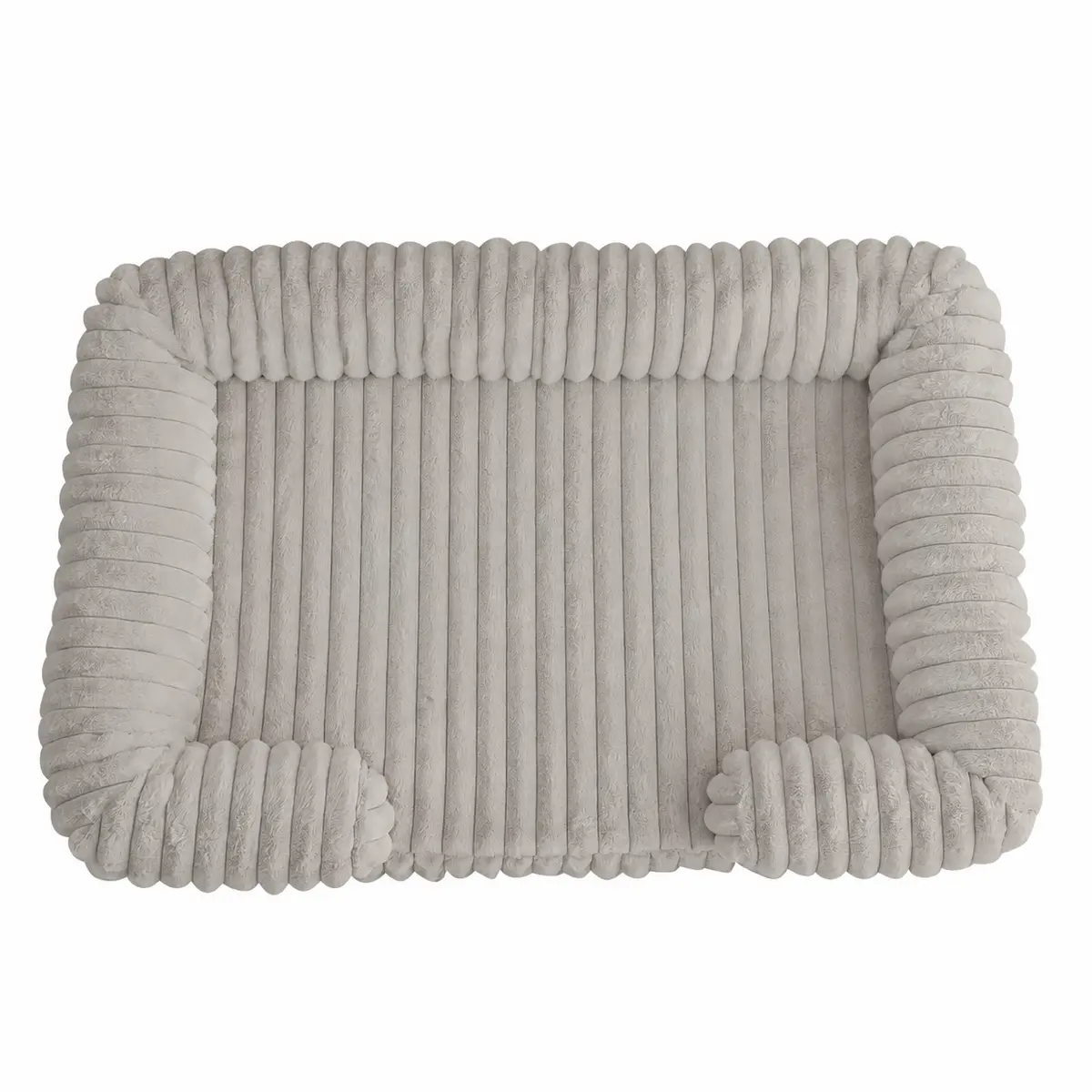
Flat orthopedic mattresses are the most supportive and the easiest for stiff dogs to step onto. Bolster beds have a raised rim that a dog can rest its head on or press its back against, which suits dogs that curl up or like to lean. Elevated cot beds lift the dog off the floor on a taut fabric frame, keeping it cooler and off cold or damp floors, and the AKC notes cot-style beds can support joints and help keep dogs cool.
Couch-style beds combine a foam base with bolsters on three sides and suit dogs that like to lie with their head raised. Cave or covered beds are rarely made large enough for big breeds. Heated pads add warmth for thin-coated or older dogs, but the AKC advises caution and supervision with electric models, especially with chewers.
Best bed for each large dog
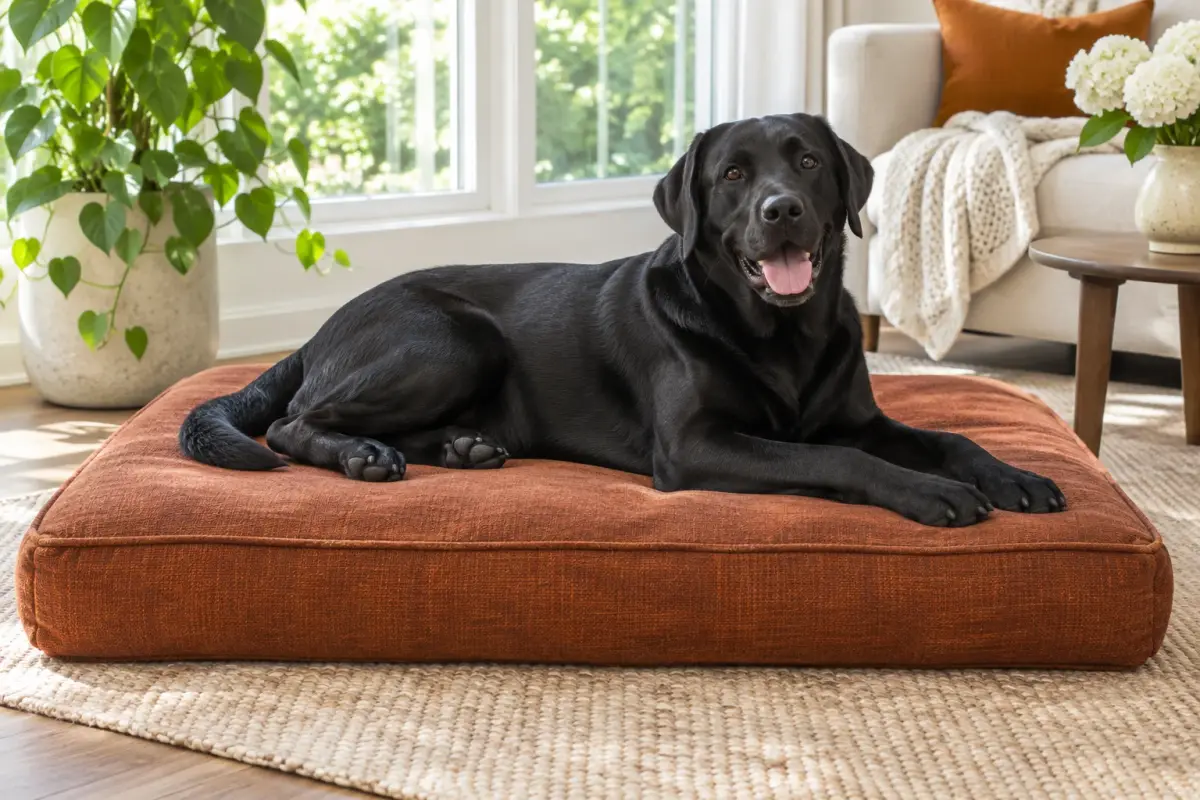
For senior dogs and breeds prone to hip and elbow problems, such as German Shepherds, Labradors and golden retrievers, a memory foam orthopedic bed with a low entry is the first choice. For a young, healthy large dog that sprawls, a thick flat foam mattress in a size up is ideal. For a dog that runs hot or lives in a warm climate, an elevated cot or a cooling gel layer helps.
For heavy chewers, choose a cot with a chew-resistant frame or a bed with a tough, zip-hidden cover, and supervise until you know the dog leaves it alone. For crates, measure the crate floor and choose a flat pad that fills it without bunching. For dogs with incontinence, a waterproof liner under the cover is essential.
How to measure your dog for a bed
Measure your dog lying in its usual sleeping position, from the nose to the base of the tail, and add 8 to 12 inches. Also measure across the widest part when it sprawls on its side. A dog that sleeps stretched out needs a rectangular bed longer than its body; a dog that curls tightly can use a round or bolster bed a little smaller.
Many large dogs need a bed of around 40 by 30 inches, and giant breeds often need 50 inches or more in length. If your dog hangs its legs or head off the edge, the bed is too small. If you are between sizes, go up, because a large dog on a too-small bed ends up half on the floor.
Care, lifespan and when to replace it
Vacuum the bed weekly and wash the cover on the cycle given on the label. Air the foam in sunshine now and then, and never put foam in a dryer unless the maker says it is safe. A waterproof liner protects foam from accidents and drool, which otherwise break it down and cause lasting smells.
A good foam bed for a large dog lasts roughly two to five years. Replace it when you can feel the floor through the center, when the foam stays dented, or when odor returns straight after washing. If your dog starts avoiding its bed, struggles to get up, or seems stiff after sleeping, ask your vet whether joint pain is the reason.
This page is general information, not veterinary advice, and it cannot replace an examination by the vet who knows your pet.
Large-bed shapes and usable space
| Shape | Construction | Measure separately |
|---|---|---|
| Flat mattress | An open padded surface | Length,width and base thickness |
| Bolster | Raised sides around a resting center | Outer footprint and usable center |
| Cot | Taut fabric over a raised frame | Fabric area and frame height |
| Couch style | A base with back and side bolsters | Open entry and space inside the arms |
| Covered bed | A resting surface under a hood | Entrance and internal covered space |
Common questions
What is the best dog bed for a German Shepherd?
A rectangular memory foam or orthopedic bed with a base at least 4 inches thick, around 40 by 30 inches or larger, and a washable cover. German Shepherds often sprawl, so measure your dog stretched out.
What is the best dog bed for a golden retriever?
An orthopedic foam bed sized for a 55 to 75 pound dog, often 40 inches or more long, with a waterproof liner and a removable cover, because goldens shed heavily and many love water.
Are orthopedic beds worth it for large dogs?
Usually, yes. Large dogs compress cheap filling quickly, and dense orthopedic or memory foam keeps their joints off the floor. The AKC notes orthopedic beds can help young dogs as well as seniors.
What size bed does an extra large dog need?
Measure your dog lying down, nose to tail base, and add 8 to 12 inches. Giant breeds often need a bed 50 inches long or more, with a base 6 inches or thicker.
Sources we checked
This guide is general information, not veterinary advice. If your pet is unwell or injured, contact your veterinarian.