






Buying guides
Best Dog Mattress: Foam Types, Thickness and Covers
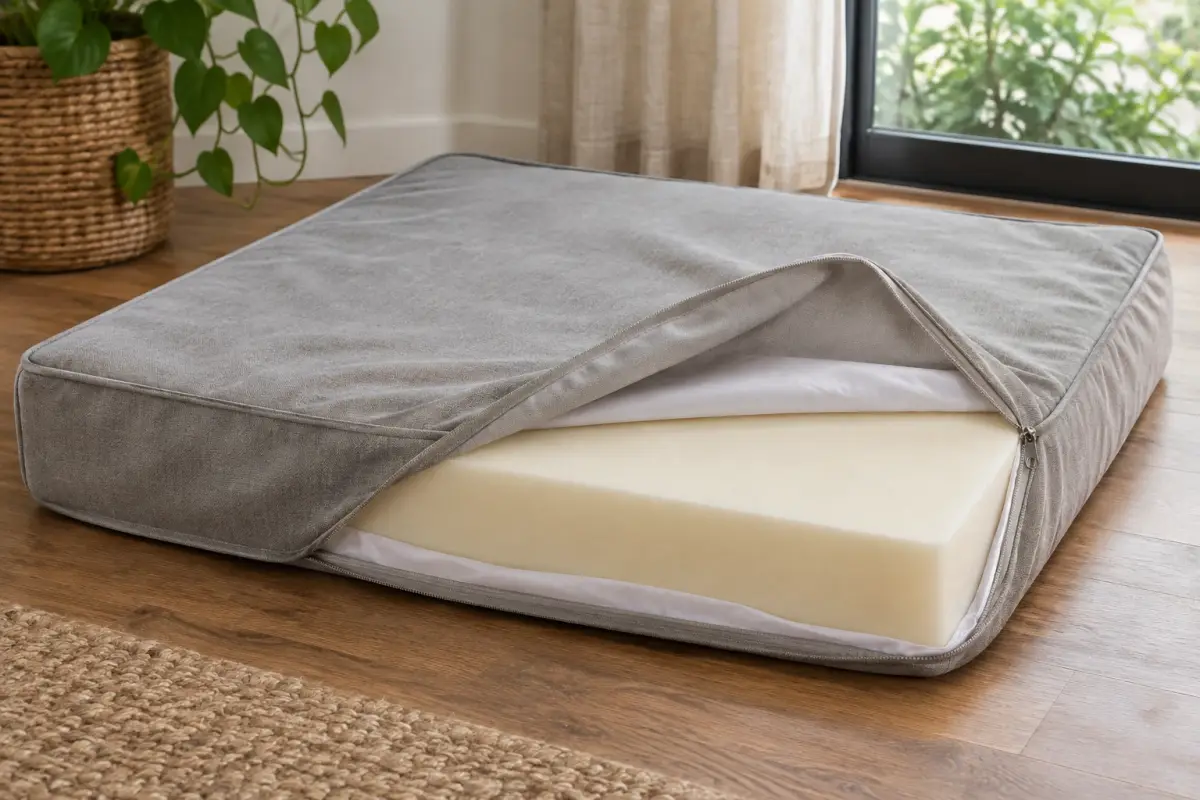
The best dog mattress is a flat slab of supportive foam, memory foam over a firmer base for most dogs, thick enough that your dog never touches the floor, with a removable washable cover and a waterproof liner. Thickness scales with weight: about 2 to 3 inches for small dogs, 4 inches for medium and large, and 6 inches or more for giant breeds and heavy seniors.
By Matt GarnettUpdated November 10, 20263 min read2 sources
What matters most: foam quality and thickness
A mattress-style dog bed is all base and no bolsters, so the foam does all the work. The AKC notes that orthopedic beds using egg-crate or memory foam help dogs with joint pain and can offer preventive support for younger dogs. The test is simple: press the center with a fist and you should not feel the floor; your dog's hips and elbows press harder than your fist.
Density matters as much as thickness. Low-density foam feels plush at first but compresses within months. Higher-density support foam keeps its shape for years. Many good mattresses combine a firm base layer with a softer memory foam top for comfort and pressure relief.
Foam types compared
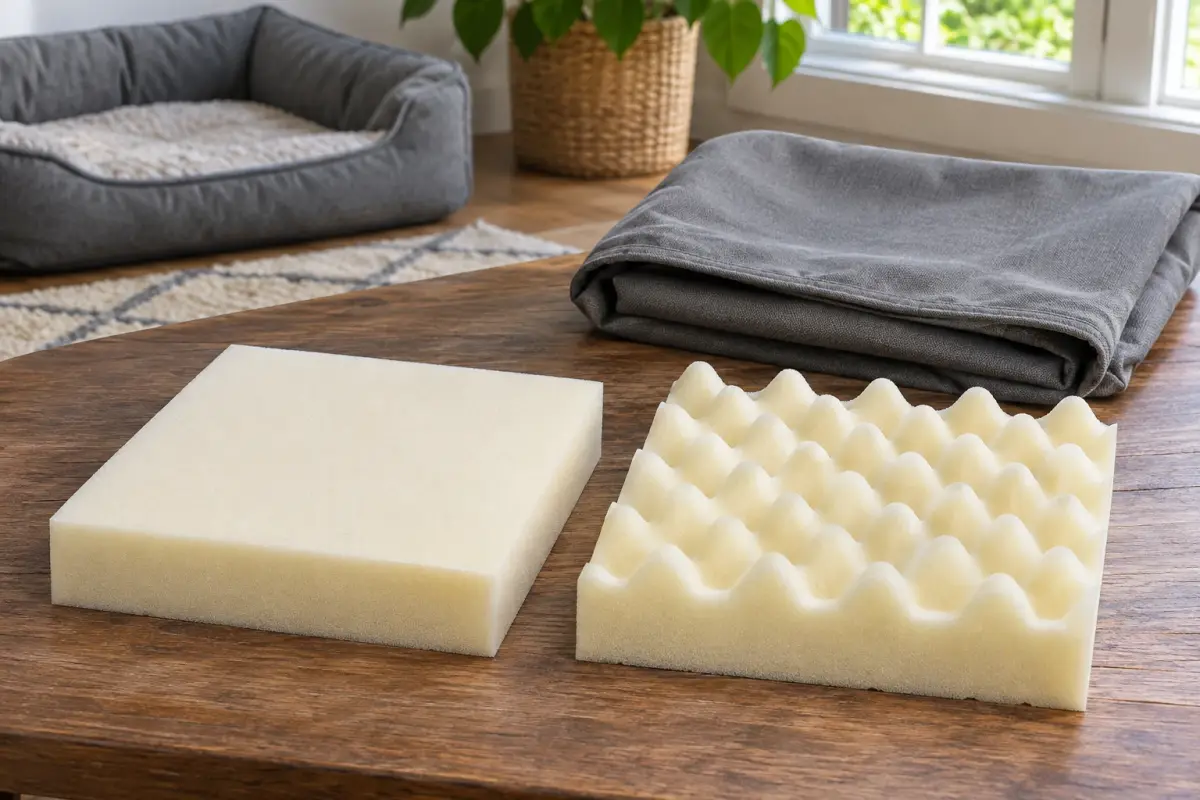
Memory foam molds to the body and spreads pressure, which suits senior dogs, large breeds and dogs with joint problems. Solid support foam is firmer and springier and lasts well. Egg-crate foam has a ridged surface that improves airflow and is lighter and cheaper, but compresses sooner under heavy dogs.
Gel-infused memory foam stays slightly cooler, useful for dogs that run hot. Shredded foam can be fluffed but clumps over time. Fiber-filled mattresses are soft and inexpensive but flatten quickly and are best kept for light dogs or as a topper.
Best mattress for each dog
For senior and arthritic dogs, an orthopedic dog bed of memory foam over support foam, 4 inches or more, with a low profile so it is easy to step onto. For large and giant breeds, 6 inches or more of dense foam in a size big enough to stretch out. For small dogs, 2 to 3 inches is plenty, and a memory foam top adds comfort.
For crates, a crate mattress cut to the crate floor; a waterproof orthopedic crate bed is one type. For dogs with incontinence or puppies, a waterproof liner is essential, as the AKC suggests for orthopedic beds. For dogs that run hot, gel foam, as in this cooling gel memory foam dog bed, or a breathable cover.
What to avoid
Avoid thin, low-density foam for big dogs, beds without removable covers, and covers with exposed zips for chewers. Avoid placing a foam mattress directly on a damp floor without a liner. Avoid washing foam in a machine or putting it in a dryer unless the maker allows it.
If your dog has trouble lying down or getting up, limps after sleeping or avoids its bed, the bed may not be supportive enough, or your dog may have joint pain worth discussing with your vet.
How to size a dog mattress
Measure your dog lying stretched out, nose to the base of the tail, and add 8 to 12 inches. Check the width when your dog sprawls on its side. Rectangular mattresses suit sprawlers and fit neatly in corners and crates.
Match thickness to weight: roughly 2 to 3 inches under 20 pounds, around 4 inches for 20 to 70 pounds, and 6 inches or more above 70 pounds or for heavy seniors. If unsure, go slightly thicker and larger.
Care and when to replace it
Vacuum weekly and wash the cover as the label allows; the AKC suggests weekly cover washing to reduce hair, dander and germs. Spot-clean foam and air dry it fully. A waterproof liner protects the foam from accidents and drool, which otherwise shorten its life.
A good foam dog mattress lasts two to five years or more. Replace it when it stays dented, crumbles, smells after cleaning or your dog's joints are touching the floor through it.
This page is general information, not veterinary advice, and it cannot replace an examination by the vet who knows your pet.
Mattress filling structures compared
| Filling structure | Physical form | Inspection point |
|---|---|---|
| Memory foam | A continuous molding foam layer | Exact foam declaration and return to shape |
| Support foam | A solid foam body | Firmness and compression |
| Egg-crate foam | A ridged or contoured surface | Ridge thickness and compressed areas |
| Gel-infused foam | A foam formulation with gel content | The actual material declaration |
| Shredded foam | Separate foam pieces | Clumping and redistribution |
| Fiber fill | Loose soft filling | Flattening and care instructions |
Common questions
How thick should a dog mattress be?
About 2 to 3 inches for small dogs, around 4 inches for medium and large dogs, and 6 inches or more for giant breeds and heavy seniors. Your dog should never feel the floor.
Is memory foam good for dogs?
Yes, especially for seniors, large breeds and dogs with joint pain. It spreads pressure and holds its shape. A firmer base layer underneath helps it last.
Are dog mattresses better than bolster beds?
For dogs that sprawl, stiff dogs and large breeds, a flat mattress often gives more support and easier access. Dogs that curl may prefer bolsters.
How do I clean a foam dog mattress?
Wash the removable cover, spot-clean the foam with mild soap and let it air dry fully. Use a waterproof liner to protect the foam. Never put foam in a dryer unless the label allows it.
Sources we checked
This guide is general information, not veterinary advice. If your pet is unwell or injured, contact your veterinarian.


