






Buying guides
Best Dog Pillow: How to Choose a Dog Mattress or Cushion
The best dog pillow is large enough for your dog to stretch out, supportive enough that it does not flatten into a pancake, and covered in a removable fabric you can wash often. A flat pillow or mattress suits dogs who sprawl, while curlers and burrowers may prefer raised edges. Below is how to size, compare and care for one.
By Matt GarnettUpdated November 14, 20264 min read2 sources
Pillow, mattress or bed: what the difference is
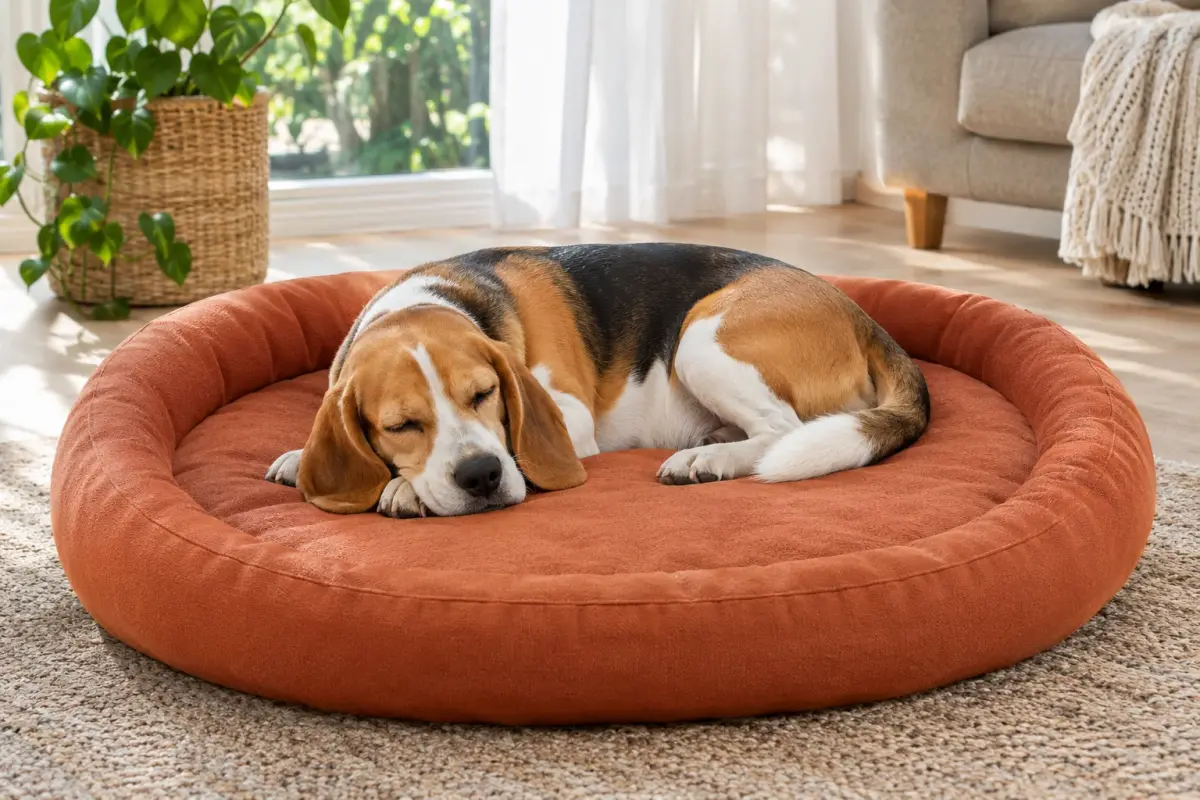
A dog pillow is a flat or gently cushioned pad with no walls, closer to a mattress than a nest. It works well in a crate, on a hard floor, in the car, or as an extra layer on top of a bed you already own. Because it is low and open, it is easy for most dogs to step onto, including older dogs who dislike climbing over a raised rim.
It will not suit every sleeper. Dogs who like to curl tightly or lean against a wall may prefer a bed with sides, and a pad alone gives no draft protection. Our dog mattresses and pillows are the flat, wall-free style, and you can compare them against bolster beds if your dog likes something to lean on.
Size: let your dog stretch out
AKC says the obvious: large dogs need bigger beds than small ones, and the bed should leave enough room to stretch out. PetMD quotes veterinarian Robin Downing, who suggests a bed about one-fourth longer than your dog is when lying down, and proportionally about as much wider as your dog is tall, so your dog can stretch without curling up.
To measure, have your dog lie in a favorite sprawl and measure nose to tail base in inches, then add about a quarter. A dog who sleeps curled can use something smaller, but a pad that is too short pushes elbows and hips onto the floor, which defeats the point. If you are between sizes, choose the larger one.
Support: how the filling decides how long it lasts
AKC says to look for a bed that is soft and supportive, and notes that supportive fill can cushion the joints, which matters for dogs with arthritis or hip problems and for growing puppies. Orthopedic-style beds use materials such as memory foam or egg-crate foam.
PetMD quotes veterinarian Hyunmin Kim, who says a minimum of 2 inches of memory foam is needed for a bed to be called orthopedic, that most have at least 4 inches, and that overstuffed foam is a good choice because memory foam can flatten over time. A thin polyester-filled pillow will feel plush for a few weeks and then pancake, so check the stated fill and thickness. A plush pad such as a plush ribbed mattress dog bed is the softer style, while firmer needs are covered by our orthopedic dog beds.
Cover, washing and placement
AKC recommends a removable cover you can wash weekly to keep hair, dander and germs down, and a bed that is machine washable and dryable, especially for senior dogs with incontinence and puppies still potty training. A zipper you cannot reach or a cover that shrinks is a common reason pillows get thrown away early, so read the care label before buying.
On hard flooring, PetMD suggests a nonslip rug or yoga mat underneath so a pad does not slide. Simple flat styles such as a pet sleeping mat or a square dog mat are easy to move between rooms. Our guide to washable dog beds covers cover materials in more detail.
Who should pick something else
Dogs with arthritis, hip dysplasia or trouble getting up should be seen by a vet, and a pillow is no substitute for a diagnosis. Heavy dogs may need a thicker orthopedic bed, and our best orthopedic dog beds guide covers that in detail.
Chewers are another exception. If your dog shreds soft fabric, a plush pillow is a poor fit, and you should call your vet if you think any stuffing was swallowed. A firmer, tougher-covered style or a supervised trial is wiser.
What to avoid
Avoid thin pads that flatten within weeks, covers you cannot remove, sizes that leave elbows on the floor, and plush that your dog treats as a toy. Avoid placing a slippery pad on a smooth floor.
Once you know your dog's measurements and sleeping style, browse our dog mattresses and pillows and the crate-sized beds if the pad needs to fit a crate.
Common questions
What size dog pillow do I need?
Measure your dog stretched out from nose to tail base in inches, then add about one-fourth. PetMD quotes a veterinarian suggesting a bed about one-fourth longer than your dog lying down.
Is a dog pillow good for joint pain?
A supportive pad can cushion the joints, according to AKC, but it is not a treatment. A dog who struggles to rise or seems sore should see a vet, and thicker orthopedic foam may suit heavier dogs.
How often should I wash a dog pillow?
AKC recommends a removable cover that can be washed weekly to keep hair, dander and germs down. Wash more often for puppies still potty training or senior dogs with incontinence.
How thick should the foam be?
PetMD quotes a veterinarian saying orthopedic memory foam beds need at least 2 inches, with most having 4 inches or more. Thin polyester filling tends to flatten, so check the stated thickness.
Sources we checked
This guide is general information, not veterinary advice. If your pet is unwell or injured, contact your veterinarian.


