






Buying guides
Best Calming Dog Bed: What Helps an Anxious Dog Settle
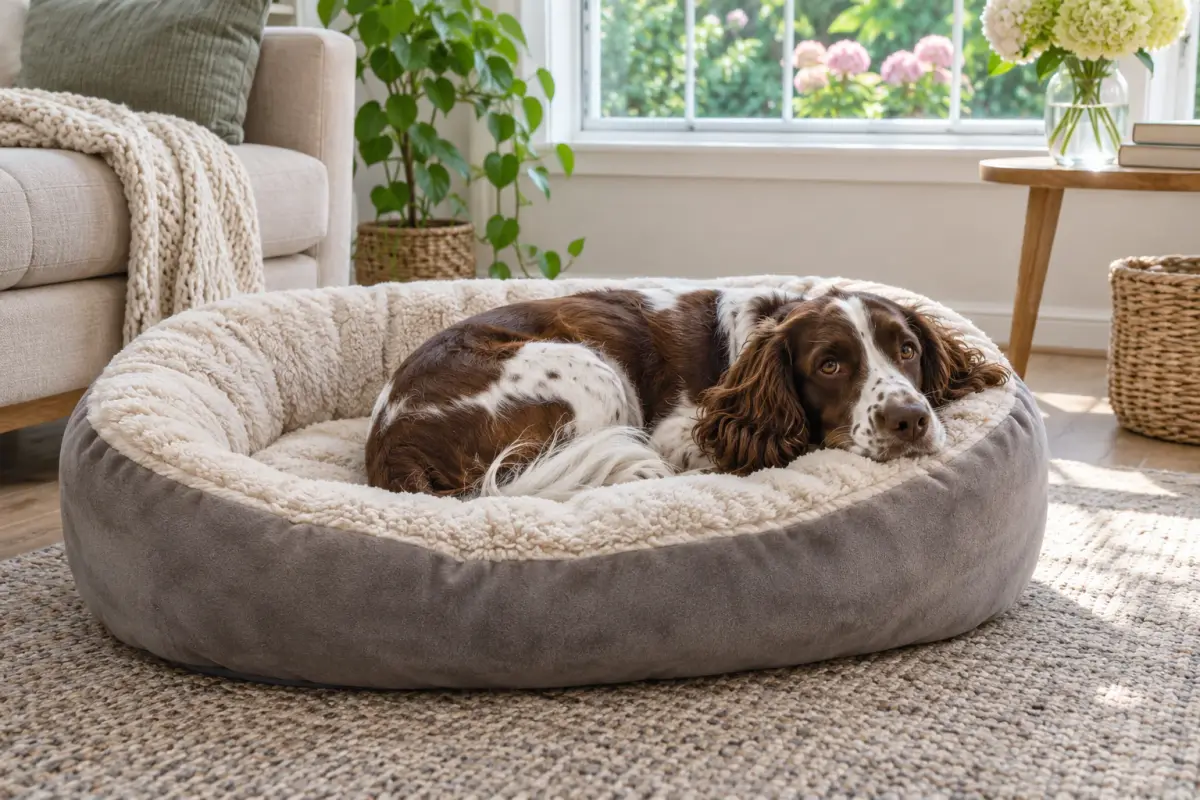
The best calming dog bed is one that lets your dog curl up and feel enclosed: a round donut bed with raised bolsters to lean against, soft fluffy faux fur, a supportive base and a washable cover. Covered or cave beds suit dogs that like to burrow. Sized so your dog can curl with its head on the rim, a cozy bed can help a nervous dog settle, though it does not treat anxiety on its own.
By Matt GarnettUpdated November 10, 20264 min read2 sources
What a calming bed can and cannot do
Calming dog beds are designed around how many dogs settle naturally: curled up, back against something, head resting on a raised edge. The AKC notes covered and enclosed beds suit anxious or nervous dogs and that burrowing beds suit small dogs. A bed that offers that secure, den-like feeling can make a quiet resting place more inviting.
What a bed cannot do is resolve anxiety. Dogs with noise phobias, separation-related distress or general anxiety need training, a predictable routine and, for some, help from your vet. A calming bed is best thought of as part of a safe space, alongside those things.
Calming bed designs compared
Donut beds are round, with a raised bolster all the way around and a sunken center, usually covered in long faux fur. They suit dogs that curl tightly. Bolster beds with three raised sides suit dogs that like to lean or rest their heads but also stretch out. Cave and hooded beds add a cover for dogs that burrow under blankets.
Some calming beds add an orthopedic foam base, which helps older dogs; others are fiber-filled throughout and softer but flatten sooner. Fluffy faux fur feels cozy but holds hair, so a removable, washable cover or a fully machine-washable bed is important.
Best calming bed for each dog
For small dogs that burrow, such as Dachshunds and Chihuahuas, a cave or hooded bed. For dogs that curl and like soft textures, a fluffy donut bed. For larger anxious dogs, a bolster bed with a supportive base, since big donut beds can flatten. For senior anxious dogs, a bolster bed with orthopedic foam and a low entry, as in our senior dog beds.
For dogs that overheat, faux fur may be too warm; a bolster bed with a smooth, breathable cover can still give the enclosed feel. For dogs that chew when stressed, avoid fluffy beds and choose durable fabrics, supervising at first.
What to avoid
Avoid donut beds too small for your dog to curl comfortably, or so large it rolls around in the center. Avoid fiber-only beds for large or arthritic dogs. Avoid beds that cannot be washed. Avoid placing the bed in a busy hallway; a quiet corner where your dog already likes to rest works better.
If your dog pants, paces, trembles, hides, destroys things or toilets indoors when stressed, a bed is not enough. Talk to your vet, who can check for pain or illness and discuss a behavior plan. Never give your dog human calming medicines.
How to size a calming bed
Measure your dog curled up, at its widest, and add a few inches; that is the minimum inside diameter for a donut bed. For dogs that sometimes stretch out, measure nose to tail base and add 6 to 10 inches, and consider a bolster bed instead. Check that the bolster height suits your dog's head when lying down.
If between sizes, go up for donut beds, because a too-small donut leaves the dog perched on the rim. Read whether the size given is the outer or inner dimension.
Care and lifespan
Shake out and vacuum the bed weekly, and wash the cover or the whole bed as the label allows; the AKC suggests weekly washing to reduce hair, dander and germs. Dry fully, on low heat if allowed, to keep faux fur soft.
Fiber-filled donut beds flatten in a year or two; beds with foam bases last longer. Replace the calming bed when it stays flat, the fur mats, or odor returns after washing.
This page is general information, not veterinary advice, and it cannot replace an examination by the vet who knows your pet.
Resting-bed shapes and filling arrangements
| Layout | What surrounds the sleeping area | Measurement or care check |
|---|---|---|
| Donut | A raised rim around a sunken center | Usable inside diameter |
| Three-sided bolster | Raised sides with a more open edge | Flat center and entry |
| Cave or hood | A cover above the sleeping surface | Entrance and headroom |
| Foam-base version | A separate foam layer beneath the surface | Exact foam and cover-removal instructions |
| Fiber-filled version | Soft filling through the body | Clumping,flattening and care directions |
Common questions
Do calming dog beds really work?
They can help some dogs settle by offering a secure, enclosed place to curl up. They do not treat anxiety, so pair one with training and talk to your vet about ongoing distress.
What is the best fluffy dog bed?
A donut or bolster bed with soft faux fur, a supportive base and a removable, machine-washable cover, sized so your dog can curl with its head on the rim.
What size calming bed should I get?
Measure your dog curled up at its widest and add a few inches for the inside diameter. For dogs that also stretch out, a larger bolster bed suits better.
Are calming beds good for large dogs?
Large dogs often do better with a bolster bed and a foam base, which gives the enclosed feel without flattening. Big donut beds can lose their shape quickly.
Sources we checked
This guide is general information, not veterinary advice. If your pet is unwell or injured, contact your veterinarian.


