






Buying guides
Best Bolster Dog Beds: What Actually Matters
A bolster dog bed has raised cushioned sides that give your dog something to lean or rest a chin on. The features that decide a good one are the support under the sleeper, a cover that really comes off and washes, and a size that lets your dog stretch the way they sleep. Browse our bolster dog beds once you know which of those matter most for your dog.
By Matt GarnettUpdated November 14, 20265 min read2 sources
What a bolster bed is, and who it suits
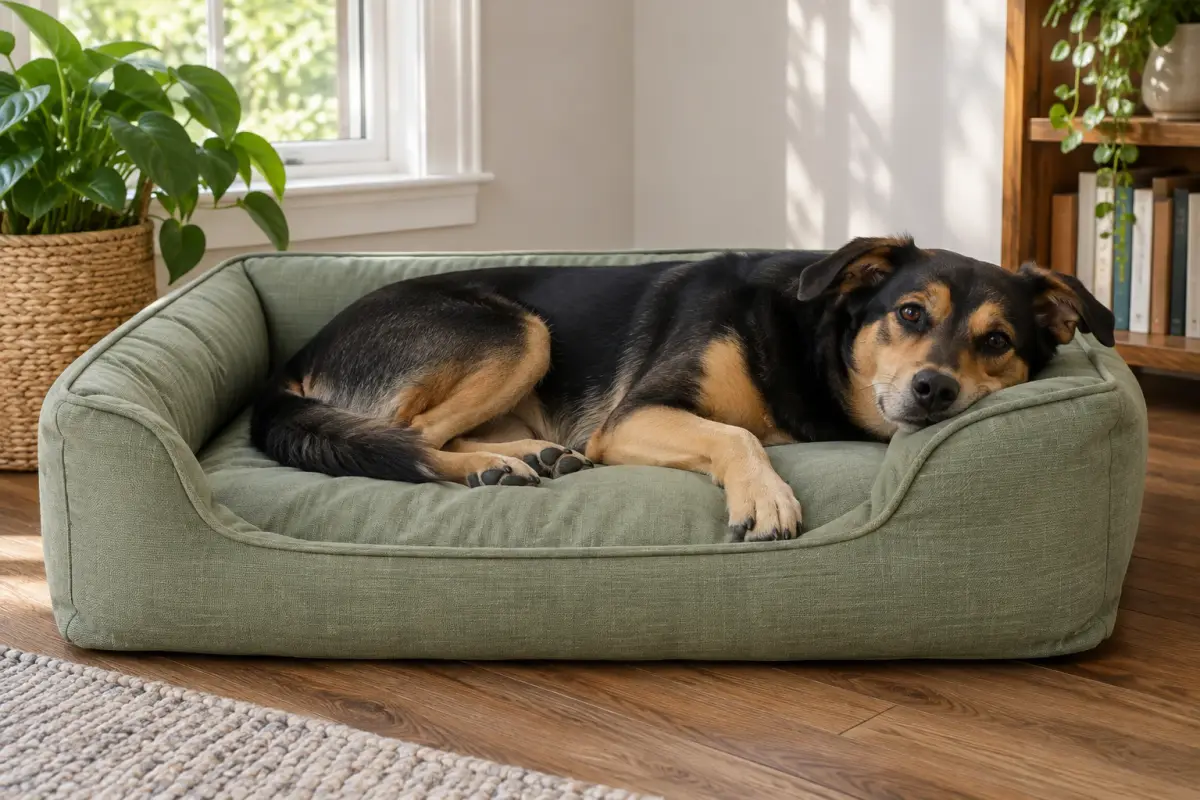
A bolster bed is a cushion with a raised rim on two, three or all four sides. The rim works as a pillow, a draft block and a boundary, which is why dogs that like to lean, curl up or rest their head on something often settle into one faster than into a flat mat. The shape does not tell you how supportive the bed is, though. That depends on what is inside the base and how thick it is, so treat the bolster as the comfort feature and the base as the support feature.
The American Kennel Club notes that dogs sleep roughly 12 to 18 hours a day depending on age, and that older and large dogs need more of it. With that much time spent on one surface, it is worth matching the bed to how your dog actually lies down. A dog that curls up or tucks its nose against a wall is the classic bolster user.
Support: look at the base, not the sides
The first thing to check is what carries your dog's weight. The AKC describes orthopedic beds as ones that use memory foam or egg-crate style foam, and says they are useful for senior dogs and for dogs with joint trouble such as arthritis or hip dysplasia. Many bolster beds are filled with soft fiber that feels plush in the shop and compresses under a heavy dog within weeks. If your dog is large, older or stiff in the mornings, look for a bed that says what the base is made of rather than one that only describes the rim.
A simple test applies to any bed you already own: press your hand into the center and see whether you feel the floor. If you do, a heavier dog will feel it too. Plush fiber bolster beds, such as a ribbed plush bolster dog bed, suit light to medium dogs that mostly want softness. A dog with sore joints is a case for talking to your vet first, since they can tell you how much support your dog needs.
Covers, washing and materials
Bolster beds collect hair, drool and the occasional accident along the rim, so washability matters more than it does for a flat mat. The AKC recommends a removable cover you can wash weekly, and says the bed itself should ideally be machine washable and dryable. For an orthopedic bed it suggests a waterproof removable cover, because foam that gets wet is hard to dry and hard to clean.
Material is the other choice. Corduroy and similar woven fabrics stand up to claws and look tidy for longer, while plush faux fur is warmer but holds hair. A corduroy bolster pet bed with a raised rim or a plush bolster dog bed with a corduroy base pairs a soft rim with a sturdier surface. If you want the easiest cleaning of all, a four-sided washable dog bed is the type to look at, and our washable dog beds collection has more.
Sizing: measure your dog, not the label
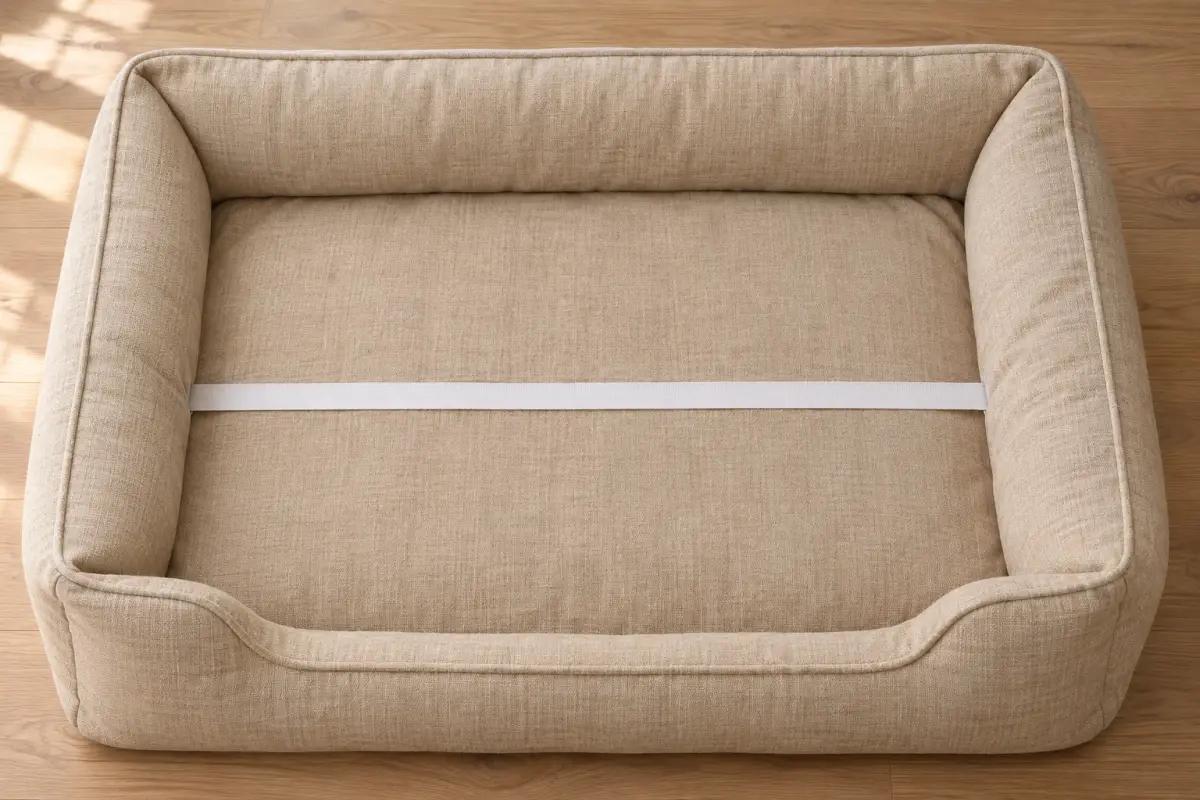
Size labels such as small, medium and large vary between makers, so measure your dog instead. Wait until your dog is asleep or relaxed, measure from the tip of the nose to the base of the tail, and compare that to the sleeping area inside the rim, not the outside dimensions of the bed.
If your dog sleeps curled up, a bed close to their curled size feels snug and secure. If they sprawl, or they fall between two sizes, choose the larger one. For a puppy, buy for the size they will reach.
Bolster beds for chewers, puppies and seniors
A chewing dog and a bolster bed are a difficult mix, because the rim is the part that gets pulled and shredded. The AKC advises caution with any electric heated bed for a dog known to chew, and suggests self-warming beds as the safer low-tech alternative since they have no cord. If your dog destroys beds, a tougher woven cover, or a different bed type, may serve you better than a bolster.
Puppies that are still being house-trained need a bed that washes easily, and the AKC says a supportive bed is also useful for developing joints. Seniors are the group that gain most from a bolster with a proper foam base, since a low entry edge and a rim to lean on make lying down easier.
Bolster, donut, flat or orthopedic: choosing between them
A flat mat suits sprawlers and warm dogs that want to spread out. A donut bed, which is a bolster that curves all the way round, suits small dogs that curl up and like to be surrounded. A bolster with one open side or a lower front sits in between and suits dogs that lean on one side but need easy access. An orthopedic bed is defined by its foam rather than its shape, and many orthopedic beds also come with bolsters.
If you are unsure, watch how your dog sleeps for a week. Note whether they curl up, lean against walls and furniture, or sprawl, and whether they get up stiffly. That answers more than any size chart. Our bolster dog beds collection covers the rim-and-cushion style, and the dog beds collection has the other shapes if the answer turns out to be a flat mat.
Bolster-bed surfaces and cleaning access
| Feature | Physical difference | Check on the exact bed |
|---|---|---|
| Corduroy or woven surface | A textured woven cover | Permitted washing and accessible seams |
| Plush faux fur | A longer-pile soft surface | How to remove trapped hair |
| Removable cover | Cover separates from the bed filling | Which parts unzip and which can be washed |
| Waterproof removable cover | A removable cover with a stated water barrier | Care instructions for both cover and foam |
| Whole-bed washable design | The complete bed can be washed if listed | Machine capacity and drying instructions |
Common questions
Are bolster beds good for dogs?
They suit dogs that like to lean, curl up or rest their chin on something. The rim gives a sense of security, but support still depends on the base, so check the filling if your dog is large, older or has sore joints.
What size bolster bed should I buy?
Measure your dog from nose to the base of the tail while relaxed, then compare it with the inside sleeping area of the bed, not the outside size. If your dog sprawls or falls between sizes, choose the larger one.
Can I wash a bolster dog bed?
Many can be washed, but check the label. Look for a removable cover you can launder weekly and a bed that can go in the machine. Foam bases usually should not be soaked, so a waterproof inner liner helps.
Is a bolster bed good for a senior dog?
It can be, if the base is supportive foam and the front edge is low enough to step over. Dogs with arthritis or hip problems should be seen by a vet, who can advise on how much support is needed.
Are bolster beds safe for dogs that chew?
Not usually. The rim and stuffing are easy to pull apart, and swallowed filling can cause problems. If your dog chews beds, choose a tougher cover or a different design, and call your vet if they swallow any.
Sources we checked
This guide is general information, not veterinary advice. If your pet is unwell or injured, contact your veterinarian.


